
Bosnia Road Trip: Sarajevo, Mostar and the Highlights
For a wider itinerary, compare Bosnia car hire guide, car hire in Mostar and Sarajevo car hire guide before choosing the pickup point.
Bosnia Road Trip – Sarajevo, Mostar and the Hidden Gems of Herzegovina
Let me tell you about a country that most travellers completely overlook. It’s got one of the most fascinating capital cities in Europe — a place where Ottoman bazaars sit alongside Austro-Hungarian architecture, where the scars of a recent war exist alongside vibrant new businesses. It’s got one of the world’s most beautiful bridges. And it’s home to some of the most underrated wine in the Balkans.
Welcome to Bosnia and Herzegovina. Europe’s best-kept secret.
Sarajevo – A City of Layers
Sarajevo is the kind of city that changes you. Walk through the Baščaršija, the old Ottoman bazaar, and you’re transported to another century. The smell of coffee ( Bosnia does coffee culture differently — it’s a whole ritual), the sound of the call to prayer, the copper workers hammering away at traditional crafts.
Then round a corner and you’re in Austro-Hungarian territory — grand Austro-Hungarian architecture lining wide boulevards. This is the city where Gavrilo Princip assassinated Archduke Franz Ferdinand in 1914, sparking World War I. You can still stand on the Latin Bridge where it happened.
More recent history is visible too. Bullet holes in buildings from the 1990s war, the War Childhood Museum (powerful and emotional), and the haunting Tunnel of Hope that kept the city alive during the siege.
For views, climb to the Yellow Fortress (Žuta Tabija) at sunset. The panorama over the city is spectacular.
And the food — oh, the food. Sarajevo does ćevapi ( grilled minced meat) better than anywhere else in the Balkans. The local version, served in somun bread with onions and kajmak (a creamy cheese), is something you’ll dream about after leaving.
Book your Sarajevo airport car hire to pick up your wheels and start the adventure.
The Drive to Mostar
From Sarajevo, head south on the A1 motorway toward Mostar — about 2 hours. The drive takes you through increasingly arid landscape as you leave the mountains and head toward the Herzegovinian plains.
About halfway, stop at Jablaničko Lake. This brilliant blue reservoir was created by a dam and has an interesting WWII history — partisans used the area during the war. It’s a great place for a coffee stop with a view.
Mostar – The Iconic Bridge
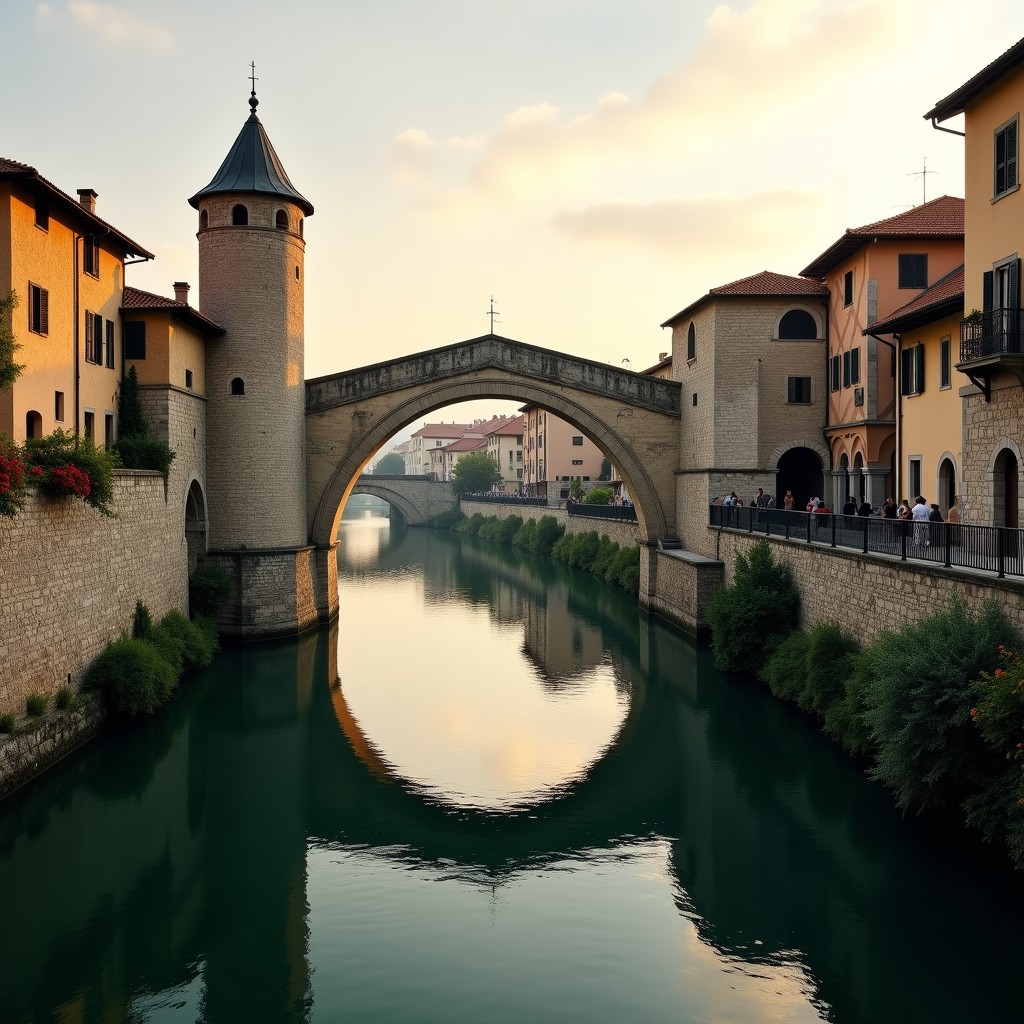
Arriving in Mostar, your eyes will be drawn immediately to the Stari Most — the Old Bridge. Rebuilt after being destroyed in 1993 during the war, it’s become a symbol of reconciliation and hope. The bridge itself is elegant, arched, and spans the emerald Neretva River at what seems like an impossibly high point.
Watch the bridge divers — local men who dive off the bridge into the river below (a drop of about 24 metres) for tips. It’s a tradition, and they’ve been doing it for centuries. You can watch for free or pay for a photo with them.
Explore the old bazaar on either side of the bridge. It’s full of workshops selling traditional crafts, cafes serving Turkish coffee, and restaurants with terraces overlooking the water. Evening is magical — the bridge is beautifully lit, and the atmosphere is unforgettable.
Kravice Waterfalls – The Hidden Gem
About 30 minutes from Mostar (heading inland toward the Croatian border) lie the Kravice Waterfalls. These are often called “Croatia’s Plitvice without the crowds” — and that’s exactly right.
The falls cascade over travertine terraces into a series of pools, surrounded by lush vegetation. You can swim in the pools (the water is cold but refreshing), walk behind some of the smaller falls, and have a picnic. It’s a fraction of the price of Plitvice, and far fewer people.
This is one of the best-kept secrets in Balkan tourism.
Trebinje – The Southern Jewel
About an hour east of Mostar, close to the Croatian border, lies Trebinje. This beautiful small city is often skipped by tourists heading between Dubrovnik and Mostar, which is a shame.
The star attraction is the Monastery of Tvrdos — a massive Orthodox monastery perched on a hill above town, with incredible views across the countryside to Croatia. The wine produced here (from the nearby vineyards) is excellent.
The town itself has a lovely river flowing through the centre, a beautiful old bridge, and excellent restaurants serving local specialities.
Herzegovina Wine Region
Here’s something that surprises most people: Herzegovina makes really good wine. The hot continental climate (think more Mediterranean than Alpine) is perfect for growing indigenous grapes.
Žilavka is the star white — crisp, mineral, and distinctive. Blatina is the most famous red — full-bodied and dark. The region isn’t as famous as Croatian Istria or Slovenia, but the wines are excellent and the wineries are friendly and welcoming.
Many vineyards around Trebinje and Mostar offer tastings — ask at your hotel or just look for signs along the road.
Practical Information
- Roads: The main A1 motorway from Sarajevo to Mostar is excellent. Secondary roads can be narrower and more winding, especially in mountainous areas. Take your time.
- Fuel: Petrol is cheaper in Bosnia than in Croatia. Fill up here.
- Currency: Bosnia uses the BAM (convertible mark), which is pegged to the Euro. Euros are widely accepted, but you’ll get change in BAM.
- Border crossing: If you’re coming from Croatia, the border crossings are straightforward. The most common is near Čapljina (from Dubrovnik) or Slunj (from the Plitvice area).
- Language: Bosnian, Serbian, and Croatian are all spoken. English is limited outside tourist areas but you’ll get by.
Book through Bosnia car hire or Mostar car hire to explore this incredible country.
Frequently Asked Questions
How far is Mostar from Sarajevo?
The drive from Sarajevo to Mostar takes about 2 hours via the A1 motorway. It’s a scenic drive through the mountains, descending from Sarajevo’s alpine setting to the more arid Herzegovina landscape.
Do I need a car to visit Mostar from Dubrovnik?
You can take a bus from Dubrovnik to Mostar (about 2.5-3 hours), but having a car gives you much more freedom. You can explore the Kravice Waterfalls, the wine region around Trebinje, and drive at your own pace. The border crossing is straightforward.
Is Bosnia safe to visit?
Yes, Bosnia is generally very safe for tourists. The main tourist areas (Sarajevo, Mostar) are peaceful and welcoming. As with anywhere, use normal precautions — don’t leave valuables in your car, be aware of your surroundings, etc.
What is the currency in Bosnia?
Bosnia uses the Convertible Mark (BAM), which is pegged to the Euro at a fixed rate (approximately 1.96 BAM = 1 EUR). Euros are widely accepted, especially in tourist areas, but you’ll usually get change in BAM.