

Hire a Car in the Canary Islands and Plan Island by Island
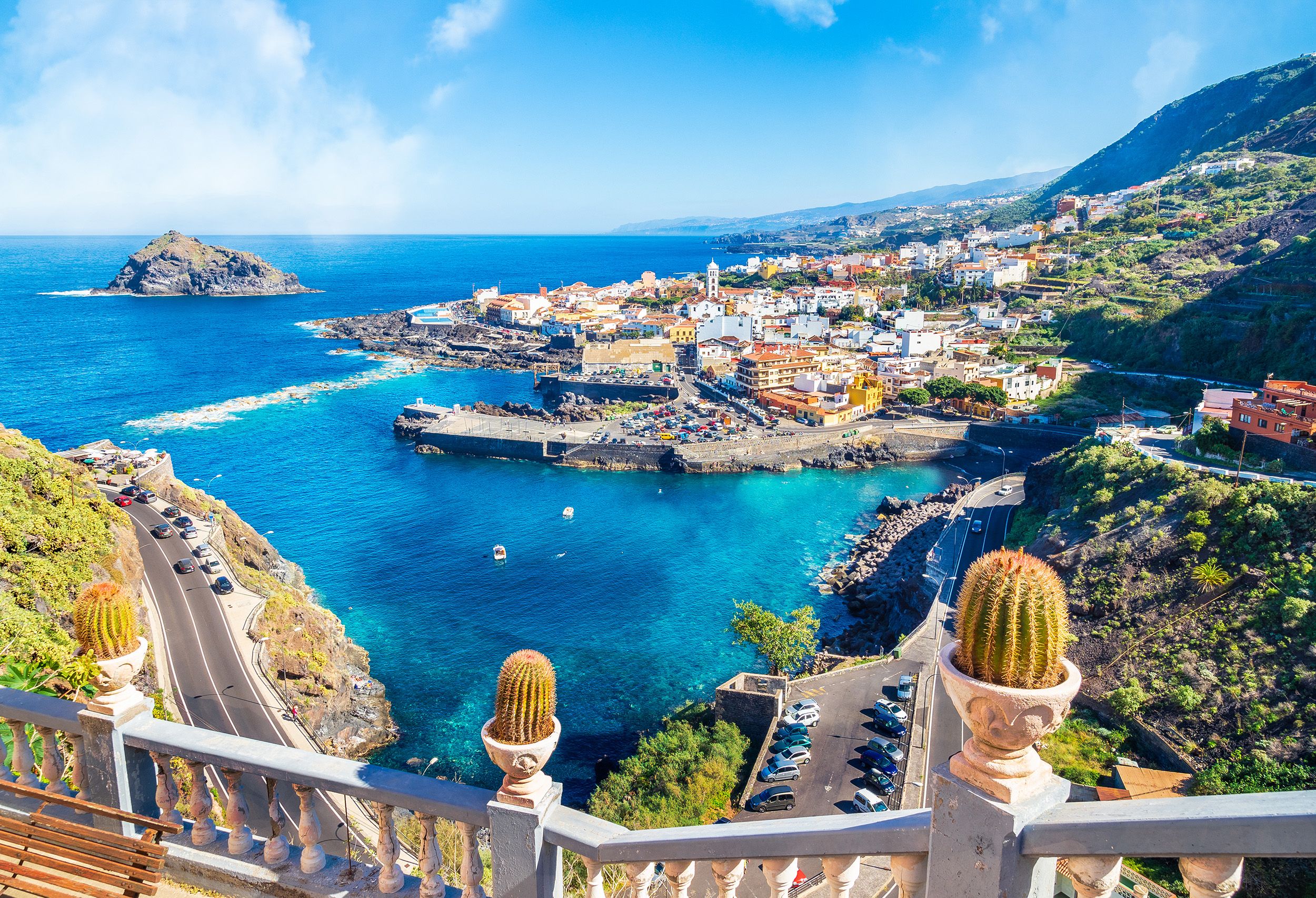
The Canary Islands sit off the coast of northwest Africa, a Spanish archipelago of volcanic landscapes, black-sand beaches, and subtropical forests. Each island has its own identity. Tenerife is dominated by Mount Teide, Spain’s highest peak. Gran Canaria packs microclimates and dunes into a compact space. Lanzarote is a UNESCO Biosphere Reserve of lava fields and white-washed villages. Fuerteventura offers the longest beaches and the strongest winds. La Palma is the greenest, a hiker’s island of deep forests and star-gazing observatories. A rental car is essential on almost all of them, because public transport is limited and the best viewpoints are scattered far from the resorts.
You should plan your Canary Islands car rental island by island. Most suppliers operate at Tenerife South, Tenerife North, Gran Canaria, Lanzarote, Fuerteventura, and La Palma airports. Each airport has its own desks, parking arrangements, and fleet sizes. A vehicle collected on Tenerife cannot automatically be driven to Gran Canaria or La Gomera; ferry crossings require written permission from your supplier, and many agreements prohibit it entirely. Your voucher will confirm the exact pickup location, the required documents, and any territorial restrictions. Bring your driving licence, the credit card used for the booking, and a passport or ID. EU licence holders generally do not need an International Driving Permit, but non-EU visitors should confirm requirements with their supplier.
Tenerife, Gran Canaria, Lanzarote, Fuerteventura, La Palma
Plan this first.
Volcanic landscapes, beaches, hiking
Confirm before booking.
Multiple: North & South Tenerife, Gran Canaria, Lanzarote, Fuerteventura, La Palma
Confirm before booking.
Plan each island separately; inter-island restrictions apply
Confirm before booking.
Match collection to the actual itinerary
Include transfers, parking days, opening hours and return timing when comparing the two options.
Airport Pickup on Arrival
All the main islands have airports with rental desks in or near the terminal. Tenerife South and Gran Canaria are the busiest, with the largest fleets and the longest summer queues. Tenerife North, Lanzarote, and La Palma are smaller but well served. Your voucher will specify the exact desk, any shuttle to the vehicle compound, and the fuel policy. Pre-booking is strongly advised in peak season.
Resort or City Office
Some suppliers have offices in Playa de las Américas, Puerto del Carmen, Corralejo, and Santa Cruz de la Palma. These can be convenient if your hotel is nearby, but fleets are smaller and opening hours shorter than at the airport. Confirm whether your voucher allows a different return location, and check Saturday or Sunday availability if your dates fall on a weekend.
Plan the handover, price and first drive
The Canary Islands are geology made visible. Every road, every beach, every vineyard terrace is shaped by volcanic fire and Atlantic weather. The oldest islands, like Fuerteventura and Lanzarote, have landscapes so raw they feel like previews of a younger Earth. The youngest, like El Hierro and La Palma, are still growing, their forests and cliffs evidence that the process is far from finished.
For visitors, the appeal is the variety. In a single morning, you can drive from a banana plantation to a lava field, from a colonial town square to a viewpoint above the clouds. The climate is mild year-round, which makes the Canaries a reliable winter destination, but the real discovery happens when you leave the resort strip and head inland.
A rental car is the tool that unlocks this variety. The bus network connects the main towns, but the best viewpoints, the quietest beaches, and the most authentic village restaurants are on roads that never see a public bus. The islands reward the driver who is willing to take the slower route, to stop for a photograph, and to accept that the sat-nav may not know the best coastal track.
The practical advice is island-specific: book each leg separately, read the territorial restrictions carefully, and treat the ferry as a foot passenger unless you have written confirmation that your rental agreement covers the crossing. The Canary Islands are not one destination. They are seven, each with its own roads, its own rules, and its own reason to explore.
Check the conditions behind the price
The selected supplier’s terms and booking voucher control the rental. Review them before payment and again before collection.
Total payable price
Compare the full payable amount and inclusions rather than an unsupported daily-price promise.
Deposit and payment card
Confirm the deposit, accepted card type and whose name must appear on the card.
Excess and cover
Read the renter's liability, exclusions and what any optional protection actually changes.
Fuel policy
Know the collection level, return requirement and whether a refuelling charge can apply.
Mileage and territory
Check any distance limit and where the vehicle may be driven.
Extras and return
Price additional drivers, seats, after-hours service and one-way return before payment.
Choose for people, bags and roads
A category normally represents a group of similar cars, not a promise of one exact model.
- Compact: convenient for couples and tighter parking.
- Intermediate: more room for bags and longer journeys.
- Family or SUV category: useful only when the required capacity justifies it.
- Transmission: select automatic explicitly if manual is unsuitable.
Practical planning before departure
Documents required
A valid driving licence, the booking credit card, and a passport or ID. Check your voucher for any extra paperwork, such as proof of address or an International Driving Permit for non-EU licences.
Driving rules
Traffic drives on the right. Seat belts are compulsory for all passengers. Child seats are required for younger passengers and must be booked in advance. Speed limits are posted and vary by road type; follow current signs rather than old online figures.
Mountain and rural roads
Island roads can change quickly from modern dual carriageways to steep, narrow, or unpaved rural tracks. Some viewpoints and beaches are reached via roads that are excluded from standard rental agreements. Read the exclusions carefully and stick to tarmac unless you have explicit permission.
Ferry crossings
Taking a rental car between islands by ferry is usually prohibited or heavily restricted. If your trip includes multiple islands, compare the cost of separate rentals against travelling as a foot passenger and hiring again on arrival. Never assume a vehicle is insured for a ferry crossing unless your voucher says so in writing.
Local access, road and operating conditions can change. Check current signs, your supplier instructions and the linked source before travelling: Canary Islands Tourism.
Build a realistic first journey
Tenerife: Teide and the Anaga Forest
Drive from the south coast up through the lava fields to the Teide cable car base station. On a clear day, the summit view spans several islands. The Anaga Rural Park in the northeast offers laurel forests and cliff roads that feel closer to the Azores than to Africa. Allow a full day and carry water.
Gran Canaria: Microclimates in Miniature
The island is small enough to cross in a morning, but the landscape shifts dramatically. Start in the dunes of Maspalomas, climb through pine forests to the summit of Pico de las Nieves, and descend to the colonial streets of Vegueta in Las Palmas. The mountain roads are good but busy with local traffic.
Lanzarote: Volcano Country
Timanfaya National Park is the highlight, a landscape of dormant craters and lava flows that looks almost lunar. The island has no high-rise buildings by law, so the villages of Yaiza and Haría remain low and white against the black volcanic soil. Roads are generally excellent, but the wind can be strong on exposed sections.
La Palma: The Green Island
La Palma is less visited than the larger islands, which makes it ideal for walkers and stargazers. The Roque de los Muchachos observatory sits above the clouds, and the Caldera de Taburiente is one of the finest hiking areas in the Canaries. Mountain roads are narrow and fog-prone; drive with caution and avoid rushing.
Frequently asked questions
Can I drive a rental car between islands?
Most agreements prohibit it. Ferry companies accept vehicles, but your supplier may void the insurance or charge a penalty. Always confirm in writing before planning an inter-island trip with a hire car.
Do I need winter tyres or snow chains?
Snow is rare at sea level but possible on Teide in winter. Your supplier may offer chains as an add-on, but availability is limited. If you plan to drive above the snow line, confirm equipment availability when you book.
Is fuel expensive in the Canaries?
Fuel is generally er than on the Spanish mainland due to tax differences, but prices fluctuate. Most suppliers use a full-to-full policy. Return the car with a full tank and keep your receipt.
Are there toll roads?
There are no toll motorways in the Canary Islands. The only charges are for some private car parks and attractions, which are clearly signed.
Compare Spain car hire
Enter dates above, then compare pickup method, vehicle category and complete supplier terms before booking.
Continue planning with Car hire Tenerife South Airport, Car hire Tenerife North Airport, Car hire Lanzarote, Car hire La Palma Airport.