

Car Hire at Clark International Airport
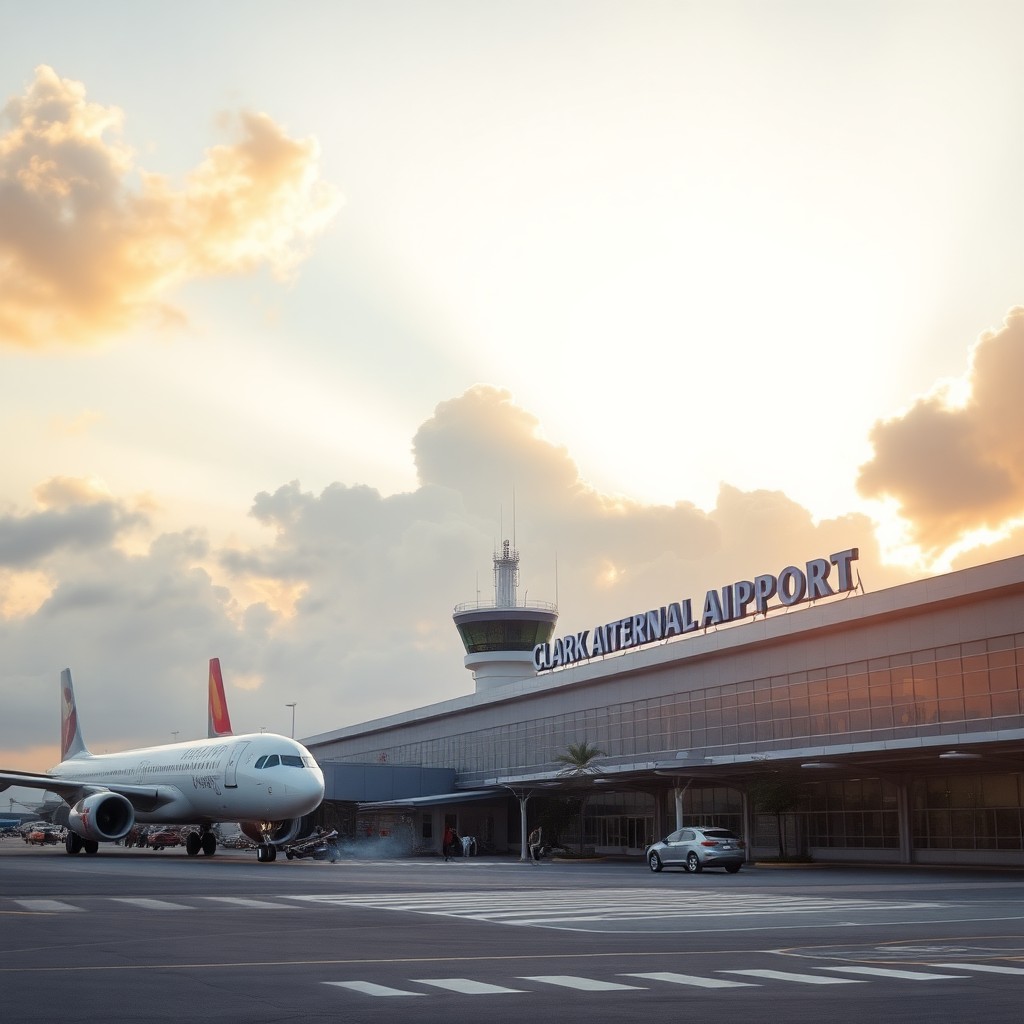
Clark International Airport serves Pampanga province and the wider Central Luzon region, offering an alternative to the congestion of Manila for travellers heading north. The airport is located within the Clark Freeport Zone, a former US military base that now houses duty-free shopping, hotels, and business parks. Renting a car here puts you on the expressway within minutes, with easy access to Angeles City, Subic Bay, and the mountain roads of Zambales. Most suppliers have desks in or near the terminal, though some operate from off-site depots with a short shuttle ride. Your voucher will specify the exact pickup procedure.
Arriving at Clark, you will find the terminal compact and easy to navigate. Baggage claim and customs are straightforward, and the arrivals hall leads directly to the ground transportation area. Some rental companies have counters inside the terminal; others send a representative to meet you with a name board and transfer you to their nearby lot. If you are staying in Angeles City or the Clark Freeport Zone, a short shuttle or taxi ride connects you to your hotel after you collect the vehicle. Confirm whether the supplier allows hotel delivery — some do, which saves you a second transfer.
Pampanga, Central Luzon
Plan this first.
CRK
Confirm before booking.
Angeles City, Subic Bay, Zambales, Manila bypass
Confirm before booking.
Terminal desks, meet-and-greet, off-site shuttle
Confirm before booking.
Match collection to the actual itinerary
Include transfers, parking days, opening hours and return timing when comparing the two options.
Terminal desk or meet-and-greet pickup
Some suppliers maintain desks inside the Clark terminal, which is a practical way to collect your car. Others arrange a meet-and-greet in the arrivals hall, where a driver meets you with your name on a board and walks you to the vehicle or shuttle. Read your voucher carefully to know which procedure applies to your booking.
Off-site depot with shuttle
A few companies operate from lots outside the terminal and provide a supplier-arranged shuttle. This usually takes only a few minutes, but factor in the extra step when you plan your arrival. Off-site depots sometimes have larger vehicle selections than the limited space inside the airport.
Plan the handover, price and first drive
Clark International Airport occupies a corner of what was once Clark Air Base, one of the largest American military installations outside the United States. The base closed in 1991 after the Mount Pinatubo eruption, and the area has since been transformed into a freeport zone and aviation hub.
Today, Clark is a quieter alternative to Manila's crowded airports. The terminal is modern, the queues are shorter, and the surrounding area has a strange mix of military history, duty-free shopping, and rural Pampanga life.
Renting a car here is the most practical way to explore the region. Angeles City is just minutes away, Subic Bay is an hour west, and the expressway south leads all the way to Manila if you need it. But the real appeal is the freedom to turn off the main roads and discover Pampanga's heritage churches, local cuisine, and volcanic landscapes at your own pace.
Whether you are here for business in the freeport, a road trip to Zambales, or simply to avoid Manila's traffic, Clark Airport is a solid starting point.
Check the conditions behind the price
The selected supplier’s terms and booking voucher control the rental. Review them before payment and again before collection.
Total payable price
Compare the full payable amount and inclusions rather than an unsupported daily-price promise.
Deposit and payment card
Confirm the deposit, accepted card type and whose name must appear on the card.
Excess and cover
Read the renter's liability, exclusions and what any optional protection actually changes.
Fuel policy
Know the collection level, return requirement and whether a refuelling charge can apply.
Mileage and territory
Check any distance limit and where the vehicle may be driven.
Extras and return
Price additional drivers, seats, after-hours service and one-way return before payment.
Choose for people, bags and roads
A category normally represents a group of similar cars, not a promise of one exact model.
- Compact: convenient for couples and tighter parking.
- Intermediate: more room for bags and longer journeys.
- Family or SUV category: useful only when the required capacity justifies it.
- Transmission: select automatic explicitly if manual is unsuitable.
Practical planning before departure
Driving licence requirements
Bring a valid driving licence and check whether your supplier requires an International Driving Permit. If your licence is not in English, an IDP is strongly recommended for police checkpoints in the Philippines.
Insurance and deposits
Basic cover is usually included, but excess levels can be high. Ask about add-ons like tyre and windscreen protection. A credit card security deposit hold is standard — ask when it will be released.
Fuel policy
Most suppliers use full-to-full. Petrol stations are located along the main roads outside the freeport, so top up before returning the car to avoid refill charges.
Freeport entry and traffic
Clark Freeport has security checkpoints at entry gates. Keep your ID and rental documents accessible. Traffic is generally light inside the freeport but builds near the expressway ramps and Angeles City exits.
Local access, road and operating conditions can change. Check current signs, your supplier instructions and the linked source before travelling: Philippines official tourism information.
Build a realistic first journey
Angeles City and the freeport zone
Angeles City is the nearest urban centre to Clark, known for restaurants, nightlife, and the SM City Clark mall. The drive is short but can back up at freeport gates during peak hours. Allow extra time for security checks.
Subic Bay and the Zambales coast
Head west on the expressway toward Subic Bay for beaches, diving, and the former US naval base area. The road is fast and scenic, with mountain views on one side and the South China Sea on the other.
Manila and the south expressway
If you are heading to Manila, the Subic-Clark-Tarlac Expressway connects to the North Luzon Expressway. Traffic intensifies as you approach Metro Manila, especially during morning and evening peaks. Plan your timing to avoid the worst delays.
Frequently asked questions
Do I need an International Driving Permit at Clark Airport?
Many suppliers require an IDP, and it is useful at police checkpoints. If your licence is in English, some operators may accept it with your passport, but this is not shown for the selected offer. Check the rental terms before you book.
Can I pick up at Clark and return the car in Manila?
One-way rentals are possible with some suppliers, but relocation fees apply. Confirm the drop-off location and any extra charges when you reserve.
Is there parking at Clark Airport?
Short-term parking is available at the terminal. If you are staying in the area and returning the car later, ask the supplier about their depot parking policy.
What should I check at pickup?
Photograph any existing damage, check the fuel level, and test the lights, wipers, and air conditioning. Clark roads are generally good, but rural routes to Zambales can be rough in places.
Compare Clark International Airport car hire
Enter dates above, then compare pickup method, vehicle category and complete supplier terms before booking.
Continue planning with Car Hire Cagayan De Oro Downtown | Pickup info from 15/day, Car Hire Cebu Downtown | Pickup info from 15/day, Car Hire Angeles Downtown | Pickup info from 15/day, Car Hire Baguio Downtown | Pickup from the quoted rate for the selected dates.