

Car Hire Shin-Fuji Station — Base Camp for Mount Fuji and the Five Lakes
Shin-Fuji Station sits on the Tokaido Shinkansen line, perfectly positioned for travellers whose goal is Japan's most iconic mountain. The station is the closest Shinkansen stop to Mount Fuji's popular Fujinomiya trailhead, and picking up a rental car here gives you access not just to climbing routes but to the entire Fuji Five Lakes region, the Sengen shrines, and the hot spring resorts at the mountain's base. Whether you are climbing Japan's highest peak, photographing it from every angle, or soaking in onsen with Fuji views, having a car transforms the experience. The mountain's attractions are spread across multiple prefectures, connected by roads that offer spectacular views at every turn.
Rental car counters are located near the station, operated by Toyota Rent a Car, Orix, and other providers. The station is smaller than major city terminals, so booking in advance is essential, especially during climbing season when demand peaks. International visitors require an International Driving Permit issued under the 1949 Geneva Convention. Australia, the UK, the USA, and most European countries are covered. Arrange your IDP before travelling, as it cannot be obtained in Japan. Counter hours typically run during daytime, with extended hours during the peak climbing season. The Shinkansen schedule means arrivals throughout the day, so confirm after-hours arrangements if arriving late.
Shin-Fuji Station, Shizuoka Prefecture
Plan this first.
Toyota Rent a Car, Orix, and others
Confirm before booking.
1949 Geneva Convention International Driving Permit
Confirm before booking.
Mount Fuji climbs, Fuji Five Lakes, and photography trips
Confirm before booking.
Match collection to the actual itinerary
Include transfers, parking days, opening hours and return timing when comparing the two options.
Standard Cars for Lake Tours
A regular compact or medium car is sufficient for touring the Fuji Five Lakes and visiting the mountain's lower viewpoints. These vehicles handle the paved ring roads comfortably and are easier to park at popular tourist stops.
Four-Wheel-Drive for Mountain Access
If you plan to drive the Fuji Subaru Line to the 5th Station or tackle rougher mountain roads, a four-wheel-drive vehicle gives extra capability. Availability is seasonal and limited, so reserve early during climbing season.
Plan the handover, price and first drive
There is a reason Mount Fuji has inspired artists and pilgrims for centuries. The mountain dominates the landscape in ways that photographs barely capture, and seeing it from multiple angles over a few days reveals different moods.
With a car from Shin-Fuji Station, you can chase the best views. Drive to Lake Kawaguchi one morning, then head to the Sengen shrines the next afternoon. If conditions are right, the 5th Station offers a perspective that makes the climb feel real before you even lace your boots.
By evening, an onsen with Fuji views is the perfect end to a day of driving and exploring. That is the rhythm the mountain invites, slow, deliberate, and constantly shifting with the light.
Check the conditions behind the price
The selected supplier’s terms and booking voucher control the rental. Review them before payment and again before collection.
Total payable price
Compare the full payable amount and inclusions rather than an unsupported daily-price promise.
Deposit and payment card
Confirm the deposit, accepted card type and whose name must appear on the card.
Excess and cover
Read the renter's liability, exclusions and what any optional protection actually changes.
Fuel policy
Know the collection level, return requirement and whether a refuelling charge can apply.
Mileage and territory
Check any distance limit and where the vehicle may be driven.
Extras and return
Price additional drivers, seats, after-hours service and one-way return before payment.
Choose for people, bags and roads
A category normally represents a group of similar cars, not a promise of one exact model.
- Compact: convenient for couples and tighter parking.
- Intermediate: more room for bags and longer journeys.
- Family or SUV category: useful only when the required capacity justifies it.
- Transmission: select automatic explicitly if manual is unsuitable.
Practical planning before departure
Advance Booking
Shin-Fuji is a small station with limited rental stock. Demand surges during climbing season and Japanese holidays. Reserving ahead is strongly recommended.
Climbing Season Access
The road to the Fujinomiya 5th Station is only open during the official climbing season, typically early July to early September. Check current conditions before planning your drive.
Weather and Visibility
Mount Fuji is famously shy. Clouds often obscure the summit, especially in summer. Early mornings and late afternoons offer the best chances of clear views.
Parking at Trailheads and Viewpoints
Popular photography spots and trailhead car parks fill quickly on weekends and during climbing season. Arrive early to secure a space, especially at Chureito Pagoda and the 5th Station.
Local access, road and operating conditions can change. Check current signs, your supplier instructions and the linked source before travelling: Mount Fuji Tourism.
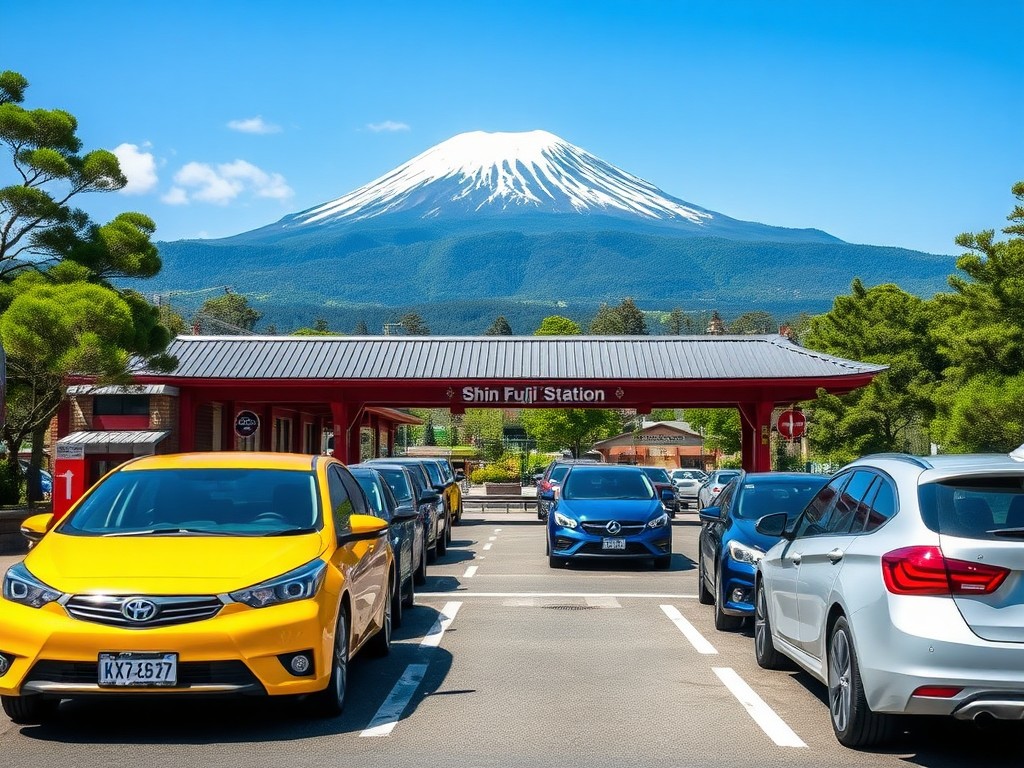
Build a realistic first journey
Fujinomiya Trail 5th Station
The most popular climbing route starts here. Drive up the Fuji Subaru Line as far as permitted, park, and begin your ascent. The road is seasonal and closes outside climbing season.
Fuji Five Lakes
Drive around Lake Kawaguchi, Lake Yamanaka, and the other lakes that ring Mount Fuji's northern base. Each offers different views and attractions, from hot springs to museums and photography spots.
Chureito Pagoda
The iconic five-storey pagoda with Mount Fuji behind it is one of Japan's most photographed locations. The viewpoint requires a short climb from the car park but rewards visitors with unforgettable scenery.
Frequently asked questions
When is the best time to see Mount Fuji clearly?
Early morning and late afternoon typically offer the best visibility. Summer afternoons often bring clouds that hide the summit. Winter has clearer skies but the climbing routes are closed.
Do I need a four-wheel-drive to reach the 5th Station?
Not always. The Fuji Subaru Line is paved and regularly maintained. A 4WD is useful in poor weather or if you want extra confidence on steep sections, but standard cars manage the road during normal conditions.
Can I pick up a car late at Shin-Fuji Station?
This depends on the supplier. Some operators accommodate late Shinkansen arrivals with advance notice. Confirm your arrival time when booking.
How busy is the area during climbing season?
Very busy. The climbing season, public holidays, and weekends see heavy traffic on mountain roads and at trailheads. Allow extra time for traffic and arrive early for parking.
Compare Shinfuji Train Station car hire
Enter dates above, then compare pickup method, vehicle category and complete supplier terms before booking.
Continue planning with All Japan Car Hire Locations, Car Hire Hakata Station | Fukuoka City Rentals from ¥3,800/day, Car Hire Miyanoura Port, Car Hire Chitose Airport | Hokkaido Rentals from ¥5,000/day.