

Car Hire in Baguio Downtown
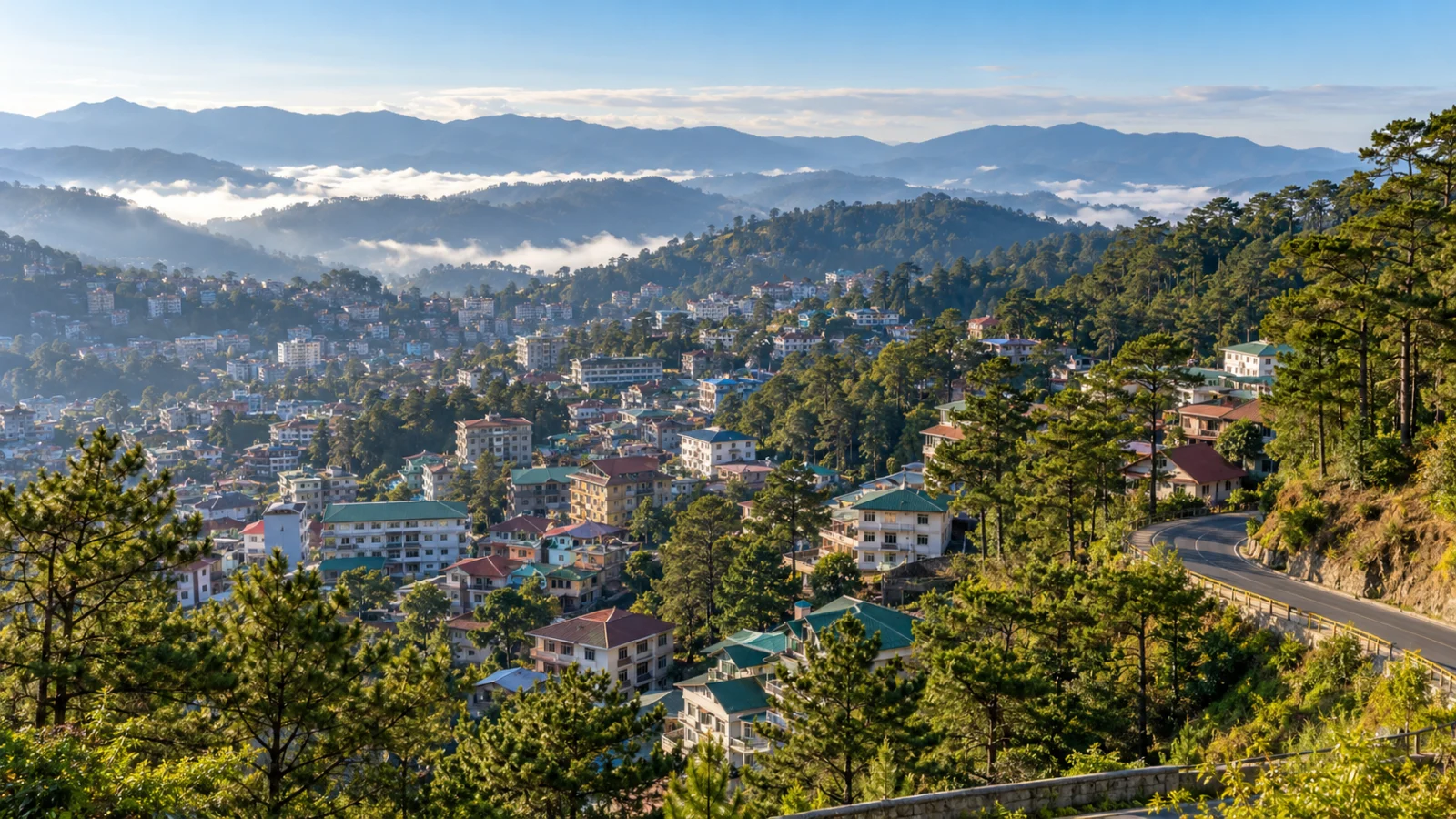
Baguio sits high in the Cordillera Central mountains, a city locals still call the Summer Capital of the Philippines. The downtown area around Session Road is the commercial heart: hotels, restaurants, markets, and Burnham Park are all close together. But the real appeal of Baguio is the surrounding region — strawberry farms in La Trinidad, viewpoints at Mines View Park, and mountain roads that wind through pine forests. A rental car collected in downtown Baguio saves you from negotiating jeepney fares and waiting on infrequent schedules. Just remember that the city is built on steep terrain, so some streets are narrow, one-way, or tight for parking.
Most visitors arrive in Baguio by bus from Manila or by domestic flight into Loakan Airport. If you are already in the city, a downtown pickup is the easiest way to start exploring. Rental offices are concentrated around Magsaysay Avenue and Governor Pack Road, within easy reach of most central hotels. Some suppliers also offer hotel meet-and-greet, which means a driver brings the car to you. If you are flying into Loakan, confirm whether the supplier provides airport collection — the airport is small and not all companies maintain a desk there. In many cases, they will send a representative to meet you at arrivals.
Approx. 1,500 metres above sea level
Plan this first.
Loakan Airport (BAG)
Confirm before booking.
Cordillera road trips, mountain towns, cooler climate
Confirm before booking.
City offices, hotel delivery, limited airport service
Confirm before booking.
Match collection to the actual itinerary
Include transfers, parking days, opening hours and return timing when comparing the two options.
Downtown office pickup
Collecting your car from a downtown office puts you right in the centre of Baguio. Offices near Magsaysay Avenue and Governor Pack Road are close to Session Road and most central hotels. You can load up, grab supplies at the public market, and head straight for the mountain roads. Ask the supplier for the exact address and whether they offer parking assistance — Baguio's steep streets can be tricky if you are unfamiliar with the layout.
Hotel meet-and-greet or Loakan Airport
If you prefer not to travel to a depot, some suppliers will bring the car to your hotel or meet you at Loakan Airport. Hotel delivery is usually straightforward in the city centre. Airport collections may involve a short wait while the driver arrives from town, so have your phone charged and confirm the contact number before you land.
Plan the handover, price and first drive
Baguio was developed as a hill station during the American colonial period, designed as an escape from the tropical heat of the lowlands. The cool climate, pine forests, and mountain setting still draw visitors from across the Philippines.
Today the city is a mix of old and new. Session Road remains the commercial spine, while neighbourhoods like Camp John Hay offer golf, restaurants, and walking trails. The public market is a chaotic, colourful place where you can buy everything from fresh strawberries to hand-woven textiles.
The real magic of Baguio, though, is outside the city limits. The Cordillera region is home to rice terraces, hanging coffins, and indigenous cultures that have survived centuries of change. A rental car turns a city break into a genuine exploration of one of the most culturally rich parts of the Philippines.
Whether you are here for the cool weather, the food, or the mountain roads, having your own wheels lets you experience Baguio on your own terms.
Check the conditions behind the price
The selected supplier’s terms and booking voucher control the rental. Review them before payment and again before collection.
Total payable price
Compare the full payable amount and inclusions rather than an unsupported daily-price promise.
Deposit and payment card
Confirm the deposit, accepted card type and whose name must appear on the card.
Excess and cover
Read the renter's liability, exclusions and what any optional protection actually changes.
Fuel policy
Know the collection level, return requirement and whether a refuelling charge can apply.
Mileage and territory
Check any distance limit and where the vehicle may be driven.
Extras and return
Price additional drivers, seats, after-hours service and one-way return before payment.
Choose for people, bags and roads
A category normally represents a group of similar cars, not a promise of one exact model.
- Compact: convenient for couples and tighter parking.
- Intermediate: more room for bags and longer journeys.
- Family or SUV category: useful only when the required capacity justifies it.
- Transmission: select automatic explicitly if manual is unsuitable.
Practical planning before departure
Driving licence requirements
Bring a valid driving licence and check whether your supplier requires an International Driving Permit. If your licence is not in English, an IDP is strongly recommended for police checkpoints in the Cordillera.
Insurance and deposits
Most rentals include basic cover, but excess amounts can be high. A credit card security deposit is standard. Ask when the hold will be released — it is not always immediate.
Fuel policy
Full-to-full is typical. Petrol stations are available along the main roads into Baguio, but fewer once you head deep into the mountains. Fill up before long trips into Ifugao or Mountain Province.
Mountain driving tips
Baguio roads are steep, narrow, and sometimes foggy. Use low gears on descents to save your brakes. Watch for pedestrians, stray animals, and sudden stops on blind corners.
Local access, road and operating conditions can change. Check current signs, your supplier instructions and the linked source before travelling: Baguio City Government.
Build a realistic first journey
La Trinidad and strawberry farms
The valley town of La Trinidad is just northeast of Baguio, famous for strawberry fields and flower plantations. The road is paved but busy on weekends. Allow extra time for traffic and stop at the viewpoint overlooking the valley.
Mines View Park and Outlook Drive
Head east from downtown for panoramic views over the mountains. The road winds through residential areas and small shops. Parking near the park fills up quickly on weekends, so go early.
Northern Luzon loop
For a longer trip, take the Halsema Highway north toward Sagada and Bontoc. This is one of the highest roads in the Philippines, with dramatic scenery and traditional villages. Not for faint-hearted drivers — the drops are steep and the weather changes fast.
Frequently asked questions
Do I need an International Driving Permit in Baguio?
Many suppliers require an IDP, and local police may ask for one at checkpoints. If your licence is in English, some operators accept it with your passport, but this is not shown for the selected offer. Check before booking.
Is parking difficult in Baguio Downtown?
Yes, especially near Session Road and Burnham Park on weekends. Most large hotels have parking, but street spaces are limited. Ask your hotel about secure overnight parking before you book the car.
Can I drive from Baguio to Sagada in one day?
The road to Sagada is long and winding — the Halsema Highway is scenic but demanding. Plan for a full day of driving with breaks. Some travellers prefer to overnight in Bontoc or Mountain Province.
What type of car is best for Baguio?
A compact or mid-sized car with good brakes is fine for the city. If you are heading into remote mountain areas, a vehicle with decent ground clearance helps on rough or unpaved stretches.
Compare Baguio Downtown car hire
Enter dates above, then compare pickup method, vehicle category and complete supplier terms before booking.
Continue planning with Car Hire Cagayan De Oro Downtown | Pickup info from 15/day, Car Hire Cebu Downtown | Pickup info from 15/day, Car Hire Angeles Downtown | Pickup info from 15/day, Car Hire Clark International Airport | Pickup info from the quoted rate for the selected dates.