

Car Hire in Besançon — Gateway to the Jura Mountains
Besançon gives you access to one of France's most beautiful historic centres and the gateway to the Jura mountains. This capital of Franche-Comté, birthplace of Victor Hugo, wraps around a dramatic meander of the Doubs River. With your rental car, you can explore surrounding wine routes, alpine lakes and the famous Comté cheese region — eastern France at its most rewarding.
Besançon's old town is best explored on foot. The UNESCO-listed Citadelle de Besançon dominates the skyline and offers panoramic views across the river bend. Park at Chamars or Granvelle near the centre. The city has a one-way system that rewards patience and GPS. The A36 motorway connects Besançon east toward Mulhouse and Basel, and west toward Dijon and Lyon. The A351 heads north into the Vosges. Driving in the surrounding Jura hills is a pleasure — winding roads through forests and vineyards with minimal traffic.
Bourgogne-Franche-Comté
Plan this first.
Historic citadel, Jura wines, alpine scenery
Confirm before booking.
A36 + A351 motorways
Confirm before booking.
No commercial airport — nearest is Basel-Mulhouse
Confirm before booking.
Match collection to the actual itinerary
Include transfers, parking days, opening hours and return timing when comparing the two options.
Hiring a Car in Besançon for Cross-Border Travel
Besançon's proximity to Switzerland makes it a practical base for cross-border trips. Many rental companies here are geared towards Swiss travel, but check your contract carefully — some charge extra for border crossings or have restrictions on certain vehicle categories. Geneva is under an hour east.
Picking Up in Besançon City Centre
City centre collection places you inside the river bend, close to restaurants and the historic quarter. Parking garages are available nearby. If you're heading into the Jura mountains or toward the wine routes, you'll be on the road within minutes of collecting your keys.
Plan the handover, price and first drive
Besançon has a habit of surprising people. Travellers heading to the Alps or the Riviera usually pass it by, which is precisely why those who stop find something special. The city sits in a loop of the Doubs River, surrounded by forested hills, with Vauban's massive citadel guarding the high ground. It's one of the most dramatically situated cities in France — and one of the least pretentious.
Victor Hugo was born here in 1802, and you can see why the Romantic imagination took root. The river bends around the old town like a moat, the clock towers chime with theatrical regularity, and the surrounding Jura mountains loom blue-green on the horizon. This is France before tourism got its hands on it — authentic, slightly rough around the edges, and genuinely welcoming.
The Jura wine region is Besançon's great secret. While Burgundy gets the glory (and the prices), the Jura produces wines of real character: Vin Jaune, aged under a layer of yeast for years, developing nutty, sherry-like complexity; Crémant, sparkling and crisp, made with the same method as Champagne but at a fraction of the cost. In Arbois, you can visit the house where Pasteur conducted his early experiments, then drink wine in the same cellars where he pondered fermentation.
With your hire car, the region opens up. The Loue Valley, with its river emerging fully formed from a limestone cliff. The Swiss border villages, where French and German blend in the architecture and the menus. The high pastures where Comté cheese ages in cool mountain caves. Besançon isn't a destination you rush through — it's a place you use as a base for slow, deliberate exploration of one of France's most overlooked corners.
Check the conditions behind the price
The selected supplier’s terms and booking voucher control the rental. Review them before payment and again before collection.
Total payable price
Compare the full payable amount and inclusions rather than an unsupported daily-price promise.
Deposit and payment card
Confirm the deposit, accepted card type and whose name must appear on the card.
Excess and cover
Read the renter's liability, exclusions and what any optional protection actually changes.
Fuel policy
Know the collection level, return requirement and whether a refuelling charge can apply.
Mileage and territory
Check any distance limit and where the vehicle may be driven.
Extras and return
Price additional drivers, seats, after-hours service and one-way return before payment.
Choose for people, bags and roads
A category normally represents a group of similar cars, not a promise of one exact model.
- Compact: convenient for couples and tighter parking.
- Intermediate: more room for bags and longer journeys.
- Family or SUV category: useful only when the required capacity justifies it.
- Transmission: select automatic explicitly if manual is unsuitable.
Practical planning before departure
Winter Driving
The Jura mountains see significant snowfall from November to March. Check whether your rental includes winter or all-season tyres. Snow chains are mandatory on certain passes when conditions require them.
Mountain Roads
Jura routes are winding but well-maintained. They're slower than main roads but far more scenic. Allow extra time and enjoy the forests, vineyards and occasional waterfall.
Parking in Besançon
Underground car parks near the centre are affordable and convenient. Street parking in the old town is limited and often restricted to residents.
Fuel and Range
Petrol stations are plentiful along the A36 and in Besançon itself. In remote Jura villages, fill up before you set out for the day.
Local access, road and operating conditions can change. Check current signs, your supplier instructions and the linked source before travelling: Besançon Tourism.
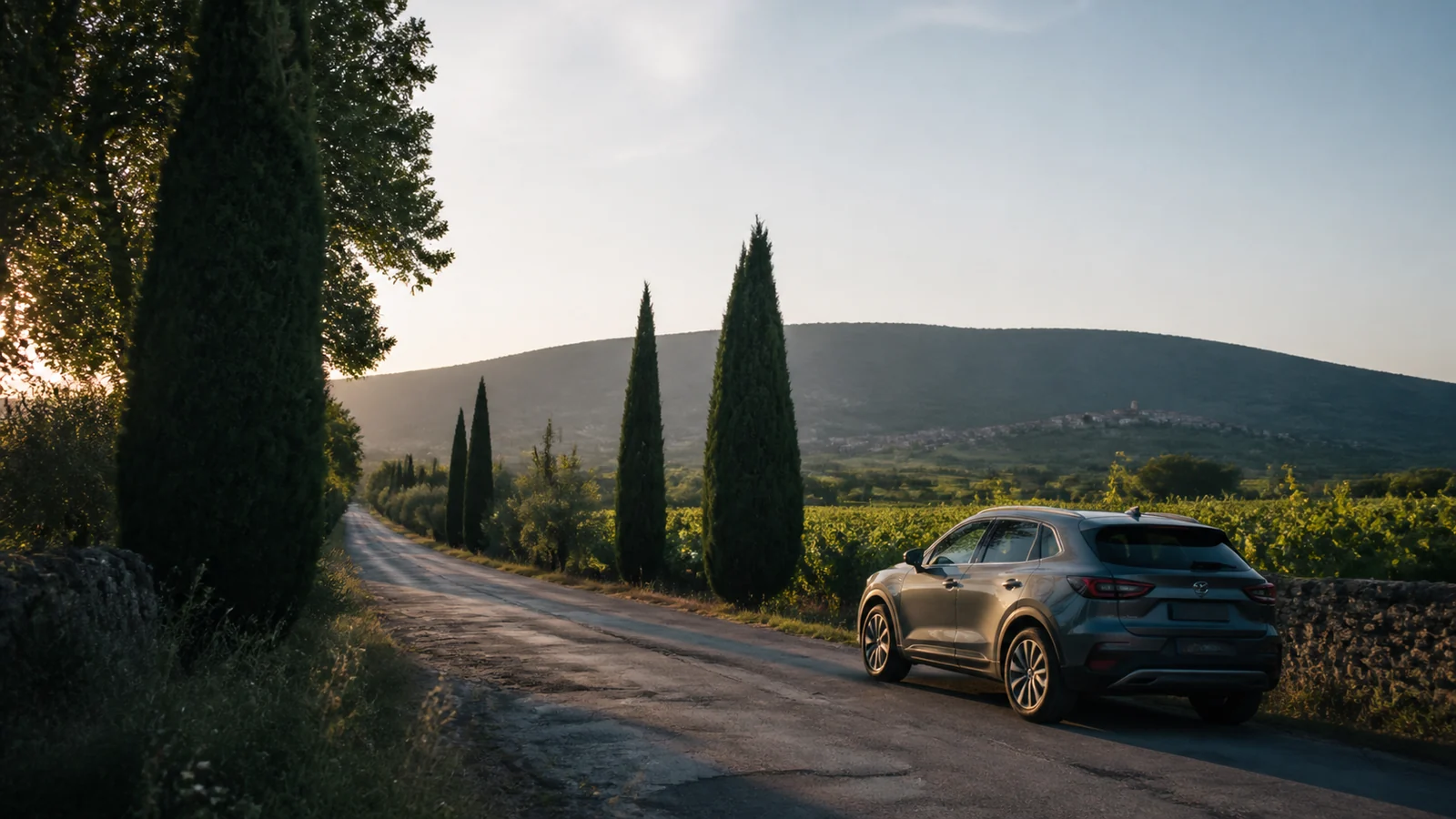
Build a realistic first journey
The Citadelle de Besançon
Vauban's 17th-century masterpiece houses museums, a zoo and offers views across the dramatic river bend. Allow at least half a day. You can drive up or walk — the path takes around twenty minutes uphill.
Arbois and the Jura Wine Route
Forty minutes southwest, this is the wine capital of the Jura. Famous for Vin Jaune and other distinctive wines, the town offers tastings at historic cellars. Drive through Pupillin and Montigny-lès-Arsure for the full Route des Vins du Jura experience.
Sainte-Ursanne
Thirty-five minutes northeast, this tiny medieval town on the Doubs river features a Roman bridge, collegiate church and cliffside hermitage. It's technically just across the Swiss border — one of the region's hidden jewels.
The Loue Valley
Thirty minutes south, the source of the Loue river emerges from a cliff face in a stunning natural display. The valley road winds past caves, waterfalls and traditional villages — perfect for a leisurely half-day drive.
Frequently asked questions
Do I need a car in Besançon?
For exploring the Jura mountains, wine routes and surrounding villages, yes. Besançon itself is walkable, but the region's highlights are spread across rural Franche-Comté.
What type of car is best for the Jura?
A compact or mid-size car handles Jura roads comfortably. In winter, prioritise vehicles with winter tyres. For mountain passes, snow chains may be required depending on conditions.
Can I drive from Besançon to Switzerland?
Yes — Basel and Geneva are both within an hour. Check your rental agreement for cross-border terms, as some suppliers charge additional fees or restrict certain vehicle types.
Is the Jura good for a road trip?
Absolutely. The region offers some of France's most underrated driving — scenic wine routes, alpine lakes, historic villages and minimal traffic compared to more famous regions.
Compare Besancon car hire
Enter dates above, then compare pickup method, vehicle category and complete supplier terms before booking.
Continue planning with Lyon Airport car hire, Paris Orly Airport rentals, All 365 Car Hire locations, Le Mans Car Hire.