

Car Hire in Budapest Downtown — Start Your Hungary Road Trip Here
Downtown Budapest is a practical place to collect a rental car when your trip is moving beyond the capital. The city has excellent trams, metro lines and buses for central sightseeing, so a vehicle is most useful when you are heading into the countryside, Lake Balaton or the wine regions. Picking up in the city centre can suit travellers who have already finished their Budapest stay and want to avoid an unnecessary airport transfer. This page explains what to expect from a downtown branch, how it compares with Budapest Airport collection, and the local driving and parking realities that shape the first hour on the road.
The downtown label can cover offices in different districts, so confirm the exact street address before you book. Some desks sit near busy junctions or tram corridors, while others are closer to quieter side streets. Opening hours and the after-hours key-drop procedure vary by supplier, so save the contact number and written instructions shown on your voucher. If your hotel offers parking, check whether the garage height suits the chosen vehicle class and ask about daily rates before you collect the car. The lead driver must bring a valid licence, the booking confirmation and the payment card accepted by the selected offer. A second form of identification is often requested, especially for premium categories. Always compare the same dates, times and return point across offers rather than chasing a headline rate that may change once extras are added.
Travellers finishing a Budapest city stay before heading into rural Hungary
Plan this first.
Valid national licence; IDP recommended for non-Latin script licences
Confirm before booking.
Credit or debit card in lead driver’s name; prepaid cards usually declined
Confirm before booking.
Hungarian Forint (HUF); cards widely accepted for rental deposits
Confirm before booking.
Match collection to the actual itinerary
Include transfers, parking days, opening hours and return timing when comparing the two options.
When Does a Downtown Rental Car Make Sense?
A car in Budapest Downtown makes sense when your itinerary includes regional destinations that are awkward by public transport. Rural guesthouses, multiple Hungarian bases in one trip, early-morning departures and routes with sightseeing stops along the way are all easier with your own vehicle. A downtown collection also simplifies luggage handovers when you are checking out of a city hotel and driving straight to the next stop. It is usually unnecessary for central Budapest sightseeing alone, where trams and metro lines are faster and parking is scarce.
Downtown Pickup or Budapest Airport?
Compare a central branch with the main Budapest car hire page before you decide. Downtown collection is more convenient if you have already spent time in the city and your next destination is west or south. Budapest Airport desks are closer to the motorways that lead east and north, and they can be simpler after a late-night flight. Save the exact address, branch hours and late-arrival policy from your voucher, because "downtown" does not always mean the same district.
Plan the handover, price and first drive
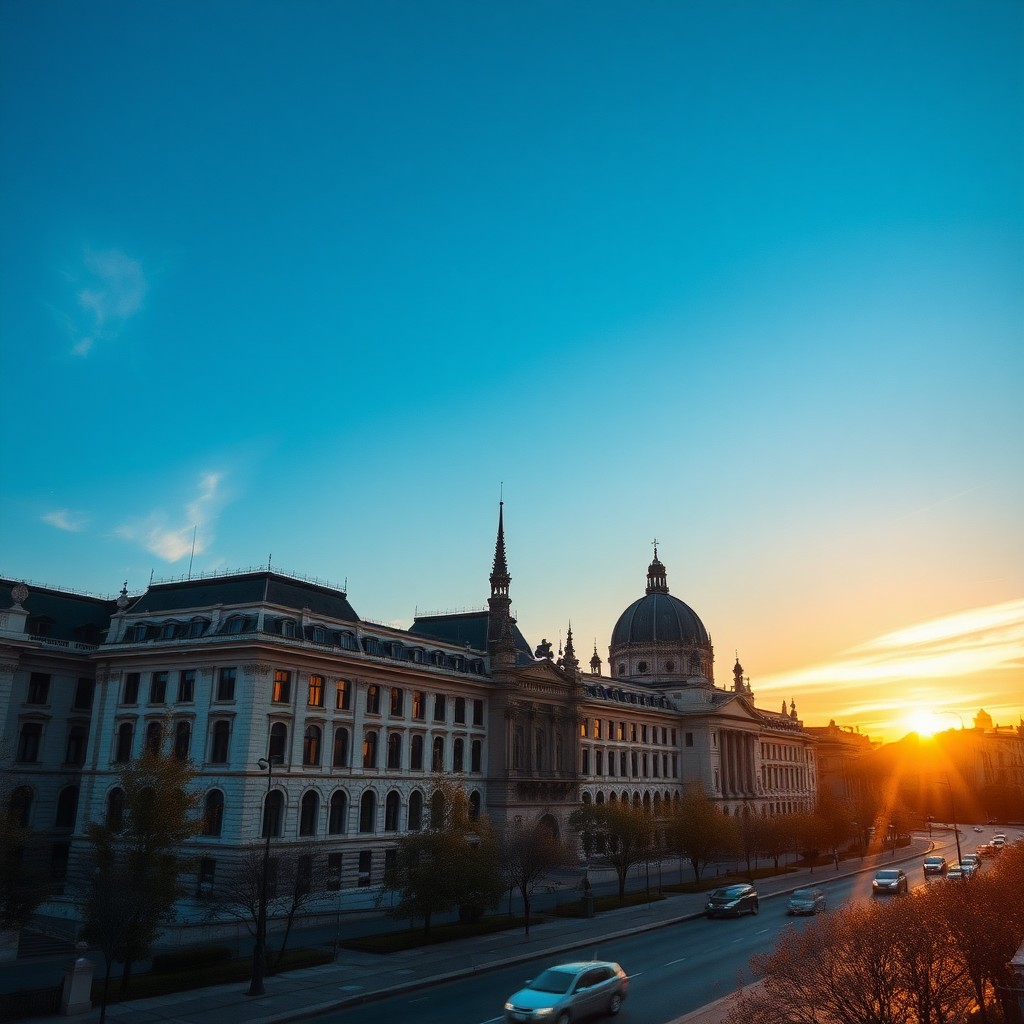
Budapest is a city of two halves — Buda and Pest — separated by the Danube and joined by historic bridges. Most downtown car hire desks sit on the Pest side, close to busy thoroughfares that link the inner city with the ring roads. Collecting here means stepping straight into urban traffic, but it also means you are already on the right side of the river for the motorways that lead to Debrecen, Balaton and the Slovak border.
The first challenge is often parking. Central districts operate controlled zones with metered bays and resident-only streets. If your hotel does not offer parking, you may spend the first morning of your rental searching for a space rather than driving. Factor this into your plan: either collect the car on departure day or choose accommodation with secure garage access.
Once you clear the city, Hungary's motorway network opens up. The M0 ring road circles Budapest, connecting the M1 toward Austria, the M3 toward Ukraine, the M5 toward Serbia and the M7 toward Croatia and Lake Balaton. Tolls are handled electronically via the e-vignette system; your rental supplier may offer a toll-pass service, or you can purchase a vignette online before you travel.
A downtown rental car is not about exploring Budapest itself — it is about everything beyond it. Use the city’s trams and metro for Parliament, the thermal baths and the ruin bars. Then collect your car when the real journey begins, point it toward the countryside, and let the Hungarian road network carry you to wineries, castles and small towns that buses rarely reach.
Check the conditions behind the price
The selected supplier’s terms and booking voucher control the rental. Review them before payment and again before collection.
Total payable price
Compare the full payable amount and inclusions rather than an unsupported daily-price promise.
Deposit and payment card
Confirm the deposit, accepted card type and whose name must appear on the card.
Excess and cover
Read the renter's liability, exclusions and what any optional protection actually changes.
Fuel policy
Know the collection level, return requirement and whether a refuelling charge can apply.
Mileage and territory
Check any distance limit and where the vehicle may be driven.
Extras and return
Price additional drivers, seats, after-hours service and one-way return before payment.
Choose for people, bags and roads
A category normally represents a group of similar cars, not a promise of one exact model.
- Compact: convenient for couples and tighter parking.
- Intermediate: more room for bags and longer journeys.
- Family or SUV category: useful only when the required capacity justifies it.
- Transmission: select automatic explicitly if manual is unsuitable.
Practical planning before departure
Driving and Parking in Downtown Budapest
Traffic keeps to the right. Central Budapest has busy junctions, tram corridors, one-way streets and controlled parking zones. Follow current official signs and local access rules rather than relying on older online parking maps. Ask your accommodation about parking options before collection and confirm the garage entrance, height limit and daily rate. Avoid leaving luggage visible while you are moving between the office and your vehicle.
Documents and Deposits
Bring the driving licence, a second form of ID, the booking confirmation and the accepted payment card. Suppliers may place an authorisation hold on the card as a security deposit; the amount varies by vehicle class. Check the excess and any optional waiver costs before you confirm the offer. Debit-card policies differ by company, so read the payment terms attached to the rate you choose.
Returning the Vehicle in Budapest
If you are returning to the same downtown branch, plan the final journey with extra time for traffic and parking near the office. Fuel policies range from full-to-full to pre-purchase; note the required level on the voucher. Inspect the car with staff, photograph any existing damage, and keep the return paperwork until your deposit is released.
Local access, road and operating conditions can change. Check current signs, your supplier instructions and the linked source before travelling: Hungarian Public Road Non-Profit.
Build a realistic first journey
Debrecen and Eastern Hungary
For an eastbound itinerary, compare the route from your downtown office through the M3 corridor. The motorway passes through the Great Hungarian Plain, with agricultural landscapes and occasional rest stops. Road conditions are generally good, but allow extra time for traffic around Budapest during weekday mornings.
Lake Balaton and the Transdanubia Region
Heading southwest, the M7 and M0 ring roads connect downtown Budapest to Lake Balaton and the rolling hills of Transdanubia. Summer weekends bring heavier traffic toward the lake, so an early start helps. Check current road reports before you leave, as seasonal works can shift the best route.
Eger and the Northern Wine Regions
The M3 and connecting roads lead north to Eger and the Bükk foothills. Wine-region roads can be narrower and slower than motorways, especially after rainfall. A compact or mid-size vehicle is usually enough for these routes unless you are carrying bulky sports equipment.
Frequently asked questions
Is there parking at Budapest downtown car hire offices?
Some branches have limited on-street or nearby paid parking, but space is not shown for the selected offer. Your voucher will list the exact address; check nearby garages or hotel parking if you are arriving by car to collect the rental.
Can I collect a rental car in Budapest Downtown and return it at the airport?
One-way rentals between downtown and airport branches are often available but may carry a location fee. Compare the total cost on the booking page rather than looking at the base rate alone.
What is the minimum age to rent a car in Budapest Downtown?
Most suppliers require the driver to be at least 21, with a young-driver surcharge commonly applied under 25. Age rules and fees vary by company, so check the terms linked to your chosen offer before confirming.
Do I need an International Driving Permit for Hungary?
An IDP is recommended if your licence is not in Latin script or if it lacks a photo. EU and UK licences are usually accepted without one. Carry the original licence and the IDP together if you obtain one.
Are automatic cars available for downtown pickup?
Automatic vehicles are offered by most major suppliers, but availability is lower than for manual-transmission cars. Book early if you need an automatic, especially during summer and holiday periods.
Compare Budapest Downtown car hire
Enter dates above, then compare pickup method, vehicle category and complete supplier terms before booking.
Continue planning with Full list of 365CarHire global branches, Car Hire Budapest Airport | Rent a Car from the quoted rate for the selected dates, Car Hire Budapest | Rent a Car from the quoted rate for the selected dates, Car Hire Debrecen Airport | Rent a Car from the quoted rate for the selected dates.