

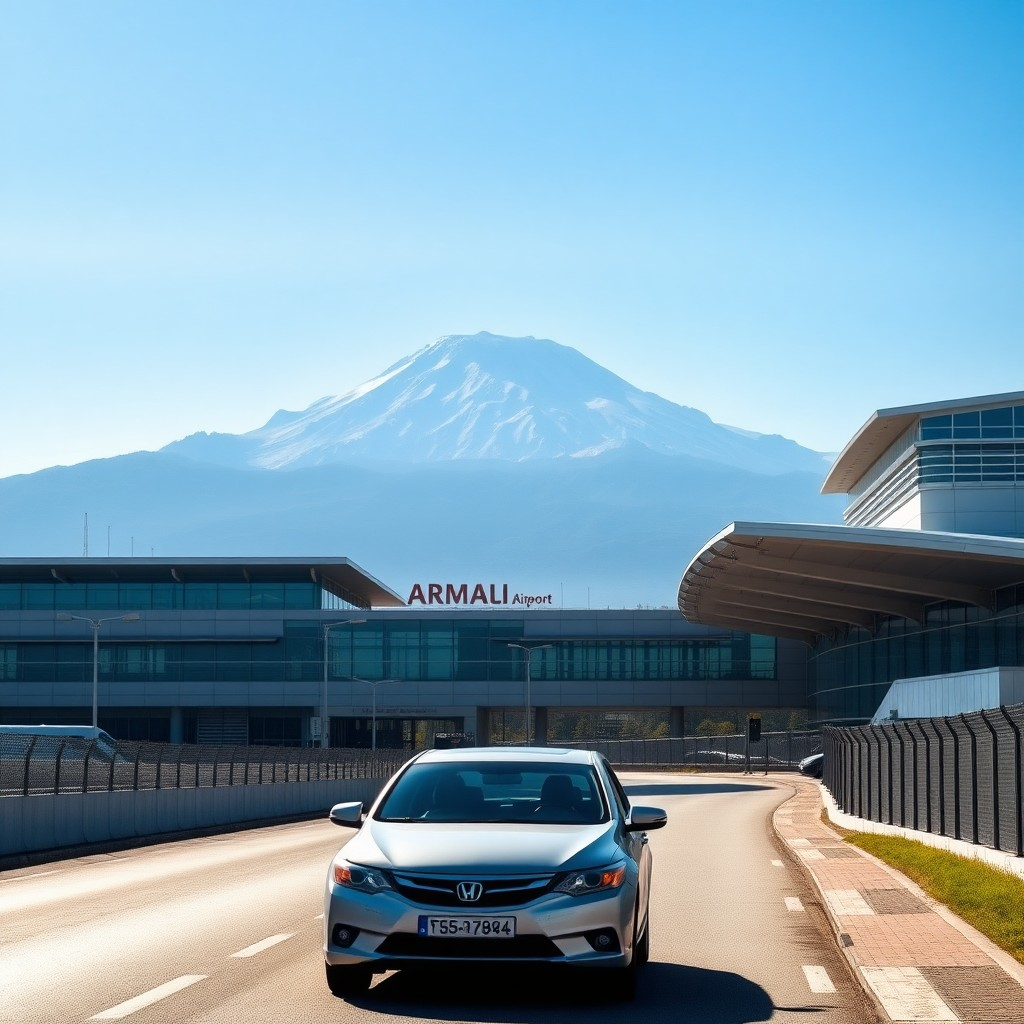
Yerevan Zvartnots International Airport (EVN) is the main gateway into Armenia — a small, landlocked Caucasus country with an extraordinary density of ancient monasteries, dramatic volcanic landscapes, and a culinary scene that will surprise even seasoned travellers. Picking up a hire car at Yerevan Airport is by far the best way to explore a country where public transport is limited outside the capital and distances between major sights are deceptively long on mountain roads.
365 Car Hire compares prices from all major suppliers operating at Yerevan Airport, including international brands and established local operators with deep knowledge of Armenian roads and conditions. With free cancellation on most bookings and no credit card surcharges, it’s straightforward to secure the right car for your Caucasus adventure.
The airport is located approximately 12 kilometres from central Yerevan — about 20 minutes by car under normal conditions. But the reason most visitors hire a car here goes well beyond the city transfer: Armenia’s best destinations are spread across the country’s mountain terrain, from the monasteries of Dilijan to the cave city of Khndzoresk to the highland plateau of Gegharkunik around Lake Sevan. None of these are easy to visit without your own transport.
Why Hire a Car at Yerevan Airport?
Armenia is one of the most underrated destinations in the Caucasus, and for independent travellers, a hire car transforms the experience. The country is roughly the size of Belgium, but its roads — many winding through high mountain passes — mean journey times are longer than you’d expect from the map. With a car, you can visit three or four UNESCO World Heritage monasteries in a single day, drive up to Lake Sevan at 1,900 metres altitude, and spend the night in a guesthouse in Dilijan’s forested highlands.
Yerevan itself is a compact, walkable city — sometimes called the “Pink City” for its distinctive rose-tuff architecture — and exploring it on foot makes sense. But for everything outside the capital, a hire car is not just convenient; it’s essentially essential if you want to see more than one or two sites during your visit.
Top 5 Things to See and Do from Yerevan Airport
- Geghard Monastery & Garni Temple — A UNESCO World Heritage monastery carved into a rocky gorge, and the only surviving pre-Christian Hellenic temple in Armenia. 40 km east of Yerevan, about 50 minutes by car.
- Lake Sevan — Armenia’s great highland lake at 1,900 metres elevation. Sevanavank Monastery sits on a peninsula jutting into the turquoise water. About 70 km east of Yerevan, 1 hour by car.
- Noravank Monastery — A 13th-century monastery wedged into a dramatic red-rock canyon. One of Armenia’s most photographed sites. About 120 km south of Yerevan, 1.5 hours by car.
- Dilijan National Park — A forested highland resort town sometimes called the “Armenian Switzerland,” with monasteries, hiking trails, and artisan workshops. About 100 km north of Yerevan, 1.5 hours by car.
- Khor Virap Monastery — An iconic monastery at the foot of Mount Ararat (in Turkey, visible across the border). On a clear day, the view of snow-capped Ararat is unforgettable. 45 km south of Yerevan, about 40 minutes.
Driving in Armenia — What You Need to Know
Armenia’s road network has improved significantly in recent years, though conditions vary widely. Main routes between major cities are generally well-maintained, but mountain roads and rural tracks can be rough, steep, and narrow — especially outside the main tourist corridor.
- Driving licence: An International Driving Permit is recommended for all non-Armenian drivers. EU, UK, and US licences are widely accepted in practice, but having an IDP avoids potential issues with police checks. Obtain your IDP through an automobile club in your home country before travel.
- Speed limits: 60 km/h in urban areas, 90 km/h on main roads outside towns, 110 km/h on motorways (limited network).
- Road conditions: The M1 (Yerevan to Georgian border), M2 (Yerevan to Iran border), and major tourist routes are in good condition. Mountain roads to Tatev, Dilijan, and the Syunik region can be challenging. An SUV or high-clearance vehicle is recommended for adventurous routes.
- Fuel: Petrol and diesel are widely available in and around Yerevan and along major highways. Carry extra fuel if venturing into remote areas. LPG is also common and cheap in Armenia.
- Tolls: Armenia does not currently operate a motorway toll system. Road use is free.
- Navigation: Google Maps works well in Armenia. Download offline maps before departure for areas with limited mobile signal.
Best Car Types for Armenia
- SUVs / 4x4s: Strongly recommended if you plan to explore beyond the main tourist routes. Mountain roads in the Syunik region, Tavush, and around Khndzoresk can be rough and steep. A high-clearance SUV adds confidence and safety.
- Compact cars: Fine for the Yerevan-Garni-Geghard-Sevan corridor, which is well-paved. If your itinerary sticks to the main tourist trail, a compact car works well and is cheaper to hire.
- Family estate cars: Good middle ground — comfortable for longer drives (Tatev is 3.5 hours from Yerevan) while remaining practical for city driving.
Cross-Border Driving from Armenia
Armenia shares borders with Georgia, Iran, Azerbaijan, and Turkey. Of these, only the Georgian border (at Lars/Kazbegi and Sadakhlo/Bagratashen) is commonly used for tourist road trips. The Georgian Military Highway to Tbilisi is one of the Caucasus’s most dramatic drives.
- Georgia: The Bagratashen/Sadakhlo border is the most practical crossing point. Tbilisi is approximately 280 km north of Yerevan — about 3.5–4 hours by car. Cross-border driving must be confirmed with your rental supplier.
- Iran: Crossing into Iran requires specific documentation and is generally not permitted with standard rental vehicles.
- Azerbaijan and Turkey: These borders are currently closed to travellers.
Armenia makes a fascinating starting point for a broader Caucasus road trip. If you’re interested in combining your Armenian trip with a Balkans journey — perhaps via Istanbul or flying through a hub — our car hire Sarajevo Bosnia guide covers driving in the Western Balkans, and our car hire in the Balkans resource at CroCar Hire maps out popular regional routes.
Frequently Asked Questions — Car Hire Yerevan Airport
Where do I pick up my hire car at Yerevan Zvartnots Airport?
Hire car desks at Yerevan Zvartnots Airport (EVN) are located in the arrivals hall. Several suppliers operate on-airport desks; others may arrange delivery to the terminal or nearby locations. Check your booking confirmation for the exact pickup point.
Do I need an International Driving Permit in Armenia?
An International Driving Permit (IDP) is recommended for all foreign drivers in Armenia. While EU, UK, and US licences are commonly accepted in practice, carrying an IDP alongside your national licence is the safest approach and is required by the letter of Armenian law for non-CIS licence holders.
What type of car should I rent in Armenia?
An SUV or 4×4 is strongly recommended if you plan to visit sites beyond the main tourist corridor. Roads to monasteries like Tatev, Khndzoresk, and many sites in Tavush and Syunik provinces can be steep, narrow, and unpaved in sections. For Yerevan city + Garni/Geghard/Sevan only, a standard compact car is sufficient.
Can I drive a hire car from Armenia into Georgia?
Cross-border driving into Georgia is possible with many suppliers but must be confirmed and approved in advance. The Bagratashen/Sadakhlo border crossing is the most commonly used. Tbilisi is approximately 280 km north of Yerevan, about 4 hours by car via the M1 highway.
Is Armenia safe to drive in?
Armenia is generally safe for driving tourists. The main risks are road quality on rural routes, aggressive driving habits in Yerevan city centre, and livestock on rural roads. Drive defensively, especially after dark on mountain roads. The tourist corridor (Yerevan–Garni–Sevan–Dilijan) is well-travelled and safe.
How long does it take to drive from Yerevan Airport to the city centre?
The airport is 12 km from central Yerevan. Under normal conditions, the drive takes 20–25 minutes. During morning rush hour (8–10am) or evening (5–7pm), allow 30–40 minutes.