
Rent a Car at Windhoek Airport, Namibia: The Self-Drive Safari Guide
Rent a Car at Windhoek Airport, Namibia: The Self-Drive Safari Guide
There’s nothing quite like watching the sun rise over the Etosha salt pan from your own vehicle, windows down, listening to lions roar in the distance. That’s the magic of a Namibia self-drive safari – total freedom, total adventure, on your own terms. And it all starts when you rent a car Windhoek airport Namibia style: with a handshake, a map, and the open road stretching before you.
Namibia was practically made for self-drive adventures. The roads are well-maintained (mostly), the signage is clear, and the landscapes? Absolutely unreal. From the rusty-red dunes of Sossusvlei to the ghostly Skeleton Coast, this country delivers one jaw-dropping moment after another. But here’s the thing – you need the right wheels to make it happen safely and comfortably.
That’s where we come in. At 365carhire.com, we’ve helped thousands of travelers navigate the ins and outs of Namibian road trips. This guide covers everything you need to know about picking up your rental at Windhoek’s Hosea Kutako International Airport, choosing the right vehicle, and hitting the road with confidence.
Picking Up Your Rental Car at Hosea Kutako Airport
Hosea Kutako International Airport (WDH) sits about 45 minutes east of Windhoek’s city center, which makes it the perfect starting point for your Namibian adventure. Most international flights land here, and the major car rental counters are conveniently located in the arrivals hall. You’ll spot them easily after you clear customs and collect your luggage.
The process is straightforward, but a few local quirks are worth knowing. Namibian car rental companies run on what I call “Africa time” – efficient, but rarely rushed. Budget about 30–45 minutes for the pickup process, including vehicle inspection and paperwork. The staff will walk you around the vehicle, noting every scratch and dent on a diagram. Pay attention here – this protects you later.
One thing that catches many travelers off guard: most rentals in Namibia come with a full-to-full fuel policy. The nearest gas station to the airport is about 10 kilometers away, so don’t panic if your tank isn’t completely full when you drive off. Just make sure you understand the return policy clearly before signing anything.
When you book through 365carhire.com, you’ll see all the terms upfront – no hidden fees, no surprises at the counter. We believe in transparent pricing because the only shock you should experience in Namibia is how incredibly beautiful it is.
Pro tip: take photos of the vehicle from every angle before driving off. This takes two minutes and can save you major headaches later. Also, confirm exactly where the spare tire and jack are located – you don’t want to figure that out on the side of the road in the middle of nowhere.
What Car Do You Need in Namibia? (4WD vs 2WD)
This is probably the most important decision you’ll make for your Namibia road trip, so let’s break it down honestly. The short answer? If you’re planning to venture beyond the main highways and Windhoek city limits, get a 4WD or at minimum a high-clearance 2WD vehicle.
Here’s why: Namibia’s most spectacular destinations are connected by gravel roads. Lots of them. And while a standard sedan can technically handle some gravel, it’s not ideal. The gravel roads in Namibia are famously corrugated (those washboard ripples that shake your entire vehicle), and low-clearance cars can struggle with the occasional sandy patch or rocky section.
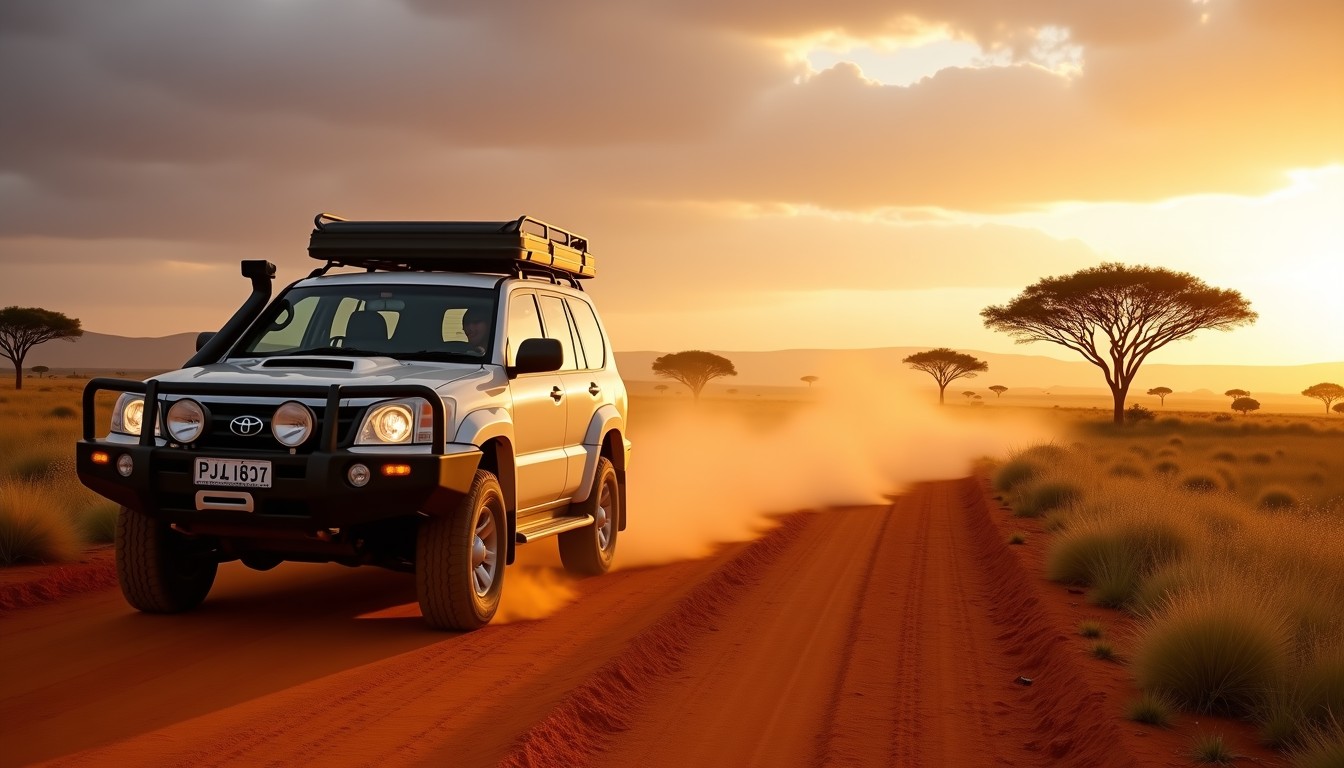
A double-cab pickup or SUV with high clearance gives you peace of mind. You won’t hold your breath crossing a dry riverbed or navigating a sandy stretch. Plus, the elevated driving position is fantastic for wildlife spotting in Etosha National Park – you can see over the grass and spot animals from much further away.
For Windhoek car rental specifically, you’ll find plenty of options. Toyota Hilux and Fortuner models are the workhorses of Namibian tourism, and for good reason. They’re reliable, parts are readily available throughout the country, and they handle the rugged terrain with confidence. If you’re planning to visit remote areas like Damaraland or the Kaokoveld, a proper 4WD with two spare tires is non-negotiable.
That said, if your itinerary is limited to Windhoek, Swakopmund, and the main paved roads, a regular sedan can work. The B1 and B2 highways are well-maintained tarmac, perfectly suitable for any vehicle. But here’s my honest advice: Namibia has a way of seducing you into taking detours. Plan for adventure.
Another consideration: rooftop tents are a popular option with 4WD rentals in Namibia. If you’re planning to camp, this is a fantastic way to travel. The tents are comfortable, setup takes about 10 minutes, and waking up in the African bush is an experience like no other.
The Ultimate Namibia Self-Drive Routes from Windhoek
Windhoek sits right in the center of Namibia, making it the perfect hub for exploring the country. Most self-drive routes form a loop, heading north or south before curving back to the capital. Here are the classic itineraries to consider.
The Northern Loop (7–10 days): Head north from Windhoek toward Etosha National Park, one of Africa’s greatest wildlife destinations. The drive takes about 4–5 hours on good roads. Spend at least three days exploring Etosha’s waterholes – Okaukuejo, Halali, and Namutoni are the main rest camps. From Etosha, swing west toward Damaraland, where you’ll find ancient rock art at Twyfelfontein, desert-adapted elephants, and the hauntingly beautiful landscapes of the Brandberg Massif.
The Southern Circuit (7–14 days): This route takes you to Namibia’s most iconic landscapes. Drive south from Windhoek toward the dramatic Fish River Canyon – Africa’s largest canyon and second only to the Grand Canyon worldwide. Continue north to Sossusvlei, where you’ll climb some of the highest dunes in the world and photograph the surreal dead camel thorn trees of Deadvlei.
The Coastal Route (5–7 days): Head west from Windhoek toward Swakopmund, Namibia’s adventure capital. This coastal town feels like a slice of Germany transplanted to Africa – colonial architecture, excellent bakeries, and a laid-back vibe. From Swakopmund, take day trips to Walvis Bay for flamingo watching, explore the Moon Landscape, or venture north to the Cape Cross seal colony.
The Grand Namibia Tour (14–21 days): Combine all the above for the ultimate Namibian road trip. You’ll need at least two weeks, preferably three, and absolutely a 4WD vehicle.
Practical Tips: Driving in Namibia
Namibia is one of Africa’s safest and most accessible countries for self-drive tourism, but a few local driving customs and road conditions deserve mention. Speed limits are strictly enforced, especially on gravel roads. The limit is typically 120 km/h on tar and 60–80 km/h on gravel, but you shouldn’t drive that fast on gravel anyway. The corrugations will rattle your teeth loose, and stopping distance on loose surfaces is much longer than on tarmac.
Speaking of gravel roads, the golden rule is: slow down for oncoming traffic. When two vehicles pass on a gravel road, stones fly. It’s considered polite (and smart) to slow to a crawl when passing another vehicle, moving as far left as safely possible. Most locals will do the same.
Wildlife on roads is a real concern, particularly in the early morning and evening. Warthogs, kudu, and even domestic animals can wander onto the road unexpectedly. Drive defensively, especially around dawn and dusk.
Gas stations are reasonably plentiful along main routes, but the distances between them can be significant. The rule of thumb: fill up whenever you see a station, even if your tank is half full. In more remote areas like Damaraland or the Namib, stations can be 200+ kilometers apart.
One final tip: download offline maps before you leave home. Google Maps works well in urban areas and on main highways, but cell coverage is spotty in remote regions. Maps.me and similar apps with offline functionality are invaluable backup tools.
Car Hire Prices in Windhoek: What to Budget
Let’s talk money, because budgeting accurately makes for a smoother trip. Car hire Windhoek Namibia prices vary significantly based on vehicle type, season, and rental duration. Here’s a realistic breakdown.
A standard sedan or compact car typically runs from about N$450–700 per day (roughly $25–40 USD). A 2WD pickup or SUV with high clearance ranges from N$700–1,200 per day ($40–70 USD). For a proper 4WD like a Toyota Hilux or Land Cruiser, expect to pay N$1,200–2,500 per day ($70–140 USD), with fully equipped camping vehicles at the higher end.
These prices usually include basic insurance, but excess (deductible) amounts can be high – often N$15,000–30,000 ($850–1,700 USD). Consider whether additional insurance coverage makes sense for your trip. At 365carhire.com, we clearly display what’s included so you can make informed decisions.
Don’t forget to budget for fuel. A typical 10-day loop covering Etosha, Damaraland, and Sossusvlei might require N$3,000–5,000 in fuel ($170–280 USD) for a 4WD vehicle.
And here’s some peace of mind: when you book through 365carhire.com, you get free cancellation on most bookings. Plans change, and we understand that flexibility matters. Check the specific terms for your rental, but in most cases, you can adjust or cancel without penalty if your plans evolve.
Frequently Asked Questions
Is it safe to self-drive in Namibia?
Absolutely – Namibia is one of the safest countries in Africa for self-drive tourism. The roads are well-maintained, crime against tourists is relatively low, and Namibians are genuinely friendly and helpful. The main risks are road conditions (gravel roads require careful driving) and wildlife on roads, not security issues. Take normal precautions: lock your vehicle, don’t leave valuables visible, and avoid driving at night when animals are active and visibility is poor.
Do I need a 4WD to visit Etosha National Park?
Technically, no – Etosha’s main roads are all accessible by 2WD vehicle. The park’s network of gravel roads is well-maintained, and you’ll see plenty of sedans and minivans inside the park. However, a high-clearance vehicle or 4WD is still recommended for the best experience. You’ll have better visibility for wildlife spotting, more comfort on corrugated roads, and the flexibility to visit in rainy season when some roads get muddy.
What documents do I need to rent a car in Namibia?
You’ll need a valid driver’s license from your home country (an International Driving Permit is recommended but not strictly required for most visitors), a valid passport, and a credit card for the deposit. The minimum age varies by rental company but is typically 21–23 years, with some companies requiring drivers to be 25+ for certain vehicle categories. Your passport should be valid for at least six months beyond your planned departure from Namibia.
Can I take a rental car across the border from Namibia?
Yes, but it requires advance planning. Many car rental companies in Namibia allow cross-border travel to South Africa, Botswana, Zimbabwe, and sometimes other neighboring countries – but you must arrange this in advance. There’s usually an additional fee, and you’ll need a letter of authority from the rental company. Always confirm cross-border policies before booking if you’re planning to visit multiple countries.
What are the roads like in Namibia?
Namibia has excellent infrastructure by African standards. The main highways (B roads) are paved and generally in good condition. Secondary roads (C and D roads) are typically well-maintained gravel, which means dusty and corrugated but passable. The biggest adjustment for most drivers is gravel road driving – it requires lower speeds, longer stopping distances, and careful handling on curves. Overall, driving in Namibia is straightforward and rewarding, with stunning scenery around every corner.
Ready to start planning your Namibian self-drive adventure? The open road is calling, and there’s no better way to experience this incredible country than from behind the wheel. Book your Windhoek car rental through 365carhire.com and discover why Namibia captures the hearts of travelers from around the world.