

Car Hire in Naxos — The Cyclades Island That Rewards Drivers Most
Naxos is the largest island in the Cyclades and the only one where a car is not just useful but transformative. While Mykonos and Santorini compress their visitors into a few famous viewpoints, Naxos spreads its treasures across a landscape of marble villages, mountain valleys, ancient temples and beaches that range from organised resorts to empty coves. The island's interior is where the real Naxos lives — in villages like Apiranthos and Filoti where marble-paved streets wind between Venetian towers and family tavernas. The coast offers long sandy beaches on the west, wilder shores on the south, and hidden swimming spots that only locals know. A rental car lets you move between these worlds daily, from mountain breakfast to beach sunset, without the constraints of bus schedules or taxi availability. Most visitors collect a car at Naxos Port or the small airport near Agios Prokopios, then spend a week exploring roads that improve with every kilometre inland.
Naxos has two main collection points. Naxos Port in Naxos Town is where most ferry arrivals collect their vehicles — the rental desks are near the ferry terminal, with cars parked in nearby lots. Your voucher will confirm the exact meeting point. Naxos Island National Airport has a smaller selection, suited to visitors flying in from Athens. The island's road network is surprisingly good for a Cycladic island. The main road runs from Naxos Town south through the agricultural plain to the villages and beaches of the south-west. Mountain roads branch east to Apiranthos, Filoti and the villages of the Tragea valley — these are narrower and windier but fully paved and passable. The north of the island is less developed, with rougher tracks leading to remote beaches. Fuel stations exist in Naxos Town and along the main south road, but fill up before exploring the north or east.
Largest in the Cyclades
Plan this first.
Naxos Port / Naxos Airport
Confirm before booking.
Marble villages & mountain valleys
Confirm before booking.
Beach and village combining
Confirm before booking.
Match collection to the actual itinerary
Include transfers, parking days, opening hours and return timing when comparing the two options.
Port Collection in Naxos Town
Most visitors arrive by ferry from Piraeus, Rafina or other Cycladic islands, and collect their car at Naxos Port. The rental area is a short walk from the ferry terminal, though your voucher will specify the exact desk or shuttle arrangement. Naxos Town itself is worth exploring before you drive — the Portara gateway, the old castle quarter, and the waterfront promenade are all within walking distance. Once you have the car, the island's west coast beaches are minutes away, and the mountain villages are an easy drive inland.
Island Driving and Beach-Hopping
Naxos is made for slow driving and frequent stops. The west coast has a string of sandy beaches from Agios Prokopios to Plaka, each with its own character — some organised with sunbeds and beach bars, others quiet and informal. The mountain villages of the interior offer shade, traditional architecture and local food. The east and north coasts are less visited, with rougher roads but emptier beaches. Wherever you go, the island's scale is manageable — no drive is longer than an hour, which means you can base yourself in one place and see it all.
Plan the handover, price and first drive
Naxos is the island that makes other Cycladic islands feel small. It is large enough to have real mountains, real villages, and real agriculture — not just tourism. The interior is a patchwork of olive groves, vineyards and potato fields that supply much of Greece. The villages are marble-built and proud, with local customs that predate the package-holiday era. The beaches are long, sandy, and varied enough to suit every mood.
What makes Naxos special is that it works at every speed. You can spend a week doing nothing but beach-hopping along the west coast, moving from organised strips to quiet coves as the mood takes you. Or you can dive into the interior, visiting a different mountain village each day, walking marble streets, eating in family tavernas, and understanding why Greeks love this island.
A rental car is what makes this flexibility possible. The island's road network is good, the distances are short, and the variety is extraordinary. One morning you can be above the clouds in Apiranthos, the afternoon swimming in turquoise water at Plaka, and the evening watching the sunset through the Portara with a glass of local kitron in your hand. That is the Naxos that only drivers discover.
Check the conditions behind the price
The selected supplier’s terms and booking voucher control the rental. Review them before payment and again before collection.
Total payable price
Compare the full payable amount and inclusions rather than an unsupported daily-price promise.
Deposit and payment card
Confirm the deposit, accepted card type and whose name must appear on the card.
Excess and cover
Read the renter's liability, exclusions and what any optional protection actually changes.
Fuel policy
Know the collection level, return requirement and whether a refuelling charge can apply.
Mileage and territory
Check any distance limit and where the vehicle may be driven.
Extras and return
Price additional drivers, seats, after-hours service and one-way return before payment.
Choose for people, bags and roads
A category normally represents a group of similar cars, not a promise of one exact model.
- Compact: convenient for couples and tighter parking.
- Intermediate: more room for bags and longer journeys.
- Family or SUV category: useful only when the required capacity justifies it.
- Transmission: select automatic explicitly if manual is unsuitable.
Practical planning before departure
Road Conditions and Driving Tips
Greek islands drive on the right. Seat belts are mandatory. Naxos main roads are good, but mountain routes to villages like Apiranthos are narrow and winding. Overtaking is difficult. Watch for goats and tractors. Some northern and eastern beaches require driving on unpaved tracks — a standard car is fine for most, but take it slowly. Fuel stations are in Naxos Town, Agios Prokopios area and along the main south road.
Parking Across the Island
Naxos Town has limited parking near the port and castle — arrive early or use the peripheral lots and walk in. West coast beaches have informal parking along the road or in designated areas. Mountain villages have small central spaces that fill by midday in summer. Remote beaches often require parking on rough ground near the track entrance. Never block access roads.
Documents and Requirements
Bring your original driving licence, passport and credit card. EU licences are accepted. Non-EU drivers should check requirements or carry an International Driving Permit. Minimum age is typically 21. Some suppliers restrict vehicle categories for drivers under 25.
Local access, road and operating conditions can change. Check current signs, your supplier instructions and the linked source before travelling: Visit Greece.
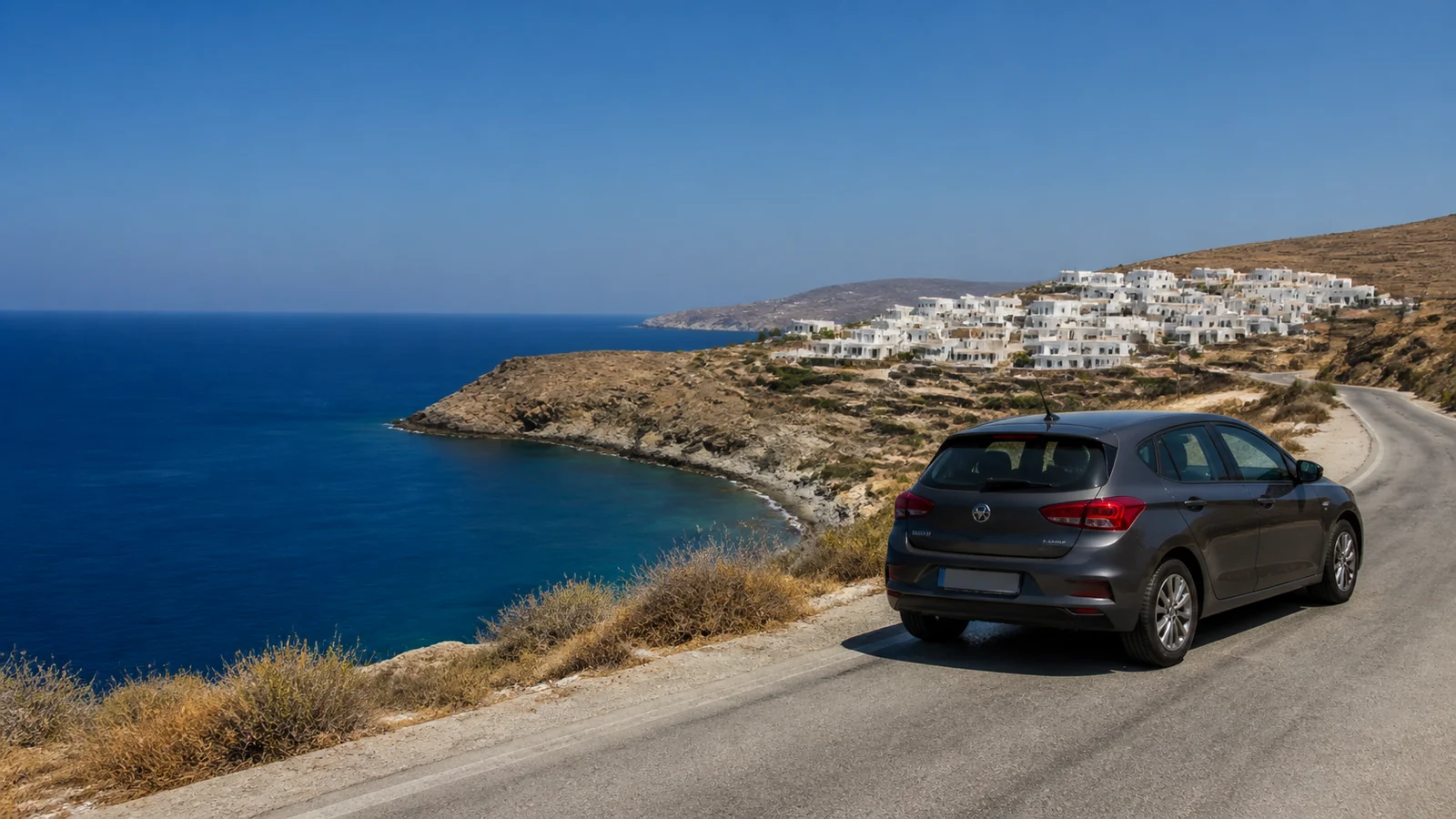
Build a realistic first journey
Naxos Town to the Mountain Villages
Drive inland from Naxos Town through the Tragea valley to villages like Halki, Filoti and Apiranthos. Halki has a kits distillery and artisan shops. Filoti is the largest mountain village, spread across a hillside beneath Mount Zas. Apiranthos is the most striking — marble streets, Venetian towers, and a local museum. The road is winding but scenic, with views across the island to the sea.
The West Coast Beaches
Follow the coast road south from Naxos Town through Agios Georgios, Agios Prokopios, Agia Anna, Plaka and on to Mikri Vigla. Each beach has its own atmosphere — family-friendly, windsurf-oriented, or quiet and undeveloped. The road is flat and easy, with plenty of places to stop. This is the classic Naxos beach circuit and the reason many visitors never leave the west coast.
Remote Beaches and the South
Continue past Mikri Vigla to Pyrgaki and the quieter southern beaches. The landscape becomes wilder, with fewer buildings and more open space. The road is paved as far as most beaches, though some require a short track drive. These spots are emptier than the west coast but equally beautiful, especially for those who value solitude over convenience.
Frequently asked questions
Is a car necessary on Naxos?
A car is strongly recommended. While Naxos Town and the nearest beaches are walkable, the island's best villages, remote beaches and interior landscapes require a vehicle. Buses exist but are infrequent and do not reach many of the quieter spots.
What type of car is best for Naxos?
A compact car is ideal for the island's narrow village streets and winding mountain roads. A small SUV or raised vehicle is useful if you plan to explore northern beaches on rougher tracks, but not essential for the main sights.
Can I pick up a car at Naxos Airport?
Yes, though the selection is smaller than at the port. Most visitors arriving by ferry collect at Naxos Port. Airport pickup suits those flying in from Athens. Check your voucher for the exact collection procedure.
Are the roads safe for visitors?
Main roads are safe and well-maintained. Mountain roads require extra caution due to narrowness and bends. Drive slowly in villages, watch for pedestrians and animals, and allow faster local vehicles to pass when safe.
Compare Naxos car hire
Enter dates above, then compare pickup method, vehicle category and complete supplier terms before booking.
Continue planning with Greece car hire overview, All car hire locations, Car Hire Neapoli Voion, Skopelos Car Hire.