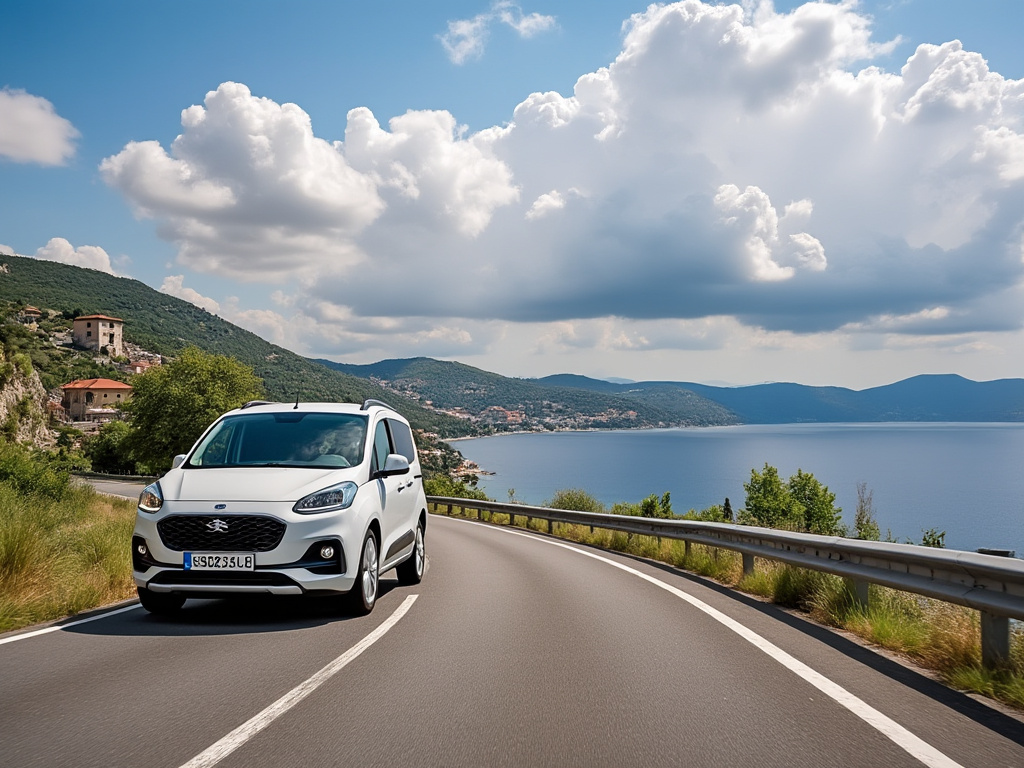

Renting a car is the smartest way to experience Croatia properly. The Adriatic coast runs over 1,700 kilometres, national parks are spread across the interior, and the best bits — Plitvice Lakes, the Istrian hill towns, the islands — are simply unreachable on public transport timetables. At 365 Car Hire, we compare rates from Hertz, Europcar, Sixt, and local suppliers so you get affordable car hire in Croatia with no hidden fees, free cancellation, and all-inclusive pricing that covers CDW, theft protection, and VAT from the moment you book.
Why Rent a Car in Croatia?
Croatia splits roughly into three touring territories: the Dalmatian coast (Dubrovnik, Split, Makarska, the islands), Istria and Kvarner (Pula, Rijeka, Rovinj, the islands of Krk and Cres), and continental Croatia(Zagreb, the Plitvice Lakes, the Danube border region). Buses connect the major cities reasonably well, but they run to bus schedules, not yours. A hire car lets you stop at the konoba on the roadside, pull over to photograph the view from a viewpoint the bus never slows for, and get from Dubrovnik to Split along the coastal road in your own time rather than someone else’s.
- No public transport headaches — no timetables, no connections, no carrying luggage onto ferries you’re not sure will run
- Island hopping logistics solved — ferry networks are efficient; having a car on your island of choice gives you total freedom once you’re there
- Plitvice and Krka accessible — both national parks are in the interior; buses fill by 9am and often don’t have space for luggage
- Drive the Istrian wine route — inland Istria has some of Europe’s most underrated wine country; you need a car to do it properly
- Cheaper than you think — daily rates start from €8, and fuel is notably cheaper than in Germany or Scandinavia
What Your Croatia Car Hire Rate Includes
Every rate shown on 365carhire.com for Croatian car hire is all-inclusive. What you see is what you pay, with no surprises at the counter:
| Included in Your Rate | Details |
|---|---|
| Collision Damage Waiver (CDW) | Reduces your liability to zero in most cases |
| Theft Protection | Cover against vehicle theft |
| Third-Party Liability | Minimum legal coverage in Croatia |
| VAT & Local Taxes | 25% Croatian VAT included |
| Breakdown Assistance | 24/7 road assistance across Croatia |
| Unlimited Mileage | Drive as far as you like with no per-km charges |
| Free Cancellation | Change of plan? Cancel up to 24 hours before pick-up with no fee |
Driving in Croatia — What You Need to Know
Croatia drives on the right-hand side, same as the rest of continental Europe. Overtaking is only permitted from the left. Here are the practical things that catch first-time visitors:
- Toll roads (naplatne ceste): Croatia’s motorway network (A1, A2, A3, A4, A6, A7, A10, A11) uses a ticket-and-pay system at toll plazas. The A1 Zagreb–Dubrovnik is the main artery and costs roughly 50–70 HRK (€6.50–9) for the full length depending on your vehicle class. Buy a ticket on entry and pay on exit — cash and cards accepted.
- Vignette required for the A1/A2: If you’re using the A1 motorway south of Zagreb toward Dalmatia, or the A2 toward Slovenia, you need a vignette. These are purchased at petrol stations before you join the motorway — do not skip this or you’ll face an on-the-spot fine of several hundred kuna.
- Speed limits: 130 km/h on motorways, 110 km/h on state roads (državna cesta), 90 km/h on regional roads (županijska cesta), 50 km/h in urban areas. Drink-drive limit is 0.05% BAC.
- Mobile phones: Using a handheld mobile while driving carries an on-the-spot fine of around 500 HRK (€66). Use Bluetooth or hands-free only.
- Seat belts: Compulsory for all passengers, front and rear. Fines apply for non-compliance.
- Child passengers: Children under 12 must travel in the back seat. Children under 135cm need an appropriate child seat — confirm availability with your supplier when booking.
- Winter driving: If you’re visiting between November and March, particularly in mountain areas (Plitvice, Rijeka’s hinterland, the A1 through Gorski Kotar), carry snow chains. Some mountain roads are closed or require winter tyres — check DHMZ (Croatian Meteorological Service) before setting out.
- Road quality: Main routes are generally excellent. Some rural and island roads are narrow, unmarked, and shared with agricultural vehicles — take it slow on unfamiliar roads.
Popular Croatia Car Hire Destinations
Most visitors pick up their car hire in Croatia at one of the major airports and drive to their first destination. Here’s what to know for the most popular locations:
Dubrovnik — Car Hire from Dubrovnik Airport (DBV)
Dubrovnik’s airport (Čilipi) sits about 20km south of the Old Town. The drive into Dubrovnik takes 25–40 minutes depending on traffic — approach via the main D8 coastal road or the newer A1 connection for the western approach. If you’re staying in the Old Town, note that no cars are allowed inside the city walls; your accommodation will direct you to nearby public parking (Gravsjak or Ilijina Glavica are the closest, around 40–60 HRK/hour, or daily passes from 200 HRK). If you’re spending a week exploring southern Dalmatia, a car is essential — the Pelješac Peninsula wine route, the island of Korčula, and Mostar in Bosnia are all within reach as day trips.
Split — Car Hire from Split Airport (SPU)
Split Airport (Resnik) is on the coast east of the city, about 25km away. The drive to central Split takes 30–40 minutes via the D409 and then the main coastal road. Split itself has restricted traffic zones — the Riva waterfront and Diocletian’s Palace area are pedestrian-only most of the day. Leave your car at your accommodation or a public car park (the most convenient is under the Bačvice beach, or on the eastern side near the ferry terminal) and walk into the old city. From Split, your car opens up the entire Dalmatian coast: Makarska Riviera to the south, Trogir and the Šibenik archipelago to the north, and the A1 motorway making day trips to Dubrovnik (about 2.5 hours) or Zagreb (about 4.5 hours) entirely doable.
Zagreb — Car Hire from Zagreb Airport (ZAG)
Zagreb Airport (Pleso) is 17km southeast of the city centre. The drive in takes roughly 25–35 minutes via the D30. Zagreb is genuinely walkable in the centre — you won’t need a car for the city itself — but it’s the perfect pick-up point if you’re flying in and then heading straight to Plitvice Lakes (about 2 hours south on the A1), the Istrian peninsula (about 2.5 hours via A4/A6), or the Slovenian border. One-way rentals into Croatia from Ljubljana or Budapest are popular options if you’re combining Croatia with a broader Balkans trip.
Pula — Car Hire from Pula Airport (PUY)
Pula Airport is on the Istrian peninsula, about 6km from Pula city centre. Istria is Croatia’s premier driving destination — the peninsula’s western coast is flat and easy, the eastern coast (the so-called “Zlatni Rat side”) is hillier and more dramatic. Pula itself is worth a half-day for the Roman amphitheatre and the surrounding Roman ruins. From Pula, you can drive north to the charming hill towns of Motovun and Grožnjan (expect winding roads through truffle forest), east along the coast to Rovinj (45 minutes, spectacular coastal approach), or take the ferry from Pula to the island of Cres (45 minutes) or Lošinj.
Rijeka — Car Hire from Rijeka Airport (RJK)
Rijeka Airport (Omišalj) sits on the island of Krk, connected to the mainland by a bridge — making it one of the most accessible airport car hire pick-up points in Croatia. From here, you can explore the Kvarner islands (Krk itself is connected by bridge so no ferry needed), drive the scenic Opatija Riviera, or head inland to the mountain resort of Platak. Rijeka itself is a working port city with a surprisingly interesting old town and the Trsat castle ruins above the harbour — it’s a good base if you want to mix cultural exploration with coastal beauty.
Croatia Car Hire — Practical Answers
What’s the minimum age to rent a car in Croatia?
The minimum age is 18 years old for most suppliers, though a young driver surcharge almost always applies for drivers under 25 (typically €10–15/day). Some suppliers set a maximum age limit of 70–75 years. Check your specific supplier’s policy when you book.
Can I take my rental car from Croatia to Montenegro or Bosnia?
Yes — but you need advance authorisation from your rental supplier. Cross-border fees apply (typically €20–40 for Montenegro, similar for Bosnia). Slovenia and Hungary are usually covered under standard Central European one-way agreements, but always confirm with your supplier before crossing any border. Unauthorized cross-border travel voids your insurance.
Is it better to pick up my car at a Croatian airport or in the city centre?
Airport pick-up is generally the better value and more convenient for most travellers. City-centre offices can be more expensive and have limited opening hours, particularly outside peak season. If you’re landing in Dubrovnik or Split late at night, confirm your office is open and whether after-hours handover is available — some airport suppliers offer 24-hour desks, others don’t.
Do I need an International Driving Permit in Croatia?
EU driving licences are accepted directly. If you’re coming from outside the EU, an International Driving Permit (IDP) alongside your national licence is recommended and officially recognised under the 1949 Geneva Convention. It’s inexpensive to get from your national automobile association before you travel.
What fuel do Croatian petrol stations use?
Diesel (dizel) and 95-octane petrol (benzin) are universally available. Euro diesel is standard. Petrol stations are plentiful along motorways and in cities, but can be sparse on islands and some rural roads — always top up before heading off on a long rural drive. Many smaller stations close on Sunday.
What’s the parking situation in Croatian cities?
Zagreb, Split, and Dubrovnik all have paid parking zones (zoning system, usually Zones 1–3 with decreasing cost and increasing distance from the centre). Use the Flowy or E-parking apps to pay by mobile — this is the most convenient method and avoids having to find a parking meter. Private car parks are common near the main tourist areas and cost 30–80 HRK/hour in peak season.
Plan Your Croatia Road Trip
With your Croatia car hire sorted through 365 Car Hire, you’re free to explore at your own pace. A week in Croatia typically combines two or three bases — one on the coast, one inland for the national parks — and a well-planned route can cover an enormous amount of ground. Whether you’re flying into Dubrovnik and heading north along the coast, or arriving in Zagreb and driving down through Istria before cutting south, having your own car transforms what you can see and do.
Browse and compare car hire options for Croatia below. All rates include CDW, theft protection, unlimited mileage, and free cancellation — no hidden fees, no surprises at the counter.
Related Destinations
Looking for car hire nearby? Also explore car hire in Dubrovnik, car hire in Split, car hire in Zagreb, car hire in Zadar, and car hire in Pula.