

See Australia Properly — City to Coast to Outback
Australia is one of the best road-trip countries on earth. Even if you are only visiting one city, a car often unlocks better beaches, wine regions, national parks, and regional towns than public transport ever will. For longer holidays, it becomes the obvious way to connect airports, coastlines, and wide-open landscapes at your own pace.
Booking early through 365 Car Hire makes it easier to compare trusted suppliers, understand the full cost before checkout, and choose a vehicle that actually fits the trip you have planned. For travellers who value flexibility, knowing the full terms upfront is the difference between a smooth pickup and an unwanted surprise at the counter.
Compare Sydney city car hire for an urban start, or use Melbourne car hire when the route begins in Victoria. Airport pages such as Adelaide Airport car hire and Darwin Airport car hire help separate terminal collection from city pickup; the selected voucher controls the exact handover and return process.
Australia
Plan this first.
City breaks, coastlines and long road trips
Confirm before booking.
Airport, city and regional collection
Confirm before booking.
Road, vehicle and territory terms
Confirm before booking.
Match collection to the actual itinerary
Include transfers, parking days, opening hours and return timing when comparing the two options.
Airport Pickup
Collecting at the airport is the easiest way to start a fly-drive holiday. Every major Australian city has rental desks at or near the terminal. You land, sign, and drive — no city transfers, no extra connections. Ideal for interstate and international arrivals.
City and CBD Pickup
CBD locations suit travellers arriving by train, bus, or those whose flights land outside rental hours. City pickup also avoids airport-specific fees and can be more convenient if your hotel is in the centre. Good for short city stays with occasional day trips.
Plan the handover, price and first drive
Australia rewards the traveller who moves slowly. A train will get you from Sydney to Melbourne, but it will not stop at a beachside café in Kiama or a winery in the Yarra Valley. A bus tour covers the highlights, but it will not let you chase a pod of dolphins you spotted from the highway. A rental car turns a checklist holiday into an actual journey.
The best Australian trips are the ones you did not fully plan. The detour to a national park you saw on a map. The small town with a surprisingly good bakery. The beach that had no sign but perfect surf. Those moments require a car, a loose itinerary, and the willingness to turn down a road just because it looks interesting.
Whether you are doing the Great Ocean Road, crossing the Nullarbor, or just driving from Brisbane to the Gold Coast for the weekend, the principle is the same: compare suppliers, understand the terms, and then forget about the logistics. The road is what matters. Australia has plenty of it.
Check the conditions behind the price
The selected supplier’s terms and booking voucher control the rental. Review them before payment and again before collection.
Total payable price
Compare the full payable amount and inclusions rather than an unsupported daily-price promise.
Deposit and payment card
Confirm the deposit, accepted card type and whose name must appear on the card.
Excess and cover
Read the renter's liability, exclusions and what any optional protection actually changes.
Fuel policy
Know the collection level, return requirement and whether a refuelling charge can apply.
Mileage and territory
Check any distance limit and where the vehicle may be driven.
Extras and return
Price additional drivers, seats, after-hours service and one-way return before payment.
Choose for people, bags and roads
A category normally represents a group of similar cars, not a promise of one exact model.
- Compact: convenient for couples and tighter parking.
- Intermediate: more room for bags and longer journeys.
- Family or SUV category: useful only when the required capacity justifies it.
- Transmission: select automatic explicitly if manual is unsuitable.
Practical planning before departure
Driving in Australia
Australians drive on the left. Speed limits are strictly enforced, with heavy fines for speeding and mobile phone use. Rural roads can be long and straight — fatigue is a real risk on outback drives. Always carry water, a charged phone, and a map app that works offline. Allow extra time for traffic in Sydney and Melbourne, and for wildlife on rural roads at dawn and dusk.
One-way and remote travel
One-way hires between major cities are common, but regional and remote drops may carry fees or restrictions. Not all suppliers allow their vehicles on unsealed roads or to remote areas like the Kimberley or Nullarbor. Check your rental agreement carefully before planning an outback trip.
What to check before you drive away
Inspect the vehicle for existing damage and photograph any marks. Confirm the fuel policy, mileage terms, and whether your voucher includes basic cover or if additional protection is available. Ask about toll roads — some states have them, others do not — and how your supplier handles charging.
Local access, road and operating conditions can change. Check current signs, your supplier instructions and the linked source before travelling: Tourism Australia.
Build a realistic first journey
Sydney to Melbourne Coastal Drive
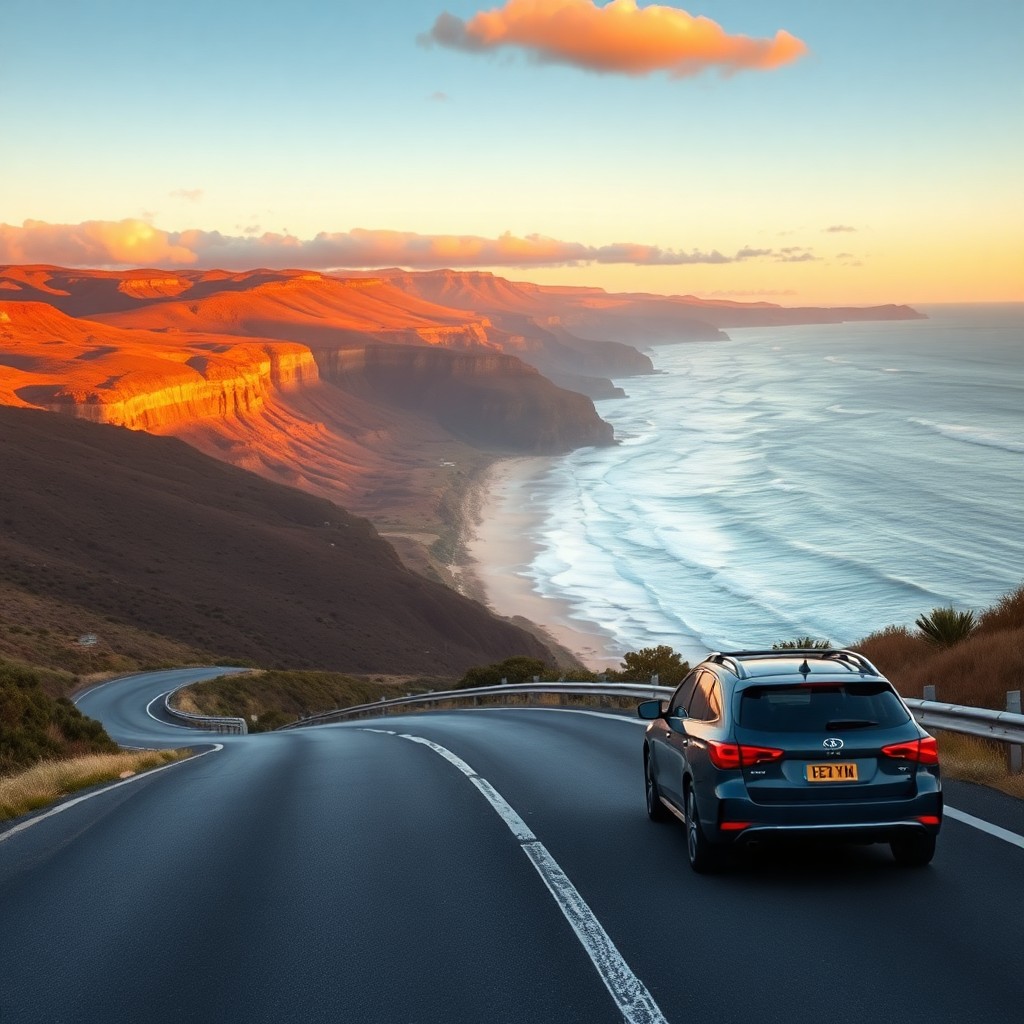
One of Australia's classic road trips, following the Princes Highway through Wollongong, Kiama, Narrawallee, and Lakes Entrance. Detour to the Snowy Mountains or Canberra if time allows. The coastal section between Batemans Bay and Eden is particularly scenic. Check the current route and allow extra time for holiday traffic.
Great Ocean Road
Starting near Melbourne, this route runs through Torquay, Lorne, Apollo Bay, and the Twelve Apostles. One of the world's great coastal drives, with surf beaches, rainforest, and limestone stacks. Plan at least two days, more if you want to explore the Otway Ranges or Port Campbell National Park.
Red Centre Way
Alice Springs to Uluru and Kings Canyon, through the heart of Australia. This is serious outback driving — long distances, limited services, and extreme temperatures. Not all rental vehicles are permitted on these roads. Confirm with your supplier and carry emergency supplies.
Frequently asked questions
Do I need a car to travel around Australia?
In the major cities, public transport is adequate for central sightseeing. But to reach wine regions, national parks, surf beaches, and the outback, a rental car is essential. For multi-city trips, a fly-drive itinerary is usually the most practical approach.
Can I drive a rental car on unsealed roads?
Most standard rental agreements exclude unsealed roads. If you plan to drive on dirt tracks or in remote areas, you must confirm this with your supplier before booking. Some premium or 4WD vehicles may be permitted with specific conditions.
Are there toll roads in Australia?
Yes, but only in some states. Sydney, Melbourne, and Brisbane have toll roads. Adelaide, Perth, Darwin, and Tasmania do not. Your rental agreement should explain how tolls are handled — usually via an electronic tag or post-rental billing.
What is the best time to book car hire in Australia?
Book as early as possible, especially for peak periods like Christmas, Easter, and school holidays. Prices and availability tighten significantly during these times. Comparing suppliers early also gives you a better chance of securing the vehicle type you need.
Compare Australia car hire
Enter dates above, then compare pickup method, vehicle category and complete supplier terms before booking.
Continue planning with Brisbane city car hire, Perth Airport car hire, Alice Springs Airport car hire, All car hire locations.