

Compare Car Hire Across Germany for City Breaks and Road Trips
Germany is one of the easiest countries in Europe for a self-drive trip. Motorways are well maintained, signage is consistent, and you can move from business districts to castles, forests, and Alpine scenery without changing trains. Booking car hire in advance lets you compare suppliers, understand the full terms, and choose a vehicle that fits your itinerary.
A rental car suits travellers who want flexibility — early starts, scenic detours, and the freedom to change plans. Airport pickup is available at every major gateway, while city-centre offices suit those already in Germany. Comparing options through one platform keeps the terms transparent before you travel.
Berlin
Plan this first.
Frankfurt, Munich, Berlin, Hamburg, Düsseldorf
Confirm before booking.
Autobahn network (no general speed limit on many sections)
Confirm before booking.
EU/EEA accepted; non-EU may need IDP
Confirm before booking.
Match collection to the actual itinerary
Include transfers, parking days, opening hours and return timing when comparing the two options.
Airport pickup for immediate travel
Major airports including Frankfurt, Munich, Berlin, Hamburg, and Stuttgart have supplier-arranged rental counters and adjacent pickup garages. This suits travellers arriving by air and heading straight to their destination. You avoid city-centre navigation and join the motorway network within minutes of leaving the terminal.
City-centre pickup for urban exploration
If you are spending time in a German city before driving elsewhere, a downtown office near the Hauptbahnof or your hotel may be more convenient. Be aware that central parking is limited and expensive in most German cities, and city branches often have reduced weekend hours.
Plan the handover, price and first drive
Germany's road network is legendary. The Autobahn system began in the 1920s and expanded rapidly under post-war reconstruction. Today it carries over 13,timing that varies with traffic and conditions of motorway, much of it without a fixed speed limit. That freedom has become part of German driving culture, though modern traffic management means limits apply dynamically where needed.
For visitors, the real appeal of German driving is variety. You can cover long distances efficiently on the Autobahn, then switch to scenic federal roads through wine regions, forests, and river valleys. The Romantic Road, the Alpine Road, and the Castle Road are just three of the themed driving routes that connect historic towns and landscapes.
German rental companies are efficient and accustomed to international visitors. Major airports and cities have multiple suppliers, making comparison straightforward. Whether you are here for business in Frankfurt, Oktoberfest in Munich, or a castle tour through Bavaria, a rental car gives you the freedom to structure your own trip.
Check the conditions behind the price
The selected supplier’s terms and booking voucher control the rental. Review them before payment and again before collection.
Total payable price
Compare the full payable amount and inclusions rather than an unsupported daily-price promise.
Deposit and payment card
Confirm the deposit, accepted card type and whose name must appear on the card.
Excess and cover
Read the renter's liability, exclusions and what any optional protection actually changes.
Fuel policy
Know the collection level, return requirement and whether a refuelling charge can apply.
Mileage and territory
Check any distance limit and where the vehicle may be driven.
Extras and return
Price additional drivers, seats, after-hours service and one-way return before payment.
Choose for people, bags and roads
A category normally represents a group of similar cars, not a promise of one exact model.
- Compact: convenient for couples and tighter parking.
- Intermediate: more room for bags and longer journeys.
- Family or SUV category: useful only when the required capacity justifies it.
- Transmission: select automatic explicitly if manual is unsuitable.
Practical planning before departure
What you need to rent a car in Germany
A valid driving licence accepted in Germany, passport or ID card, and a credit card in the main driver's name for the deposit. Non-EU licence holders should carry an International Driving Permit. The minimum age is typically 21, with young driver surcharges under 25.
Motorway driving
German Autobahns have sections without a general speed limit, but dynamic limits apply during congestion, bad weather, and roadworks. The left lane is for overtaking only. Stay right unless passing, and watch for sudden speed restrictions.
Parking and urban driving
City-centre parking is scarce and expensive. Use Parkhaus garages or choose accommodation with included parking. Many German cities have environmental zones requiring a green emissions sticker — check whether your rental vehicle has one if you are driving into a low-emission area.
Local access, road and operating conditions can change. Check current signs, your supplier instructions and the linked source before travelling: German National Tourist Board.
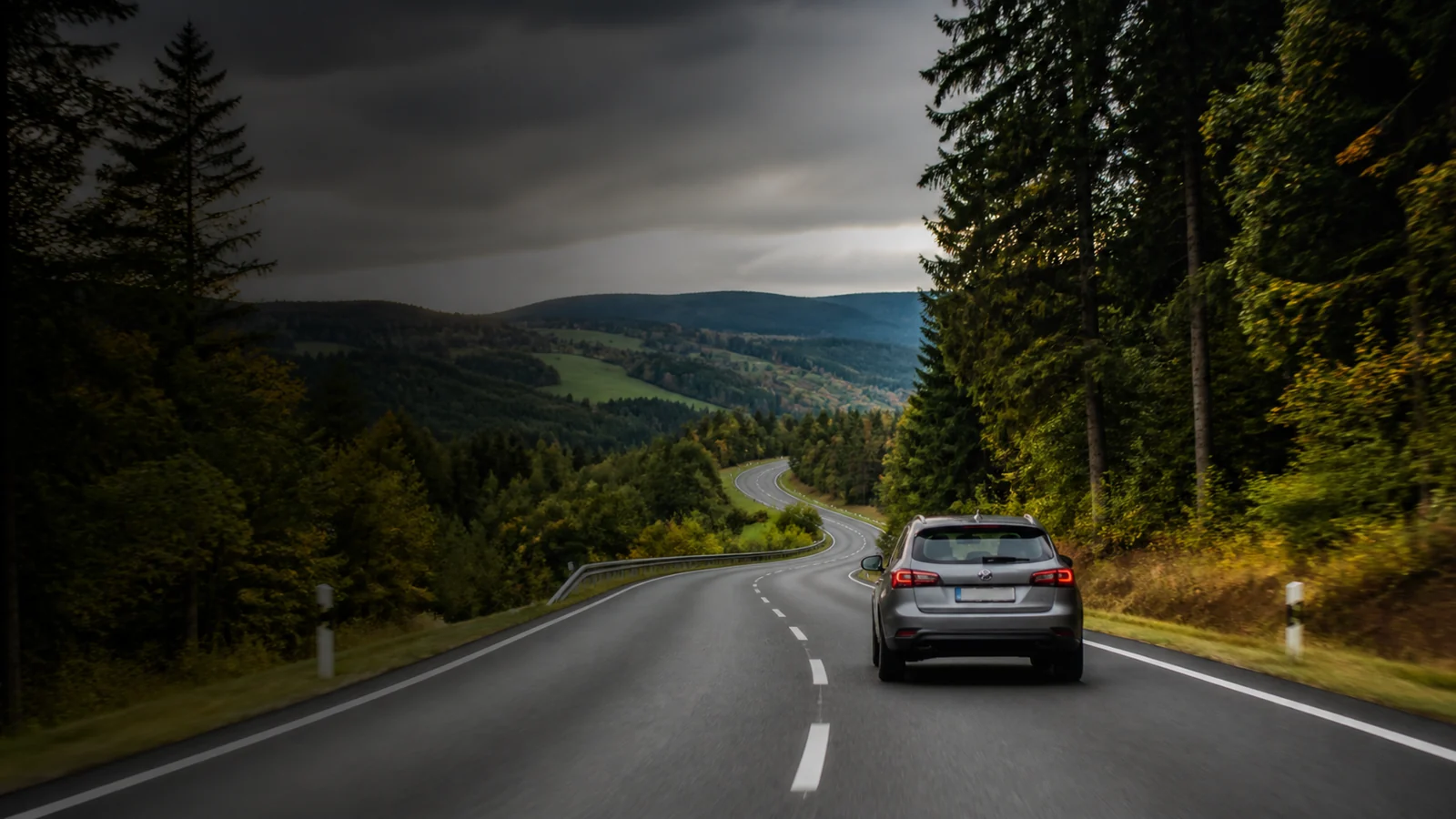
Build a realistic first journey
Berlin to Munich
South on the A9 through Leipzig, Nuremberg, and Ingolstadt. This is one of Germany's most important north-south routes, passing through varied landscapes from flat Brandenburg to Alpine foothills.
Romantic Road
South from Würzburg to Füssen via Rothenburg ob der Tauber and Augsburg. This scenic route connects medieval towns and castles, including Neuschwanstein. It is a popular driving itinerary for visitors exploring Bavaria.
Rhine Valley
West from Frankfurt or Wiesbaden toward Koblenz, following the river through vineyard-covered hills and castle ruins. The B42 and B9 run along both banks, with ferry crossings between them.
Frequently asked questions
Do I need an International Driving Permit for Germany?
EU and EEA licence holders can drive with their domestic licence. Travellers from outside the EU should carry an International Driving Permit alongside their original licence, as some rental companies and police checks require it.
Can I drive a German rental car into neighbouring countries?
Most suppliers allow travel within the EU and Schengen area, but confirm with your specific company. The voucher or booking confirmation states any territorial restrictions. Additional cover may be required for non-EU countries.
What is the minimum age to rent a car in Germany?
Typically 21, with surcharges for drivers under 25. Some premium or larger vehicle categories require a higher minimum age. Check the terms before booking.
Are there tolls on German motorways?
Germany does not currently charge passenger cars for motorway use. Tolls apply to heavy goods vehicles and some tunnels and bridges. Fuel costs and parking are the main driving expenses for tourists.
Compare Germany car hire
Enter dates above, then compare pickup method, vehicle category and complete supplier terms before booking.
Continue planning with Munich car hire, Hamburg car hire, Car Hire Herne | Compare Deals from the quoted rate for the selected dates, Nuremberg Airport Car Hire.