
Why Hire a Car in Gjirokaster?
Gjirokaster sits in southern Albania, dramatically positioned on the steep slopes of the Drino Valley. While this UNESCO World Heritage city draws visitors for its Ottoman architecture and rich history, the surrounding region remains largely inaccessible without your own transport. A hire car transforms a simple city break into an extraordinary journey through some of the Balkans’ most captivating landscapes.
The city’s location makes it an ideal base for exploring southern Albania and beyond. The famous Blue Eye spring is just 30 minutes away by car – a natural wonder that public transport simply cannot reach efficiently. The ancient ruins of Butrint, the coastal charm of Saranda, and the untouched beaches of the Albanian Riviera all become accessible day trips when you have your own vehicle.
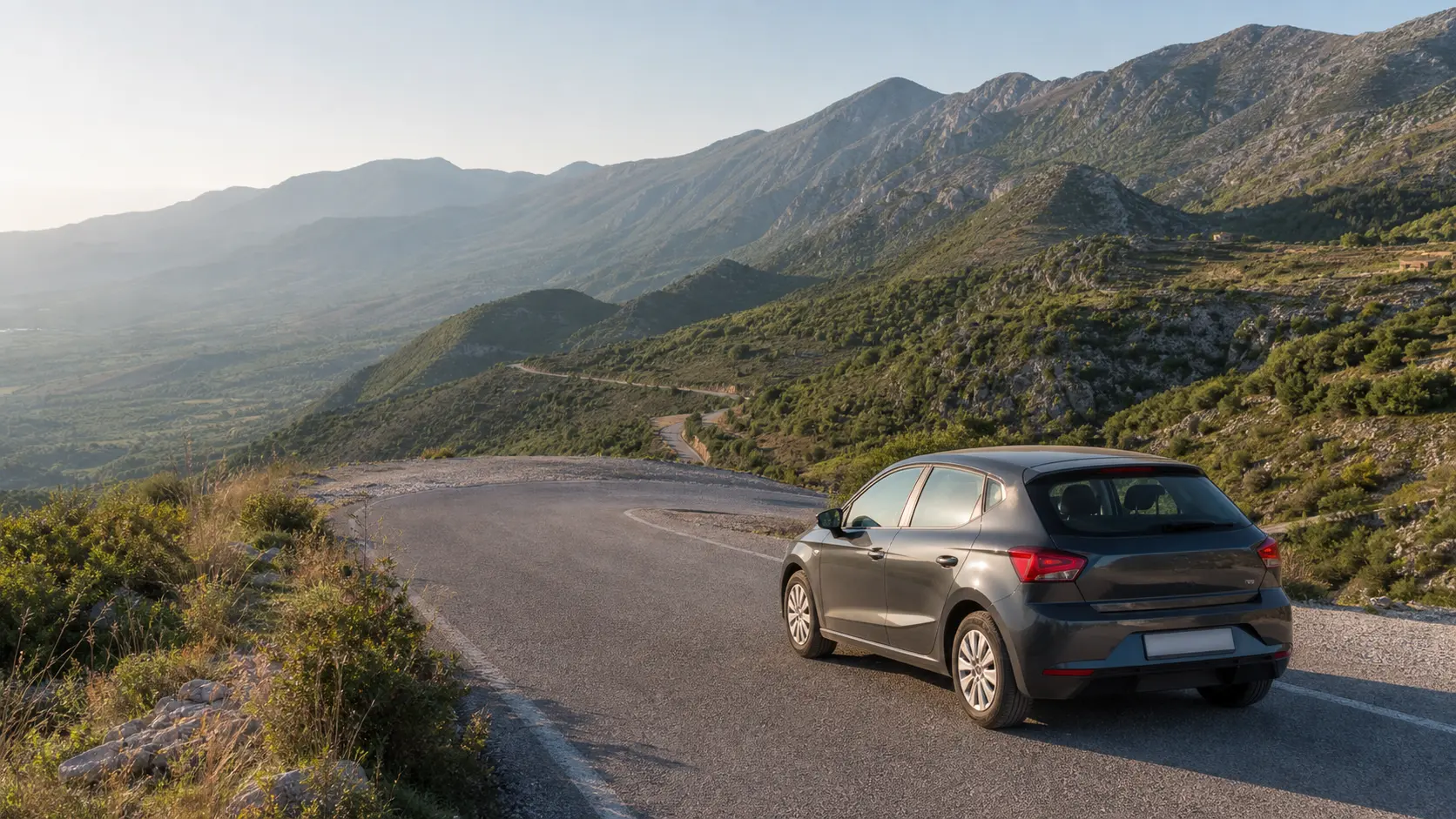
Driving here also offers something increasingly rare in European travel: genuine freedom. The roads winding through the Lunxheri Mountains reveal villages where time has stood still, family-run wineries welcome spontaneous visitors, and panoramic viewpoints appear around every bend. For travellers looking to venture further, Gjirokaster’s position makes it a perfect stop on a multi-country Balkan itinerary – the Greek border lies just 40 kilometres south, opening routes to Ioannina and beyond.
About Gjirokaster
Known as the “City of Stone,” Gjirokaster presents one of the most distinctive cityscapes in the Balkans. Grey slate roofs and stone facades cascade down the hillside, creating an almost monochromatic palette broken only by the occasional burst of bougainvillea or the warm glow of lantern-lit evenings. This visual unity comes from centuries of building with local stone – a tradition that earned the city its UNESCO status in 2005.
The city’s history reads like a condensed version of Albanian history itself. Founded in the 1st century BC, Gjirokaster flourished under Ottoman rule from the 14th century onwards. The grand stone houses that define the old town were built by wealthy merchants and landowners, their fortified designs reflecting both status and the need for protection in turbulent times. The Zekate House and Skenduli House stand as magnificent examples of this architectural heritage, featuring ornate ceilings, hidden rooms, and defensive towers.
Culturally, Gjirokaster punches far above its weight. The city produced two of Albania’s most significant 20th-century figures: Enver Hoxha, the communist dictator who ruled for four decades, and Ismail Kadare, the novelist frequently tipped for the Nobel Prize. Kadare’s works, particularly “Chronicle in Stone,” capture the city’s atmosphere with haunting beauty. Today, the old bazaar quarter buzzes with artisans selling embroidered textiles, silver jewellery, and carved wooden items – traditions kept alive through generations.
Geographically, Gjirokaster occupies a strategic position in the Drino Valley, surrounded by the Lunxheri Mountains to the east and the Bureto Mountains to the west. This setting creates a microclimate distinct from the coast – cooler summers and crisp, clear winters with occasional snow dusting the slate roofs. The elevation, roughly 300 metres above sea level, offers natural air conditioning when coastal Albania swelters in August heat.
Top Destinations to Drive to from Gjirokaster
The Blue Eye (Syri i Kaltër)
Just 25 kilometres from Gjirokaster, the Blue Eye represents one of Albania’s most mesmerising natural phenomena. This spring bubbles up from a depth of at least 50 metres, creating water so clear and blue that it appears almost unreal. The surrounding woodland offers shaded picnic spots, and several family-run restaurants serve fresh trout from the spring’s waters. The drive takes roughly 30 minutes along the Gjirokaster-Saranda road, with a small turning signposted to the left. A modest entrance fee applies, and the site is open during daylight hours.
Butrint National Park
Butrint deserves a full day’s exploration. This UNESCO site spans 2,500 years of history, with Greek, Roman, Byzantine, and Venetian remains scattered across a wooded peninsula. The theatre, baptistery with its famous mosaics, and Venetian fortress transport visitors through millennia. Drive time from Gjirokaster is approximately 45 minutes – head south through the Bistricë Valley. Arrive early morning to avoid tour groups from Saranda’s cruise ships. The entrance fee includes access to the entire archaeological park.
Saranda and the Albanian Riviera
Saranda, 55 kilometres south, serves as the gateway to the Albanian Riviera and offers a complete contrast to mountain Gjirokaster. This coastal city buzzes with beach bars, seafood restaurants, and boat trips to Corfu. The drive descends dramatically from the highlands to the coast, with views across the Ionian to Greek islands. From Saranda, the Riviera unfolds – Ksamil’s white beaches, Dhërmi’s bohemian beach clubs, and Himara’s relaxed charm all become accessible. The coastal road (SH8) is one of Europe’s great drives, hugging cliffs above turquoise waters.
Lunxheri Villages
For travellers seeking authenticity, the villages of the Lunxheri region offer a glimpse into traditional Albanian life rarely seen by visitors. Drive east from Gjirokaster into the mountains, passing through Saraqinishtë and Derviçan. Stone houses, ancient churches, and welcoming locals define these settlements. The road is paved but narrow – take your time and stop at viewpoints across the Drino Valley. This route works beautifully as a half-day excursion before returning to Gjirokaster for dinner.
Ioannina, Greece
Ioannina lies just across the Greek border, roughly 70 kilometres from Gjirokaster. This lakeside city offers Ottoman architecture, a castle quarter, and access to the Zagori region’s stone bridges and hiking trails. Border formalities are straightforward for EU citizens, though non-EU nationals should carry passports. The drive crosses the Muzina Pass, where abandoned bunkers from Hoxha’s paranoid regime still dot the landscape – a stark reminder of Albania’s isolated past.
Tirana
Tirana connects easily from Gjirokaster via the SH4 highway, roughly 230 kilometres north. The drive takes approximately 3.5 hours through spectacular mountain scenery, passing Berat en route. Many visitors combine Gjirokaster with a few days in the capital, experiencing both Albania’s vibrant present and its preserved past.
Driving Tips for Gjirokaster
Roads in southern Albania have improved dramatically over the past decade, though standards vary. The main route to Tirana (SH4) is a well-maintained dual carriageway for most of its length. Secondary roads to coastal destinations are generally paved but feature tight bends and occasional potholes. Mountain routes require confident driving – expect hairpin bends, stray animals, and agricultural vehicles sharing the road.
Within Gjirokaster’s old town, driving presents challenges. The cobbled streets are narrow, steep, and often one-way. Park at designated areas near the Bazaar entrance and explore on foot – the old town rewards walkers, and parking spaces are scarce. Most hotels offer guidance on the nearest parking spots.
Fuel stations are plentiful on main routes, though carry extra fuel for remote mountain drives. Payment is usually cash in Albanian lek, though major stations accept cards. Speed limits are 40 km/h in towns, 80 km/h on open roads, and 120 km/h on highways – though enforcement varies, stick to limits for safety on winding roads.
Driving at night requires extra caution. Street lighting is limited outside major towns, and animals often wander onto roads. If possible, plan longer drives for daylight hours. In winter, mountain passes can experience snow – check conditions before setting out.
Car Hire Tips
Several rental companies operate in Gjirokaster, with most offices located in the city centre or near major hotels. For the widest selection, consider collecting your vehicle in Tirana and driving south – the capital’s airport offers more suppliers and vehicle types. However, local rentals in Gjirokaster work perfectly for regional exploration.
Book well ahead during July and August – demand outstrips supply in peak season. Manual transmission vehicles dominate the Albanian market; automatics are available but cost significantly more. Compact cars handle narrow mountain roads better than large saloons or SUVs.
Insurance warrants careful attention. Standard policies often carry high excesses – consider additional coverage to reduce this. Damage to tyres and windscreens isn’t always included; gravel roads increase the risk here. Photograph the vehicle thoroughly before driving away, noting any existing marks. Albania’s roads can be tough on suspension, so document everything.
Most rentals require a credit card for the security deposit. Ensure you have sufficient funds available – typically €500-1500 depending on the vehicle. Driving licences from EU countries are accepted; others may need an International Driving Permit.
Best Time to Visit
Spring (April to June) and autumn (September to October) offer ideal conditions for exploring Gjirokaster and its surroundings. Temperatures hover pleasantly between 15-25°C, rainfall is moderate, and the landscape bursts with wildflowers or autumn colours. Summer brings intense heat – often exceeding 35°C in July – though Gjirokaster’s elevation provides some relief compared to the coast. Winter is quiet and atmospheric, with occasional snow transforming the stone city, though mountain roads can become challenging. The Gjirokaster Folk Festival, held every few years in late summer, showcases traditional music and dance – check dates if your travel is flexible.
Frequently Asked Questions
Do I need a car to visit Gjirokaster?
You can reach Gjirokaster by bus from Tirana and other major cities. However, exploring the surrounding region – the Blue Eye, Butrint, mountain villages, or continuing to Greece – requires a vehicle. Public transport to these destinations is limited or non-existent.
Can I drive from Gjirokaster to Greece?
Yes, the border crossing at Kakavia (approximately 40 km south) is open to vehicles. Ensure you have your passport, vehicle registration, and insurance documents. EU citizens face minimal formalities; other nationalities should check visa requirements.
How long should I spend in Gjirokaster?
Allow two full days to explore the old town, castle, and nearby attractions like the Blue Eye. A week allows deeper exploration of the Riviera, Butrint, and cross-border trips to Greece. Many visitors combine Gjirokaster with Berat and Tirana for a comprehensive Albanian tour.
Is parking difficult in Gjirokaster?
The old town’s narrow streets make parking challenging. Use designated parking areas at the Bazaar entrance or near the castle. Most hotels provide parking guidance. Never block driveways or gateways – locals need access.
Are credit cards accepted at fuel stations?
Major stations on main routes accept cards, but rural stations often require cash. Carry Albanian lek for smaller stops. Prices are generally lower than in neighbouring Greece, making it worth filling up before cross-border trips.