

Lipsi: Small Island, Slow Pace
Lipsi is one of the smallest inhabited islands in the Dodecanese — barely eight square kilometres, with a single village clustered around a harbour and a handful of beaches reachable by narrow roads. There are no big hotels, no nightclubs, no crowds. Life here follows the rhythm of the ferry schedule and the fishing boats. Vehicle hire exists but is limited to a small number of local operators offering compact cars and scooters. This guide explains what transport looks like on Lipsi and where to find car hire alternatives on the larger neighbouring islands if you need more choice.
The first thing to understand about Lipsi is that everything revolves around the harbour. The ferry from Patmos or Leros arrives here, the tavernas open onto it, and the village beach is a short walk away. A single paved road runs from the village to the main beaches, with a few dirt tracks branching off to more remote coves. A car or scooter makes sense if you want to explore beyond the village, but many visitors are content to walk, take the occasional local boat, and simply be present on an island that has not changed much in decades. If you want a wider choice of vehicles or longer rental periods, the practical option is to collect a car on Patmos or Leros and bring it across by ferry, though most people do the reverse — they visit Lipsi as a peaceful break from a touring holiday on the larger islands.
Approximately 8 square kilometres
Plan this first.
Around 700 residents
Confirm before booking.
Patmos, Leros, Piraeus via Dodecanese route
Confirm before booking.
Limited local cars and scooters
Confirm before booking.
Match collection to the actual itinerary
Include transfers, parking days, opening hours and return timing when comparing the two options.
Life on a Small Island
Lipsi Village is the only settlement — a cluster of white houses, a few tavernas, a bakery, and a shop selling local thyme honey and cheese. The harbour fills with fishing boats in the morning and yachts in the afternoon. There is no nightlife to speak of, no shopping, and no rush. The beaches are the main draw: Platis Gialos is the best known, a long sweep of sand and pebble with turquoise water and a beach taverna. Kampos on the north coast is quieter and better for snorkelling. Monodendri is a tiny cove with a single tree and some of the clearest water in the Dodecanese. Boat trips run from the harbour to surrounding islets and sea caves.
When to Consider a Vehicle
A car or scooter is useful on Lipsi if you want to reach beaches beyond the village without relying on the infrequent local bus or boat. The main road to Platis Gialos is paved and short. The tracks to more remote coves are rougher and better suited to a scooter or a sturdy compact. In the height of summer, the limited local vehicles are often fully booked. If you are planning to explore multiple Dodecanese islands, it may make more sense to arrange longer-term car hire on Patmos or Leros and use the ferries to hop between islands, rather than trying to hire separately on each small stop.
Plan the handover, price and first drive
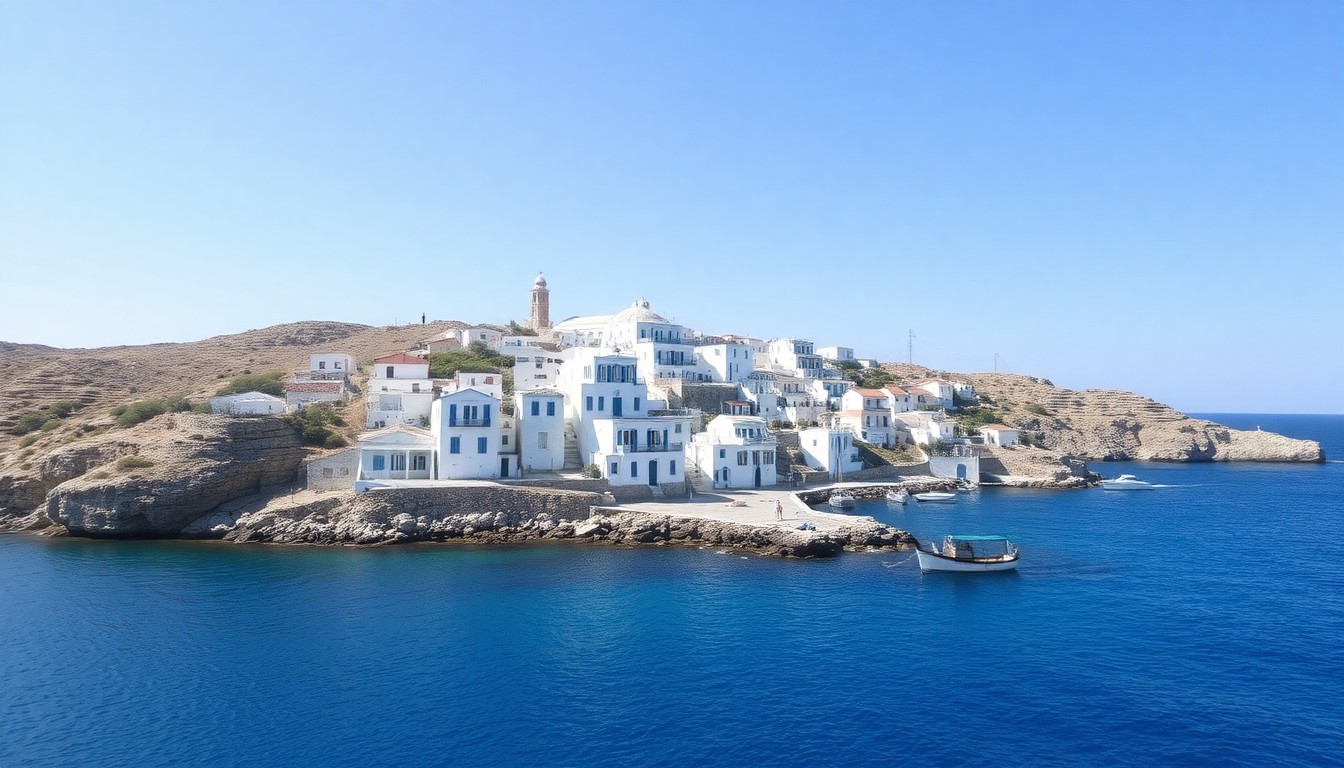
Lipsi announces itself with silence. You step off the ferry into a harbour where a few fishing boats are tied up, a cat sleeps on a bollard, and the only movement is the shimmer of heat off the quay. The village rises in white tiers behind the water, with a single church bell tower visible above the roofs. It is immediately clear that this is not an island of excursions and activities. It is an island of stillness.
The days follow a simple pattern. Morning coffee at a harbour taverna, watching the fishing boats unload their catch. A swim at the village beach, where the water is warm and shallow. Lunch under a trellis of bougainvillea. An afternoon walk to Platis Gialos, the long beach on the other side of the island, where a single taverna serves grilled fish and cold wine. An evening return to the village as the light turns gold and the ferry departs for Patmos, taking day-trippers with it.
For those who want to explore, a scooter or a small car opens up the island's quieter corners. The track to Monodendri cove is rough but passable, leading to a beach where a single pine tree provides shade and the water is glassy and clear. The coastal path to Kampos passes through dry-stone walls and thyme scrub, with the sound of goats bells in the distance. It is not dramatic scenery, but it is deeply peaceful.
Lipsi works best as a pause in a longer island journey. Collect a car on Kos or Patmos, explore the bigger islands, then come here for a few days of doing very little. The limited transport options become a feature rather than a constraint. You slow down because the island demands it, and that slowness is the reason people return.
Check the conditions behind the price
The selected supplier’s terms and booking voucher control the rental. Review them before payment and again before collection.
Total payable price
Compare the full payable amount and inclusions rather than an unsupported daily-price promise.
Deposit and payment card
Confirm the deposit, accepted card type and whose name must appear on the card.
Excess and cover
Read the renter's liability, exclusions and what any optional protection actually changes.
Fuel policy
Know the collection level, return requirement and whether a refuelling charge can apply.
Mileage and territory
Check any distance limit and where the vehicle may be driven.
Extras and return
Price additional drivers, seats, after-hours service and one-way return before payment.
Choose for people, bags and roads
A category normally represents a group of similar cars, not a promise of one exact model.
- Compact: convenient for couples and tighter parking.
- Intermediate: more room for bags and longer journeys.
- Family or SUV category: useful only when the required capacity justifies it.
- Transmission: select automatic explicitly if manual is unsuitable.
Practical planning before departure
Getting to Lipsi
Lipsi has no airport. The only access is by ferry from Patmos, Leros, or Piraeus. The crossing from Patmos or Leros takes roughly an hour. The direct ferry from Piraeus is an overnight journey. The Dodecanese island-hopping route connects Lipsi to Kalymnos, Kos, and Rhodes further south. Schedules vary seasonally, so check current timetables before planning.
Getting Around Lipsi
The village is entirely walkable. A small bus runs to the main beaches in season. Water taxis and small boats can be hired for trips to remote coves and islets. Bicycles are a pleasant way to explore the coastal road. The island is small enough that you can walk from the village to Platis Gialos in under an hour, though the summer heat makes this less appealing at midday.
Driving on Lipsi
The main road is paved and short, running from the village to Platis Gialos and a few other beaches. Side tracks are unpaved and can be rough. There are no traffic lights, no roundabouts, and very few other vehicles. Parking at the beaches is informal — pull onto the verge. In August, the dusty tracks can be busy with scooters. Drive slowly and watch for walkers.
Local access, road and operating conditions can change. Check current signs, your supplier instructions and the linked source before travelling: Lipsi Municipality.
Build a realistic first journey
Lipsi to Patmos
Patmos is the spiritual and administrative centre of the northern Dodecanese, famous for the Monastery of St John and the Cave of the Apocalypse. It is an hour by ferry from Lipsi and has a wider range of car hire options, more restaurants, and a livelier atmosphere. Many visitors pair the two islands — Patmos for culture and choice, Lipsi for peace and simplicity.
Lipsi to Leros
Leros is a larger island with a substantial Italian-era town, a naval history, and excellent diving. The ferry from Lipsi takes roughly an hour. Leros has more vehicle hire options and a road network that rewards exploration. It is a practical base for island-hopping in the northern Dodecanese.
Lipsi to Kalymnos
Kalymnos is the sponge-diving island, with dramatic cliffs, world-class rock climbing, and a busy harbour town. It is further south on the Dodecanese ferry route and makes a good next stop if you are working your way down the island chain. The ferry connection is less frequent than to Patmos or Leros.
Frequently asked questions
Can I hire a car on Lipsi?
Yes, but options are extremely limited. A small number of local operators offer compact cars and scooters in season. Availability is best in spring and autumn; in August, vehicles are often fully booked. Book in advance if you want to be certain.
Should I bring a rental car from another island?
If you are island-hopping through the Dodecanese, it can make sense to collect a car on a larger island like Patmos or Kos and bring it on the ferry. However, ferry space for vehicles is limited and must be booked ahead. Many visitors find it easier to hire separately on each island or simply do without.
Do I need a car on Lipsi?
Not necessarily. The village and the nearest beach are walkable. A bus runs to the main beaches in season. Many visitors enjoy the simplicity of walking and taking local boats. A car or scooter is useful if you want to explore remote coves independently.
What is the best time to visit Lipsi?
Late spring and early autumn offer warm weather, calm seas, and fewer visitors than peak summer. July and August are hot and busy with Greek holidaymakers. Some tavernas and accommodation close in winter.
Compare nearby car hire
Enter dates above, then compare pickup method, vehicle category and complete supplier terms before booking.
Continue planning with Nearby: Kos, All Greek locations, Car Hire Thessaloniki Airport, Windhoek Downtown Car Hire.