

Meteora Car Hire — Monasteries, Mountains & Open Road
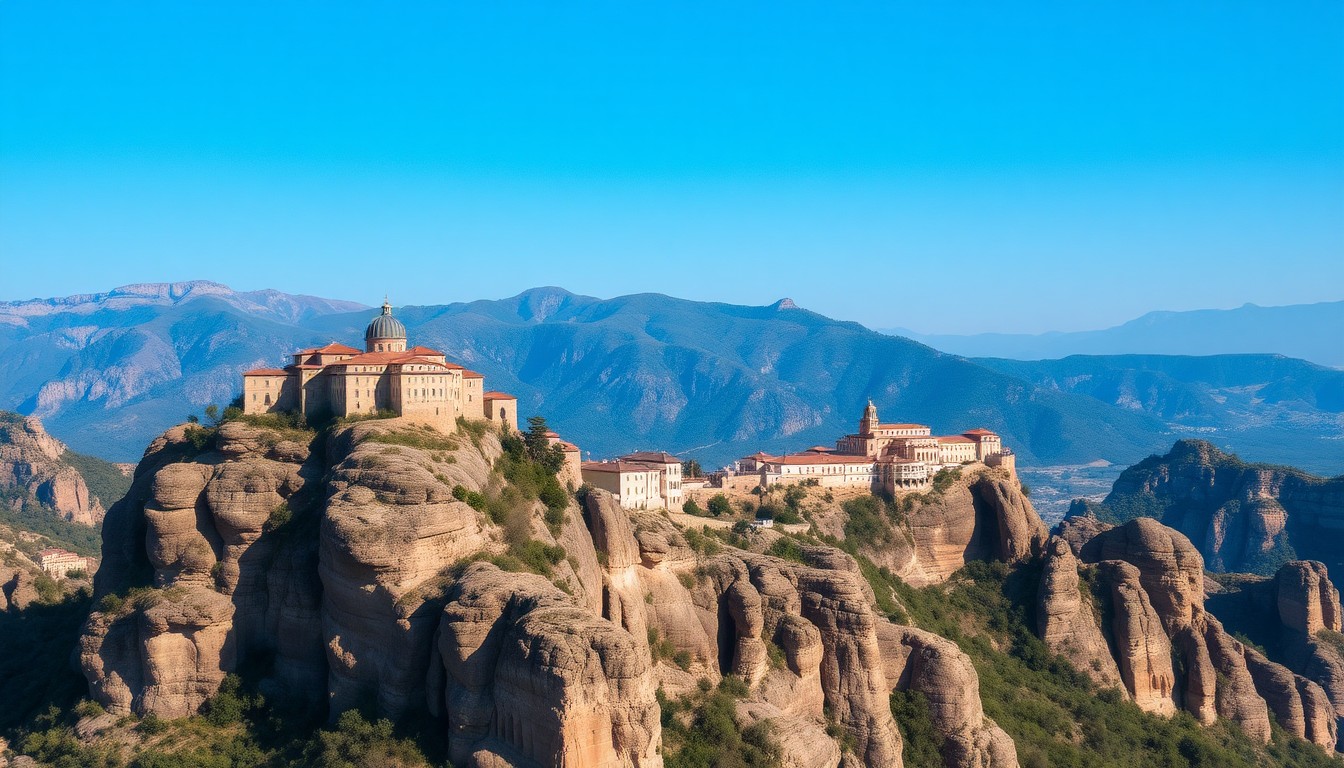
Meteora is one of the most extraordinary places in Greece — sandstone pillars rise from the Thessaly plain, topped with Byzantine monasteries that have stood for centuries. Hiring a car in Meteora gives you the freedom to visit all six active monasteries, hike the trails around the rocks, and explore the towns of Kalabaka and Kastraki on your own schedule. Whether you are flying into Thessaloniki or arriving by train, a rental car turns a day trip into a proper adventure.
We compare car hire options from local operators in Kalabaka and nearby towns, so you can pick up a vehicle close to the monasteries and start exploring straight away. Having your own transport is especially useful in Meteora, where the monasteries are spread across a wide area and public buses run to a fixed timetable. With a car, you can reach quieter viewpoints at sunrise, visit the less crowded monasteries, and stop at villages in the Pindus Mountains that most travellers never see.
Six active monasteries perched on sandstone pillars
Plan this first.
Kalabaka and Kastraki — both at the foot of the rocks
Confirm before booking.
Thessaloniki Airport (SKG)
Confirm before booking.
Right-hand side — Greek licence or valid foreign licence accepted
Confirm before booking.
Match collection to the actual itinerary
Include transfers, parking days, opening hours and return timing when comparing the two options.
Kalabaka Town Pick-Up
Kalabaka sits directly below the Meteora rocks and has the widest choice of car hire providers in the area. Picking up here means you are minutes from the monastery road and can beat the coach tours to the gates in the morning.
Kastraki Village Base
Kastraki is smaller and closer to the hiking trails than Kalabaka. A rental car from this village is ideal if you plan to walk between viewpoints and want to park near the trailheads without navigating Kalabaka's busier streets.
Plan the handover, price and first drive
The first time I saw the Meteora rocks, I was driving up from Kalabaka at dawn. The monasteries were still in shadow, but the pillars were catching the early light — it looked like a landscape from another planet. I pulled over at a viewpoint near Varlaam Monastery and sat there with a coffee from a roadside kiosk, watching the colours change. That moment alone justified the car hire.
Over three days, I drove the monastery circuit three times — early morning, mid-afternoon, and sunset. Each visit felt different. The Great Meteoron was busy with tour groups by 10am, but Holy Trinity at 4pm was almost empty. I hiked the trail from Kastraki to Rousanou and drove back through the village for a late lunch of grilled trout and horta at a taverna the hotel owner had recommended.
One afternoon I drove west into the Pindus Mountains, following signs to villages I had never heard of. The road narrowed, the pine forests thickened, and I passed stone bridges and waterfalls that do not appear in guidebooks. I ended up in a village square where an old man was sharpening scythes outside a café. We talked — in broken Greek and gestures — about the weather, the sheep, and the road ahead. That is the Greece you only find with your own wheels.
Check the conditions behind the price
The selected supplier’s terms and booking voucher control the rental. Review them before payment and again before collection.
Total payable price
Compare the full payable amount and inclusions rather than an unsupported daily-price promise.
Deposit and payment card
Confirm the deposit, accepted card type and whose name must appear on the card.
Excess and cover
Read the renter's liability, exclusions and what any optional protection actually changes.
Fuel policy
Know the collection level, return requirement and whether a refuelling charge can apply.
Mileage and territory
Check any distance limit and where the vehicle may be driven.
Extras and return
Price additional drivers, seats, after-hours service and one-way return before payment.
Choose for people, bags and roads
A category normally represents a group of similar cars, not a promise of one exact model.
- Compact: convenient for couples and tighter parking.
- Intermediate: more room for bags and longer journeys.
- Family or SUV category: useful only when the required capacity justifies it.
- Transmission: select automatic explicitly if manual is unsuitable.
Practical planning before departure
Driving to the Monasteries
A paved road winds up from Kalabaka past all six monasteries. There are parking areas near the main gates, but spaces fill quickly in summer. Arrive early or late in the day. Each monastery has its own visiting hours and modest dress codes apply — shoulders and knees must be covered.
Road Conditions in the Region
The main routes from Thessaloniki and Larissa to Kalabaka are on good national roads. The final climb to the monasteries is narrow with tight bends. Allow extra time for traffic and coaches, especially on weekends and religious holidays.
Exploring Beyond the Rocks
With a car, you can drive to the ancient Theopetra Cave, the mountain villages of the Pindus range, and the lakeside town of Ioannina to the west. These areas are poorly served by public transport, so having your own vehicle opens up much more of mainland Greece.
Local access, road and operating conditions can change. Check current signs, your supplier instructions and the linked source before travelling: Visit Meteora.
Build a realistic first journey
From Thessaloniki Airport to Meteora
The most common approach is to collect a car at Thessaloniki Airport and drive southwest through the Macedonian plain. The route passes through Veria and Trikala before reaching Kalabaka. Allow extra time for traffic, especially near Thessaloniki and through Trikala.
From Athens by Road
Travellers coming from Athens can collect a car in the capital or at the airport and head north through Lamia and Larissa. This is a longer journey through central Greece, but it lets you combine Meteora with stops at Delphi or Thermopylae if you have time.
Local Drives from Kalabaka
From Kalabaka, short drives lead to Kastraki village, the Theopetra Cave, and the lesser-known monasteries of St. Nicholas Anapausas and Holy Trinity. A circular day trip west into the Pindus Mountains takes you through traditional stone villages like Kalogeriko and Anthousa.
Frequently asked questions
Do I need a car in Meteora?
You do not need a car to visit the monasteries — organised bus tours and local taxis serve the sites — but a rental car gives you flexibility to avoid crowds, visit at quieter times, and explore the surrounding region at your own pace.
Where is the best place to pick up a hire car?
Kalabaka is the most convenient base, with providers close to the town centre and the monastery road. Thessaloniki Airport is the nearest major hub if you want to collect before arriving in the region.
What type of car is best for Meteora?
A compact or economy car is sufficient for the paved roads around Kalabaka and the monastery route. If you plan to explore mountain villages or drive in winter, a vehicle with a little more clearance is advisable.
Are the monastery roads suitable for all vehicles?
The main monastery road is paved and suitable for standard cars, but it is narrow and steep in places. Coaches and large vehicles share the route, so drive carefully and use the designated parking areas near each monastery entrance.
Compare car hire Meteora
Enter dates above, then compare pickup method, vehicle category and complete supplier terms before booking.
Continue planning with Thessaloniki city guide, Thessaloniki Airport car hire, All 365 Car Hire locations, Windhoek Downtown Car Hire.