

Car Hire Switzerland: Drive the Alps and Lakes at Your Own Pace
Switzerland is a country of dramatic contrasts: glacier-capped peaks, turquoise lakes, medieval old towns, and modern cities all packed into a compact space. A hire car here gives you the freedom to connect these landscapes on your own schedule, stopping at viewpoints, villages, and trailheads that trains and buses simply do not reach. Whether you are planning an alpine road trip, a lakeside holiday, or a multi-city tour, having your own vehicle is the most flexible way to see the country.
The Swiss road network is among the best in Europe, with smooth motorways, well-marked mountain passes, and scenic routes that are destinations in themselves. Driving culture is disciplined and predictable, which makes the country welcoming for visitors. That said, alpine roads can be challenging, winter conditions are serious, and motorway tolls require a vignette. Plan ahead, check the season, and confirm your vehicle equipment with the rental supplier.
Right-hand traffic, overtake on the left
Plan this first.
Vignette required; confirm with your supplier
Confirm before booking.
Winter tyres often needed; high passes may close
Confirm before booking.
Trains are excellent but do not reach every viewpoint or trailhead
Confirm before booking.
Match collection to the actual itinerary
Include transfers, parking days, opening hours and return timing when comparing the two options.
Why Visitors Choose Car Hire in Switzerland
Switzerland has one of the world’s most admired public transport systems, yet even the best train cannot stop at a mountain viewpoint for a photograph, divert to a cheese farm for lunch, or carry camping gear to a remote trailhead. A hire car fills those gaps. It is especially valuable for families, photographers, and anyone travelling with sports equipment or bulky luggage. You set the pace, choose the stops, and adapt the route to the weather.
What to Know Before You Book
Swiss rental rates vary significantly by season, location, and vehicle type. Airport desks usually have the widest choice but may charge location fees. City-centre offices can be er and more convenient if you are staying locally. Always check what is included: insurance excess, winter tyres, cross-border permission, and the vignette. Ask specific questions rather than assuming standard packages cover your needs.
Plan the handover, price and first drive
Switzerland rewards the independent traveller. The train will get you to Interlaken efficiently, but it will not take you to the trailhead above Grindelwald at dawn, or to the remote alp where a family serves raclette from their own cows. A car turns the journey into part of the experience. The Gotthard Pass is not just a road; it is a historical trade route with galleries, chapels, and views that justify the slow pace.
Each region has a distinct character. The Valais is dry and sun-baked, with vineyards below glacier peaks. Ticino feels Italian in its architecture, food, and tempo. The Jura is green, wet, and largely empty. Connecting these regions by road gives you a sense of the country’s diversity that no single-base holiday can match.
For photographers, the car is essential. The best light is often at dawn or dusk, when public transport is sparse. The best viewpoints are usually a short drive above the main road, on a track or a lay-by that buses do not serve. Having your own vehicle means you can wait for the light, move with the weather, and return to the same spot the next morning if conditions improve.
Check the conditions behind the price
The selected supplier’s terms and booking voucher control the rental. Review them before payment and again before collection.
Total payable price
Compare the full payable amount and inclusions rather than an unsupported daily-price promise.
Deposit and payment card
Confirm the deposit, accepted card type and whose name must appear on the card.
Excess and cover
Read the renter's liability, exclusions and what any optional protection actually changes.
Fuel policy
Know the collection level, return requirement and whether a refuelling charge can apply.
Mileage and territory
Check any distance limit and where the vehicle may be driven.
Extras and return
Price additional drivers, seats, after-hours service and one-way return before payment.
Choose for people, bags and roads
A category normally represents a group of similar cars, not a promise of one exact model.
- Compact: convenient for couples and tighter parking.
- Intermediate: more room for bags and longer journeys.
- Family or SUV category: useful only when the required capacity justifies it.
- Transmission: select automatic explicitly if manual is unsuitable.
Practical planning before departure
Motorways and the Vignette
All Swiss motorways require a vignette, displayed on the windscreen. Most rental cars from Swiss desks include one, but some do not. If you are collecting near the border or from a non-Swiss supplier, confirm the vignette status before driving on an autoroute. Fines for missing one are steep and enforced by camera.
Winter Driving and Equipment
Winter tyres are not universally mandatory in Switzerland, but they are required on many mountain roads and strongly recommended from November through March. Snow chains may be needed on specific passes. Rental companies can usually fit winter tyres on request, but book early. High passes such as the Grimsel, Furka, and Susten close entirely in winter; check the current status before planning a route.
Cross-Border Rules
Many rental agreements allow travel into neighbouring EU countries, including France, Germany, Austria, and Italy. Liechtenstein is usually included. Confirm the permitted countries, any extra insurance requirements, and whether you need additional documentation. Some suppliers charge a cross-border fee.
Parking and Urban Driving
Swiss cities are compact and pedestrian-friendly, which means driving in the centre can be slow and parking is expensive. Most travellers park at their hotel or on the outskirts and use trams or walk for local exploration. Mountain villages often have free short-street parking but limited spaces. Arrive early at popular trailheads.
Local access, road and operating conditions can change. Check current signs, your supplier instructions and the linked source before travelling: MySwitzerland.
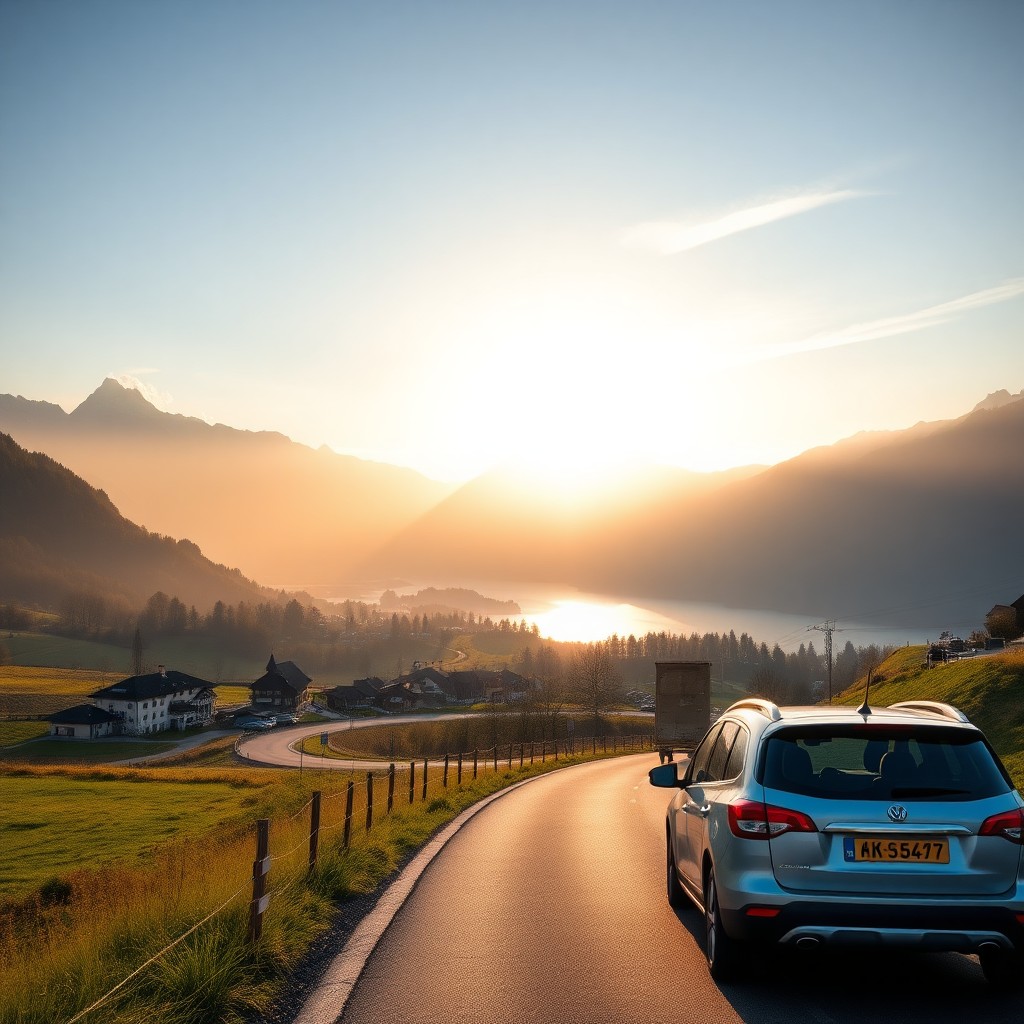
Build a realistic first journey
Grand Tour of Switzerland
A national scenic route that loops through the country’s most dramatic landscapes. You can join it from several points, including Zurich, Lucerne, or Montreux. The full circuit is long, but sections can be done as day trips. Allow extra time for mountain passes, photo stops, and village lunches.
Lakes and Vineyards Loop
A gentler route connecting Lake Geneva, Lake Neuchâtel, and Lake Constance through wine regions and orchard valleys. The roads are flatter and the pace slower than the alpine routes. This is a good choice for spring and autumn, when the vines and orchards are at their best.
Alpine Pass Drive
The high passes such as the Furka, Grimsel, and Gotthard are among the most spectacular drives in Europe. They are also demanding, with tight bends, steep drops, and rapidly changing weather. Only attempt them in suitable weather, with a well-maintained vehicle, and after confirming the road is open. The experience is unforgettable, but safety comes first.
Frequently asked questions
Do I need an International Driving Permit in Switzerland?
If your licence is issued in an EU or EEA country, you do not. For many other countries, including the UK, USA, and Australia, an IDP is recommended though not always strictly required for short visits. Carry your original licence regardless.
Is car hire er at airports or in city centres?
Airport locations often have more competition and better availability, but they may add location surcharges. City-centre offices can be er for short rentals, especially if you do not need the car immediately upon arrival. Compare total cost, not headline rate.
Can I drive a Swiss rental car into Italy or France?
Usually yes, but not always. Check your rental agreement for the list of permitted countries. Some suppliers require advance notice for cross-border travel, and a few charge extra. Always carry the rental documents and your ID.
Are Swiss roads toll-free apart from the vignette?
The vignette covers motorways. Some tunnels and mountain passes charge separate tolls, though many scenic routes are free. Parking in cities is typically paid. Factor these costs into your budget.
Compare Switzerland car hire
Enter dates above, then compare pickup method, vehicle category and complete supplier terms before booking.
Continue planning with Geneva Airport, Basel Airport, Bern and the Oberland, all Switzerland car hire locations.