

Walk in Van Gogh's Footsteps and Explore the Wild Camargue
Car hire in Arles opens up the heart of Provence and the wild Camargue wetlands. This UNESCO World Heritage city, where Van Gogh painted his most famous works, combines Roman ruins, medieval streets, and access to one of Europe's most unique ecosystems. From here, you can explore the Camargue's white horses, pink flamingos, and endless beaches that feel worlds away from the pretty Provence of postcards.
Arles' old town is walkable, with the Roman arena, Van Gogh sites, and Musée Réattu within easy reach. But the real adventure lies beyond the city walls. The Camargue, a vast wetland delta where the Rhône meets the Mediterranean, is only accessible by car. The N572 connects to Avignon and Nîmes, while the flat roads south lead into a landscape of salt pans, marshes, and semi-wild horses that has changed little in centuries.
Marseille Provence (MRS), 50 min southeast
Plan this first.
Roman Arles, Camargue wetlands, Provence villages
Confirm before booking.
N572 to Avignon/Nîmes; D roads into Camargue
Confirm before booking.
Van Gogh, Roman arena, Camargue wildlife
Confirm before booking.
Match collection to the actual itinerary
Include transfers, parking days, opening hours and return timing when comparing the two options.
Marseille Airport Collection
Most visitors arrive at Marseille Provence Airport, timing that varies with traffic and conditions southeast via the A54 and N113. All major hire companies have desks here, and the drive to Arles is straightforward. This is the most practical option for international arrivals, with the widest range of flights and car categories.
Arles City or Camargue Base
Some visitors collect in Arles itself and use the city as a base for both cultural sightseeing and Camargue exploration. Others head straight to the Camargue, staying in Saintes-Maries-de-la-Mer or Le Grau-du-Roi and using Arles for day trips to the Roman sites. Your itinerary should guide where you base yourself.
Plan the handover, price and first drive
Arles has been a place of artistic pilgrimage since 1888, when Vincent van Gogh arrived by train and rented the famous yellow house. In fifteen months here, he produced over 300 paintings and drawings — Starry Night Over the Rhône, Café Terrace at Night, The Yellow House, and many of the sunflower canvases. The light of Provence, clear and intense, drove him to a feverish pace of work that ultimately contributed to his breakdown. But the paintings remain, and visitors still come to stand where he stood and see what he saw.
The Roman heritage is equally compelling. The arena, built when Arles was a major imperial city, seated 20,000 spectators. Today it hosts bullfights in the Spanish tradition, a cultural survival that connects modern Provence to its Roman past. The nearby theatre, though more ruined, still stages performances in summer — Ovid and Molière performed in spaces built by Augustus' engineers. The Thermes de Constantin, the baths by the river, remind you that this was a city of sophisticated urban life two millennia ago.
The Camargue is Arles' other identity — wild, flat, and strange. This is where the Rhône fragments into channels before reaching the Mediterranean, creating a delta of salt pans, marshes, and lagoons. The white horses, black bulls, and pink flamingos are not kept in reserves; they roam freely across the landscape, crossing the roads at will. The light here is different from the hills of Provence — flatter, more diffuse, with the white glare of salt and water. It is a landscape that resists the pretty postcard image of lavender and hilltop villages.
The beaches of the Camargue are among France's wildest. Piémanson, accessible only by sand track, stretches for kilometres without a building in sight. The sea is warm in summer, the current gentle, and the sense of space absolute. Behind the beach, the salt pans produce the fleur de sel that seasons Provence's cuisine. A day here — swimming, walking the dunes, watching flamingos take flight at dusk — is a reminder that the Mediterranean coast still has places that feel genuinely remote. The car that gets you there also lets you stay until the light fades, when the day-trippers have gone and the Camargue returns to the silence that has defined it for millennia.
Check the conditions behind the price
The selected supplier’s terms and booking voucher control the rental. Review them before payment and again before collection.
Total payable price
Compare the full payable amount and inclusions rather than an unsupported daily-price promise.
Deposit and payment card
Confirm the deposit, accepted card type and whose name must appear on the card.
Excess and cover
Read the renter's liability, exclusions and what any optional protection actually changes.
Fuel policy
Know the collection level, return requirement and whether a refuelling charge can apply.
Mileage and territory
Check any distance limit and where the vehicle may be driven.
Extras and return
Price additional drivers, seats, after-hours service and one-way return before payment.
Choose for people, bags and roads
A category normally represents a group of similar cars, not a promise of one exact model.
- Compact: convenient for couples and tighter parking.
- Intermediate: more room for bags and longer journeys.
- Family or SUV category: useful only when the required capacity justifies it.
- Transmission: select automatic explicitly if manual is unsuitable.
Practical planning before departure
The Roman Arena
Arles' amphitheatre, built in 90 AD, still hosts bullfights and concerts. It is one of the best-preserved Roman arenas in France, and you can walk through the underground passages where gladiators once waited. The nearby Roman theatre, though less complete, offers summer performances with the ancient stones as backdrop.
Camargue Wildlife
The Parc Ornithologique du Pont de Gau, timing that varies with traffic and conditions south, offers shown for the selected offer flamingo sightings plus herons, egrets, and birds of prey. Continue to Les Saintes-Maries-de-la-Mer for the beach, pilgrimage church, and gypsy festival in May. The D roads cross cattle grids where wild horses and bulls roam freely.
Van Gogh's Arles
The yellow house where Van Gogh lived was destroyed in the war, but the location is marked. The café terrace he painted still operates on Place du Forum. The Espace Van Gogh, the former hospital courtyard, recreates the garden from his painting. The Fondation Vincent van Gogh hosts contemporary exhibitions in his spirit.
Beaches of the Camargue
Plage de Piémanson, timing that varies with traffic and conditions south, is the Camargue's wildest beach — kilometres of sand backed by dunes and salt pans. The access track can be sandy; a vehicle with reasonable clearance helps. The beach is undeveloped, with no facilities, so bring water and shade. The sense of isolation is the attraction.
Local access, road and operating conditions can change. Check current signs, your supplier instructions and the linked source before travelling: Arles Tourism.
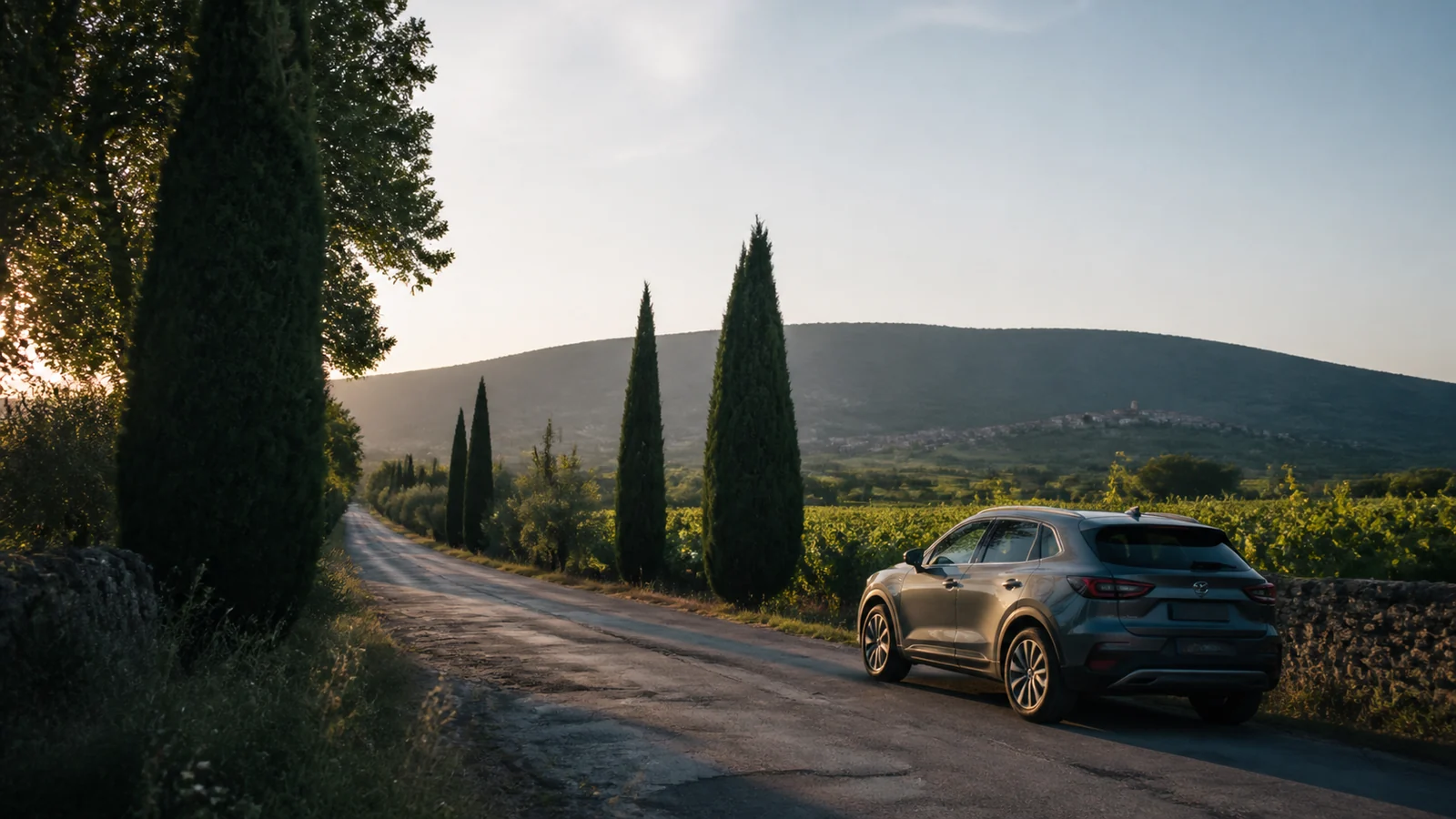
Build a realistic first journey
Camargue Safari Loop
Drive south through the rice fields and marshes toward Les Saintes-Maries-de-la-Mer. Branch east to the Etang de Vaccarès for birdwatching, then loop back through the salt pans at Salin-de-Giraud. The landscape shifts from agricultural to wild, with flamingos appearing in increasing numbers as you approach the coast.
Van Gogh and Roman Route
Start at the Roman arena in Arles, then follow Van Gogh's footsteps to the Place du Forum and the hospital garden. Drive timing that varies with traffic and conditions northeast to Saint-Rémy-de-Provence, where he painted Starry Night at the Saint-Paul de Mausole asylum. Continue to Les Baux-de-Provence for views across the Alpilles hills.
Provence Villages Circuit
Head north to Avignon for the Popes' Palace, then east to Gordes and the Luberon villages. Return via Saint-Rémy-de-Provence and the Roman ruins of Glanum. This longer loop captures the essential Provence of hilltop villages, lavender, and wine within a single day's drive.
Frequently asked questions
Is Arles a good base for the Camargue?
Yes — Arles sits at the northern edge of the Camargue, with the main wetland areas timing that varies with traffic and conditions south by car. The city offers more accommodation and restaurant options than the smaller Camargue villages. Saintes-Maries-de-la-Mer is closer to the beaches and flamingos but has limited facilities outside summer.
Can I see flamingos near Arles?
Yes — the Camargue is one of Europe's best flamingo habitats. The Parc Ornithologique du Pont de Gau offers reliable sightings year-round. Wild flamingos can also be seen from the D roads through the salt pans, particularly at dawn and dusk when they are most active.
What Roman sites are in Arles?
The amphitheatre, theatre, and underground galleries are the main attractions. The Musée de l'Arles et de la Provence Antiques, across the river, houses a remarkable collection including a recently excavated Roman barge. The city has UNESCO World Heritage status for its Roman and Romanesque monuments.
Is the Camargue safe to drive through?
Yes, but with caveats. The bulls and horses that roam the Camargue are semi-wild and should be given space. Drive slowly, especially at dawn and dusk when animals are most active. The D roads are straight and flat but can be narrow in places. Morning fog is common and can reduce visibility dramatically.
Compare Arles car hire
Enter dates above, then compare pickup method, vehicle category and complete supplier terms before booking.
Continue planning with Car Hire France Guide, Car Hire Marseille Airport, Car Hire Avignon, all France car hire locations.