

Explore Frankfurt and the Heart of Germany by Rental Car
Frankfurt am Main is a city of contrasts. Modern glass towers rise above cobblestone squares where locals gather to drink Apfelwein from traditional ribbed glasses. As Germany's financial centre and a major transport hub, it is an excellent base for exploring the Rhine-Main region by road. Within an hour, you can reach the vineyards of the Rhine Valley, the spa town of Wiesbaden, the Roman city of Mainz, and the forested hills of the Taunus. The city itself is compact enough to manage without a car, but its position at the heart of Germany's motorway network makes it ideal for regional exploration.
Frankfurt's public transport system, with its U-Bahn and S-Bahn networks, is comprehensive for urban travel. However, the real value of a rental car here lies beyond the city limits. The A3, A5, and A66 motorways converge in Frankfurt, connecting you to every corner of the country. The Rhine Valley to the west, Heidelberg to the south, and the fairy-tale towns of the Spessart Forest to the east are all within easy reach. Plus, with Frankfurt Airport as one of Europe's largest rental hubs, the choice of vehicles is extensive and competition keeps standards high.
Over 760,000
Plan this first.
A3 / A5 / A66
Confirm before booking.
Frankfurt (FRA)
Confirm before booking.
Finance district, Römerberg, Apfelwein taverns
Confirm before booking.
Match collection to the actual itinerary
Include transfers, parking days, opening hours and return timing when comparing the two options.
City-centre branch
Rental offices in Frankfurt are found near the Hauptbahnhof, Hauptwache, and Konstablerwache. These locations suit travellers who are staying in the city and want to collect the car just before a day trip or onward journey. Most branches open Monday to Saturday with limited Sunday hours. Parking in central Frankfurt is expensive and scarce, particularly in the banking district and the Altstadt, so plan to drive out of the centre immediately after pickup.
Frankfurt Airport alternative
Frankfurt Airport (FRA) is the main rental hub for the region and operates longer hours than most city branches. If you are arriving by air or need an early-morning or late-evening pickup, the airport is the more reliable choice. The drive into the city follows the A5 or the A66 and is well signposted. Airport pickup also avoids the parking and traffic challenges of the city centre.
Plan the handover, price and first drive
Frankfurt's identity is built on trade. The city's name comes from the Franks' ford, a shallow crossing point on the Main River where medieval merchants gathered. The Römerberg square, with its half-timbered houses and the reconstructed Römer city hall, preserves the atmosphere of the old trading city. The Frankfurt Book Fair, founded in the fifteenth century, is still the largest in the world, and the city's trade fair grounds host events throughout the year.
The contrast between the old city and the modern skyline is what makes Frankfurt distinctive. The Main Tower and the Commerzbank Tower are among the tallest buildings in Europe, and the view from the Main Tower's observation deck shows how compact the city centre really is. Beneath the towers, however, the Sachsenhausen district maintains the traditional apple wine culture, with taverns serving Handkäs mit Musik, a local cheese dish, and pitchers of tart Apfelwein. This dual identity is something that locals are proud of, and visitors who explore both sides come away with a fuller picture of the city.
Frankfurt's location at the centre of Germany's motorway network makes it one of the most logical places to rent a car for a wider European trip. The A3 runs from the Dutch border to Passau on the Austrian border, while the A5 connects Hamburg to Basel. Within a day's drive, you can reach Amsterdam, Paris, Munich, Zurich, or Prague. For travellers who want to combine urban sightseeing with regional exploration, Frankfurt offers the best of both worlds: a compact, walkable city centre and immediate access to the open road.
Check the conditions behind the price
The selected supplier’s terms and booking voucher control the rental. Review them before payment and again before collection.
Total payable price
Compare the full payable amount and inclusions rather than an unsupported daily-price promise.
Deposit and payment card
Confirm the deposit, accepted card type and whose name must appear on the card.
Excess and cover
Read the renter's liability, exclusions and what any optional protection actually changes.
Fuel policy
Know the collection level, return requirement and whether a refuelling charge can apply.
Mileage and territory
Check any distance limit and where the vehicle may be driven.
Extras and return
Price additional drivers, seats, after-hours service and one-way return before payment.
Choose for people, bags and roads
A category normally represents a group of similar cars, not a promise of one exact model.
- Compact: convenient for couples and tighter parking.
- Intermediate: more room for bags and longer journeys.
- Family or SUV category: useful only when the required capacity justifies it.
- Transmission: select automatic explicitly if manual is unsuitable.
Practical planning before departure
Parking in Frankfurt
The Altstadt and the banking district have very limited street parking and heavy traffic. Multi-storey Parkhaus garages are the safest option, with several located near the Hauptbahnhof and the Opernplatz. Many hotels charge separately for parking, so confirm this when booking. Park and Ride facilities at the edge of the U-Bahn zones offer er rates if you are driving in for a day visit.
Documents and deposits
Bring your full valid driving licence, a passport or ID card, and a credit card in the main driver's name. EU and EEA licences are accepted directly; others should carry an International Driving Permit. The security deposit is held on your card and released after return inspection. German rental companies are thorough about vehicle checks, so photograph any existing damage before leaving the lot.
Regional driving tips
German motorways are generally free for standard cars, but the Frankfurt area has heavy commuter and freight traffic. The A3 and A5 are major corridors with frequent construction zones. Stay in the right lane unless overtaking, and watch for variable speed limits. If you are heading into the Rhine Valley, the B42 river road is slower but more scenic than the A66 motorway alternative.
Local access, road and operating conditions can change. Check current signs, your supplier instructions and the linked source before travelling: Germany official tourism information.
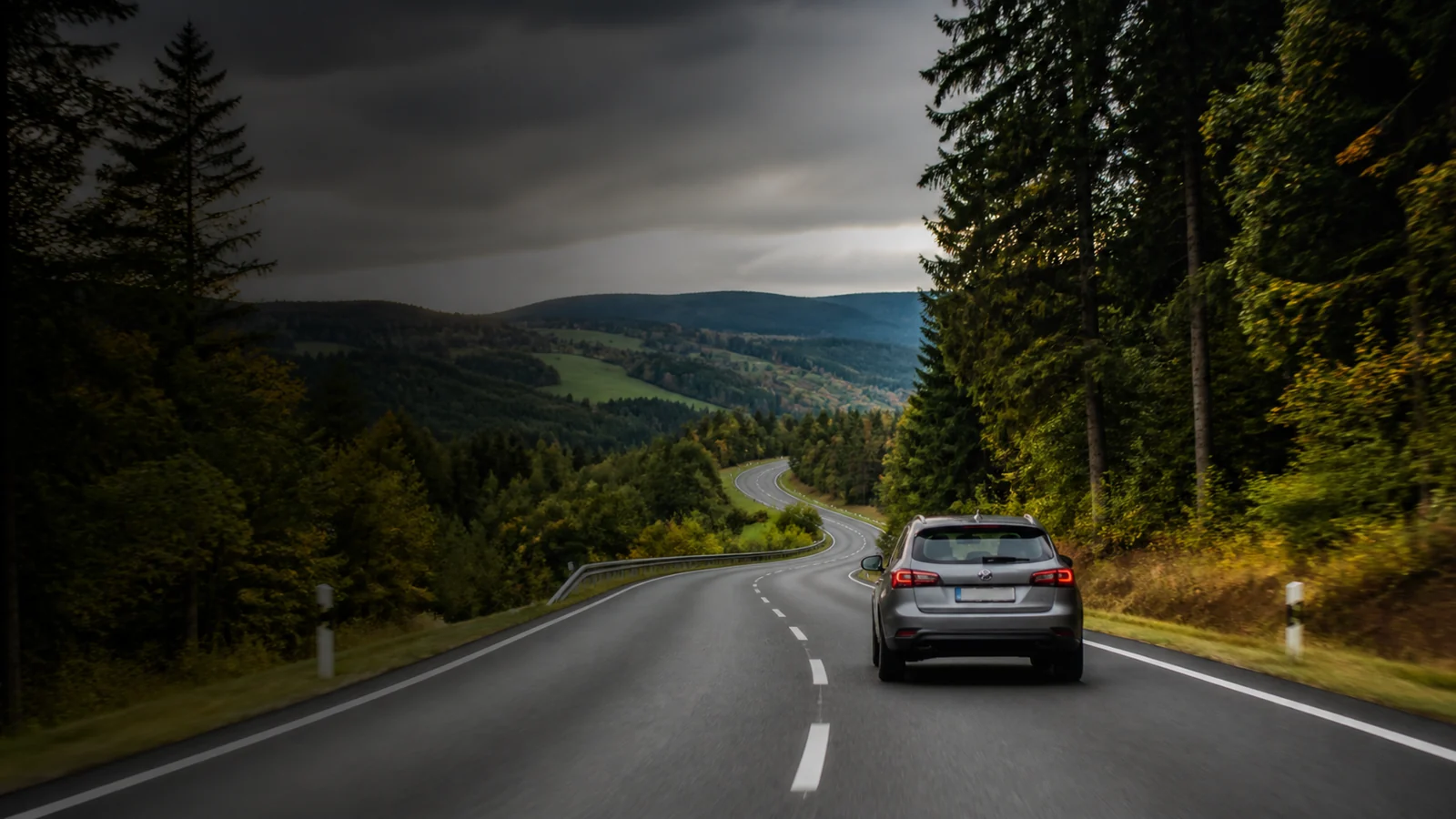
Build a realistic first journey
Rhine Valley
West of Frankfurt, the Rhine Gorge is a UNESCO World Heritage site of vineyards, castles, and historic towns. Rüdesheim, Bingen, and Bacharach are the main stops, reachable via the A60 and A61. The river road offers views of the Lorelei rock and the medieval castles that line the hillsides. Wine taverns along the route serve local Riesling, and the autumn vineyard colours make this one of Germany's most photogenic drives.
Heidelberg
South on the A5, Heidelberg is Germany's oldest university town, with castle ruins overlooking the Neckar River and a charming old town. The drive is straightforward, but Heidelberg's centre is pedestrianised, so park in a municipal garage and explore on foot. The Philosopher's Walk above the river offers panoramic views of the castle and the old town.
Wiesbaden and Mainz
West on the A66, Wiesbaden is a historic spa town with elegant architecture and thermal baths. Mainz, across the Rhine, is famous for its cathedral, its Gutenberg Museum, and its Carnival tradition. The two cities are connected by bridges and can be visited in a single day. Both are less crowded than Frankfurt and offer a more relaxed atmosphere.
Taunus Mountains
North of Frankfurt, the Taunus is a low mountain range of forests, villages, and Roman ruins. Bad Homburg, with its casino and spa gardens, and the reconstructed Saalburg Roman fort are the main attractions. The roads are narrow and winding compared to the motorways, but the scenery is peaceful and the villages are picturesque. This is a good choice for a half-day escape from the city.
Frequently asked questions
Where is the best place to pick up a rental car in Frankfurt?
City-centre branches near the Hauptbahnhof are convenient if you are already staying downtown. Frankfurt Airport is better for early or late collections and for travellers arriving by plane. Both options connect easily to the motorway network.
Do I need an International Driving Permit?
EU and EEA licence holders do not need an IDP. Drivers from other countries should carry an International Driving Permit alongside their original licence. The rental company has the final say on whether your documents are acceptable.
Is parking difficult in Frankfurt?
Yes, particularly in the Altstadt and the banking district. Street parking is scarce and expensive. Use Parkhaus garages, and confirm whether your hotel includes parking before booking.
Can I drive to France or Switzerland?
Yes, most rental agreements allow cross-border travel within the EU and EEA. Inform the rental desk of your plans, as additional insurance or documentation may be required. Switzerland and Austria require motorway vignettes, available at petrol stations near the borders.
Compare Frankfurt car hire
Enter dates above, then compare pickup method, vehicle category and complete supplier terms before booking.
Continue planning with Germany car hire, Berlin Car Hire, Berlin Airport Car Hire, Car Hire Herne | Compare Deals from the quoted rate for the selected dates.