

Car Hire Halle: Compare Rates & Book the Right Vehicle
Halle, often called Halle an der Saale or simply Halle (Saale), is one of the larger cities in Saxony-Anhalt, sitting on the banks of the Saale River a short distance from Leipzig. It is a place of salt-mining history, baroque architecture, and a strong classical music tradition thanks to its most famous resident, the composer Georg Friedrich Handel. A rental car gives you the flexibility to explore both Halle itself and the surrounding region without being locked into regional train schedules. The city centre rewards walking, but the outlying districts, nature reserves, and neighbouring towns are far easier to reach with your own vehicle. The proximity to Leipzig/Halle Airport also makes Halle a practical arrival point for visitors who want to split their time between the two cities.
Leipzig/Halle Airport serves both cities and is the most common collection point for rental cars used in Halle. The airport has desks in the terminal and a short connecting road that leads onto the autobahn network. Driving into Halle from the airport is straightforward, although urban traffic increases during weekday mornings and late afternoons. Within Halle, the road layout follows a mix of historic street patterns and post-war reconstruction. The old town around the Marktplatz and the five-towered Marktkirche is partially pedestrianised, so drivers usually park on the periphery and walk the final stretch. The newer districts to the west and south have wider roads and more available parking, which suits visitors staying in outer hotels.
Saxony-Anhalt, Germany
Plan this first.
Leipzig/Halle Airport
Confirm before booking.
A14, A38
Confirm before booking.
Compact, estate, SUV
Confirm before booking.
Match collection to the actual itinerary
Include transfers, parking days, opening hours and return timing when comparing the two options.
Why visitors choose a rental car in Halle
Halle and Leipzig are close enough to share an airport but distinct enough to justify separate exploration. A rental car lets you stay in the quieter, less expensive accommodation of Halle while driving into Leipzig for day trips, concerts, or business meetings. It also opens up the Saale valley, the Harz foothills, and the smaller towns of Saxony-Anhalt that are poorly served by public transport outside peak hours.
What to know about driving in central Germany
Germany drives on the right. Autobahn sections near Halle and Leipzig carry heavy commercial traffic and are subject to variable speed limits, especially where roadworks are active. Inside Halle, the default urban speed limit is 50 km/h unless otherwise signed. Tram lines run through several central streets, so watch for signals and avoid blocking tram stops. Winter tyres are required by law in snow or icy conditions.
Plan the handover, price and first drive
Halle's identity is inseparable from salt. The city grew wealthy in the Middle Ages from salt springs along the Saale, and the name itself derives from an old Germanic word for salt works. That wealth funded the baroque townhouses, the grand churches, and the cultural institutions that still define the city centre today. The Handel-Haus museum occupies the composer's birthplace and preserves a remarkable collection of baroque musical instruments. Visitors can trace the story of how a provincial German musician became one of the most performed composers in the world. The museum also hosts regular concerts, so it is worth checking the schedule before you visit. Beyond the cultural landmarks, Halle has a quieter, more residential character than Leipzig. The Neustadt district to the west mixes nineteenth-century apartment blocks with newer developments and green corridors along the river. Visitors who stay in this area often find they have more space, lower hotel rates, and easy road access to both the city centre and the autobahn. For anyone interested in the broader region, Halle is well placed for day trips along the Saale, into the Harz mountains, and across to Leipzig. A rental car turns the city from a single destination into a hub for a wider exploration of central Germany, letting you adjust your itinerary according to weather, mood, and the opening hours of small-town museums and restaurants.
Check the conditions behind the price
The selected supplier’s terms and booking voucher control the rental. Review them before payment and again before collection.
Total payable price
Compare the full payable amount and inclusions rather than an unsupported daily-price promise.
Deposit and payment card
Confirm the deposit, accepted card type and whose name must appear on the card.
Excess and cover
Read the renter's liability, exclusions and what any optional protection actually changes.
Fuel policy
Know the collection level, return requirement and whether a refuelling charge can apply.
Mileage and territory
Check any distance limit and where the vehicle may be driven.
Extras and return
Price additional drivers, seats, after-hours service and one-way return before payment.
Choose for people, bags and roads
A category normally represents a group of similar cars, not a promise of one exact model.
- Compact: convenient for couples and tighter parking.
- Intermediate: more room for bags and longer journeys.
- Family or SUV category: useful only when the required capacity justifies it.
- Transmission: select automatic explicitly if manual is unsuitable.
Practical planning before departure
Picking up your vehicle after a flight
Leipzig/Halle Airport is the standard collection point for Halle visitors. Rental desks are located in or adjacent to the terminal building. Bring your driving licence, booking confirmation, and a credit card in the main driver's name. Your voucher specifies the exact desk, any shuttle requirements, and the after-hours protocol, so review it before arrival.
Driving out of the city
The A14 runs east-west through the region, connecting Halle to Leipzig, Dresden, and Magdeburg. The A38 loops to the west and provides access to the A7 for longer north-south journeys. Fuel stations are plentiful on the autobahn, but if you are heading into rural Saxony-Anhalt, fill up before leaving the outskirts, as village stations may close earlier in the evening.
Parking near the old town
The centre around the Marktplatz has limited on-street parking and several pedestrian zones. Visitors typically use multi-storey car parks on the edges of the old town or near the main station. Pay-by-the-hour systems are standard. If your hotel is in the centre, ask in advance whether they have a reserved guest space, as street parking overnight can be restricted in some zones.
Returning the car
For airport returns at Leipzig/Halle, follow the signage to the rental return area and allow time for refuelling if your agreement requires a full tank. If you are returning to a Halle city agency, confirm the exact address with your supplier, as some operate from shared office buildings or hotel forecourts rather than standalone branches. Document the vehicle condition before handing over the keys.
Local access, road and operating conditions can change. Check current signs, your supplier instructions and the linked source before travelling: Halle City Tourism.
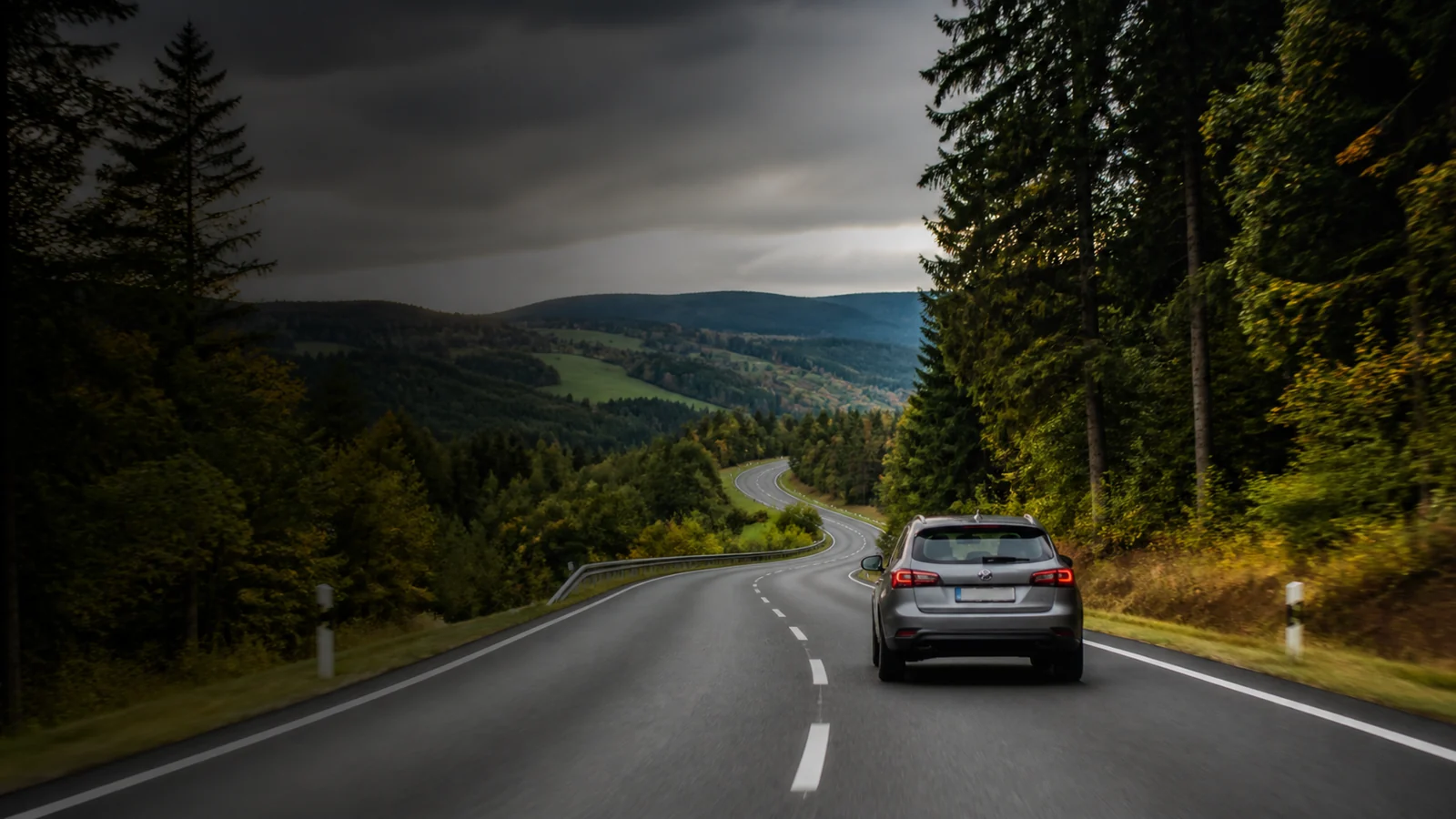
Build a realistic first journey
Halle to Leipzig
The A14 eastbound is a short, fast connection. Leipzig's concert halls, zoo, and historic battlefields attract visitors year-round. Traffic is heaviest during weekday mornings and Friday afternoons. Parking is available in garages near the city centre, and Leipzig's old town is compact enough to explore on foot once you are parked.
Halle to the Saale valley
Follow the B80 and connecting regional roads south along the river. The Saale valley is known for limestone cliffs, castles, and vineyards. The roads are narrower than the autobahn and include tunnels and tight bends through the hills, so allow extra time for the journey and watch for cyclists in summer.
Halle to the Harz foothills
Head west on the A38 and then take regional roads toward towns like Quedlinburg or Wernigerode. The Harz region offers dense forest, steam railways, and hiking trails. Mountain roads can be steep and winding, and winter conditions can close higher passes without warning, so check weather forecasts before setting out.
Frequently asked questions
Where can I pick up a rental car near Halle?
Most visitors collect their vehicle at Leipzig/Halle Airport, which serves both cities. Some suppliers may offer a downtown Halle handover by arrangement. Your voucher will specify the exact address, opening hours, and any shuttle or out-of-hours instructions.
Do I need an International Driving Permit in Germany?
Licences from the EU, UK, USA, Canada, Australia, and New Zealand are generally accepted without an IDP. If your licence is printed in a non-Latin script, carry an International Driving Permit alongside the original. Always confirm your supplier's specific requirements before you travel.
Is there a minimum age for car hire in Halle?
Most German rental contracts require the driver to be at least 21, with a full licence held for one or two years. Drivers under 25 may face a young-driver surcharge and may be restricted from premium vehicle classes. The exact rules are set by the supplier you select.
What vehicle size is best for Halle and the region?
A compact car handles Halle's older streets and multi-storey car parks easily. For families, groups, or anyone carrying bulky luggage, an estate or small SUV provides useful extra space. Check your hotel's parking dimensions before booking a larger vehicle, as some inner-city bays are tight.
Compare Halle car hire
Enter dates above, then compare pickup method, vehicle category and complete supplier terms before booking.
Continue planning with Car hire in Berlin, Car hire in Leipzig, Car hire in Essen, Germany car hire.