

A Rental Car Opens Up Saarland, Luxembourg, and the French Border
Homburg sits in the south-west corner of Germany, close to the French and Luxembourg borders and the forested hills of Saarland. With a rental car, you can explore the region’s industrial heritage, cross into Luxembourg for a day trip, or follow the Saar River through wine villages and castle ruins. At 365 Car Hire, we compare trusted suppliers so you can find the right vehicle and pickup option for your south-western itinerary.
Car hire in Homburg is available from city-centre branches, with Saarbrücken Airport and Frankfurt Airport being the closest air hubs for travellers arriving by plane. A compact car is ideal for narrow old-town streets and cross-border day trips, while a larger vehicle suits family travel or longer routes into the Pfälzerwald and beyond. Your voucher will confirm the exact pickup address and any shuttle details.
Border trips, Saar wine route, Luxembourg visits
Plan this first.
Saarbrücken and Frankfurt
Confirm before booking.
Compact for cities, estate for touring
Confirm before booking.
Saarland, south-west Germany
Confirm before booking.
Match collection to the actual itinerary
Include transfers, parking days, opening hours and return timing when comparing the two options.
City-centre car hire in Homburg
A downtown pickup is practical if you are staying locally or arriving by train. City offices usually open weekday mornings and Saturday mornings, with limited Sunday hours. Parking is available in the centre, though the pedestrian zone around the fortress and old town restricts vehicle access during certain hours.
Airport car hire near Homburg
Saarbrücken Airport is the closest hub, with Frankfurt offering far more international connections. Both have multiple rental desks in the terminals. An airport pickup saves a train or bus transfer and puts you on the road immediately, which is useful if you are heading straight to Luxembourg or the French border.
Plan the handover, price and first drive
Homburg’s fortress is one of the largest in Germany, a sprawling complex that dominates the hill above the city. It was fought over by French and German forces for centuries, and the ruins still carry that layered history. The view from the ramparts stretches across Saarland and into France.
Saarland is Germany’s smallest state, but it packs in industrial heritage, wine villages, and borderland culture. The Saar River forms a natural boundary with France, and the region’s cuisine reflects that proximity. Tarte flambée, Riesling, and rustic meat dishes appear on menus on both sides of the border.
With a rental car, the tri-border area becomes a playground. You can breakfast in Germany, lunch in Luxembourg, and dine in France, all within an hour’s drive. That kind of flexibility is rare and one of the best reasons to pick up a car in Homburg rather than a larger, more distant hub.
Check the conditions behind the price
The selected supplier’s terms and booking voucher control the rental. Review them before payment and again before collection.
Total payable price
Compare the full payable amount and inclusions rather than an unsupported daily-price promise.
Deposit and payment card
Confirm the deposit, accepted card type and whose name must appear on the card.
Excess and cover
Read the renter's liability, exclusions and what any optional protection actually changes.
Fuel policy
Know the collection level, return requirement and whether a refuelling charge can apply.
Mileage and territory
Check any distance limit and where the vehicle may be driven.
Extras and return
Price additional drivers, seats, after-hours service and one-way return before payment.
Choose for people, bags and roads
A category normally represents a group of similar cars, not a promise of one exact model.
- Compact: convenient for couples and tighter parking.
- Intermediate: more room for bags and longer journeys.
- Family or SUV category: useful only when the required capacity justifies it.
- Transmission: select automatic explicitly if manual is unsuitable.
Practical planning before departure
Driving in Homburg and Saarland
Roads in the region are well-maintained and generally quiet outside rush hours. The A1 and A6 are the main autobahn routes, with smaller roads following the Saar River and cutting through the Pfälzerwald forest. Signage is clear in both German and French near the border.
Parking in the region
Homburg has metered on-street parking and several garages near the centre. Saarbrücken and Luxembourg City have larger parking structures, though Luxembourg’s old town is best explored on foot after parking on the edge.
Cross-border travel
The French and Luxembourg borders are minutes from Homburg. You may need a vignette for Luxembourg motorways and should confirm with your supplier whether cross-border travel is permitted. French autoroutes also require toll payment, so carry a card for automated booths.
When to book
Summer and early autumn are popular for wine touring and forest hiking. Luxembourg City and Strasbourg fill up during EU institution sessions and Christmas market season. Booking in advance secures better vehicle choice, especially for automatics and larger cars.
Local access, road and operating conditions can change. Check current signs, your supplier instructions and the linked source before travelling: Germany official tourism information.
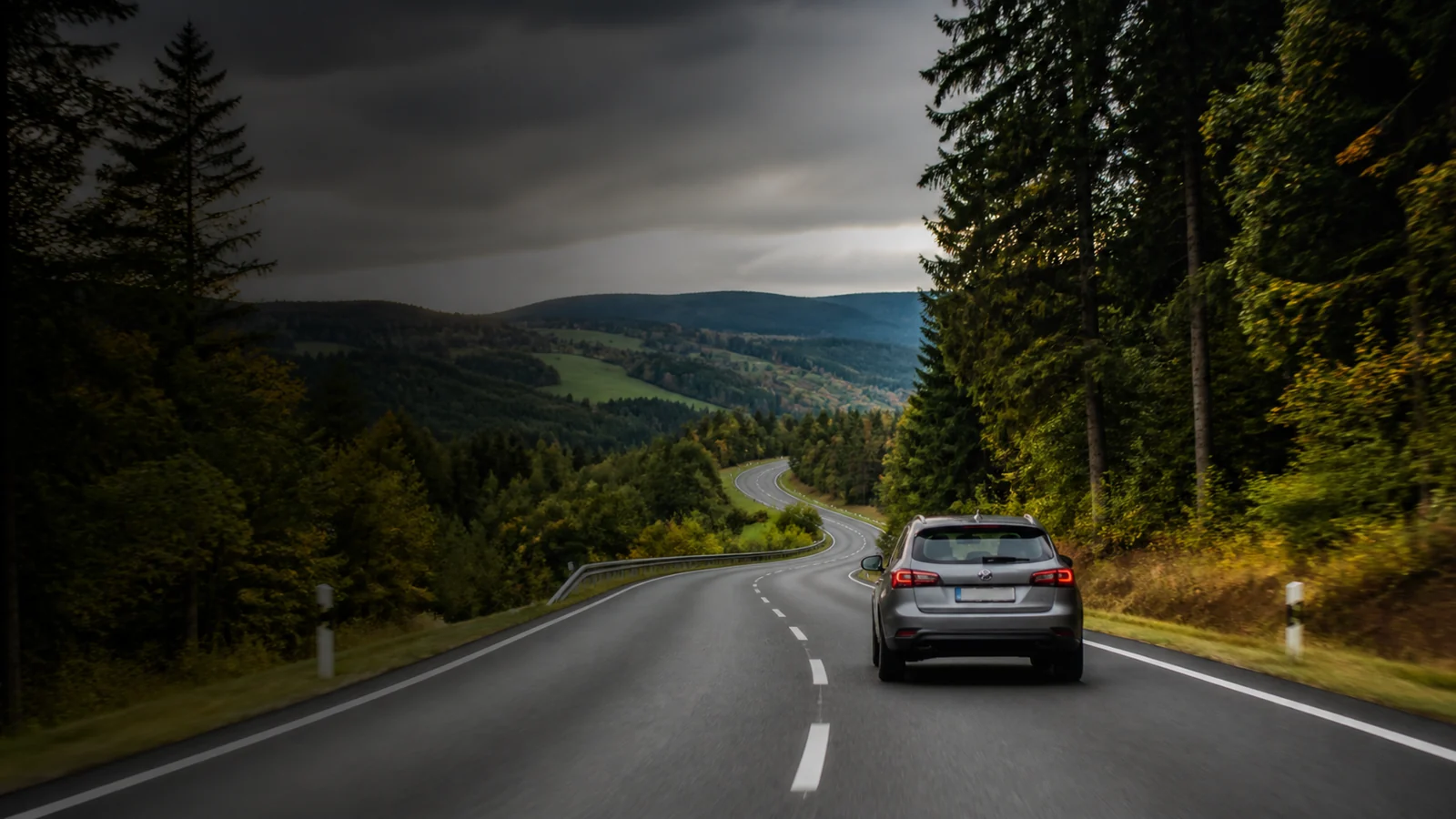
Build a realistic first journey
Homburg to Luxembourg City
Head west on the A6 and smaller roads. Luxembourg City is a compact capital perched on dramatic cliffs, with a UNESCO-listed old town, underground casemates, and a strong financial district. It is an easy day trip from Homburg.
Homburg to Strasbourg
Drive south into France on the A6 and A35. Strasbourg is the capital of Alsace, with a stunning cathedral, petite France district, and one of Europe’s most beautiful Christmas markets. The drive is straightforward, though French autoroutes charge tolls.
Homburg to Saarbrücken
Take the A1 north. Saarbrücken is Saarland’s capital, with the Saar riverfront, the Ludwigskirche, and a lively dining scene. It is also the region’s main transport hub if you need to change vehicles or extend your rental.
Homburg to the Pfälzerwald
Head east on the A6 and connect to smaller forest roads. The Pfälzerwald is a region of dense woodland, sandstone rock formations, and castle ruins. It is popular with hikers and cyclists, and a car lets you reach trailheads that public transport does not serve.
Frequently asked questions
Do I need an International Driving Permit in Germany?
EU and EEA licences are accepted. Non-EU drivers should check whether their home licence is sufficient or if an International Driving Permit is required by their chosen supplier.
Is Homburg easy to drive in?
Local streets are calm and well-signposted. The Old Town is narrow, but the rest of the city is straightforward. A GPS or phone mount helps with navigating border roads and finding parking near the fortress.
Can I pick up in Homburg and drop off in another city?
One-way rentals between major German cities are usually possible, though a surcharge may apply. Confirm the drop-off location and any extra cost before completing the booking.
What type of car is best for Homburg?
A compact is easiest for city driving and border hops. If you are touring the Pfälzerwald or travelling with family, a mid-size or SUV gives more space and comfort.
Are there toll roads near Homburg?
German autobahns are free for passenger cars. French autoroutes charge tolls, and Luxembourg motorways require a vignette. Plan accordingly for any cross-border routes.
Compare Homburg car hire
Enter dates above, then compare pickup method, vehicle category and complete supplier terms before booking.
Continue planning with Car hire in Frankfurt, Car hire in Cologne, Car hire in Stuttgart, All 365 Car Hire locations.