

Car Hire Kiel: Compare Rates & Book the Right Vehicle
Kiel is the capital of Schleswig-Holstein, a port city on the Baltic coast that mixes maritime industry with summer sailing culture and an unexpectedly lively events calendar. The Kiel Canal, the world's busiest artificial waterway, cuts through the city and defines much of its identity, while the surrounding fjord landscape provides a scenic backdrop that is best explored by car. A rental vehicle in Kiel frees you from the fixed routes of local ferries and regional buses. The city itself is walkable in parts, but the nearby beaches, fishing villages, and nature reserves along the Schleswig-Holstein coast are far easier to reach with your own transport. The autobahn connections also make Hamburg and Denmark practical options for longer excursions.
Kiel does not have a major commercial airport within the city, so most international visitors arrive via Hamburg Airport and collect a rental car for the onward journey north. The drive from Hamburg to Kiel is a straightforward run on the A7 and A215, though traffic around Hamburg can be heavy during weekday rush hours, so allow extra time for traffic. Within Kiel, the road network is organised around the fjord and the canal. The city centre has pedestrian zones near the central station and the main shopping streets, so drivers usually rely on surrounding car parks and garages. Parking near the waterfront and the cruise terminals can be in high demand during sailing events and cruise ship turnaround days.
Schleswig-Holstein, Germany
Plan this first.
Hamburg Airport
Confirm before booking.
A7, A215, A21
Confirm before booking.
Compact, estate, SUV
Confirm before booking.
Match collection to the actual itinerary
Include transfers, parking days, opening hours and return timing when comparing the two options.
Why visitors choose a rental car in Kiel
Kiel's harbour and canal are impressive on foot, but the real appeal of the region lies along the Schleswig-Holstein coast and in the fishing villages of the fjords. Public transport serves the main towns, but smaller beaches, nature trails, and rural restaurants are often unreachable without a car. A rental vehicle also makes it easy to cross into Denmark for a day, visit the UNESCO-listed Wadden Sea, or explore the historic trading towns of the region.
What to know about driving in northern Germany
Germany drives on the right. The autobahn north of Hamburg carries heavy freight traffic and has variable speed limits in sections. Within Kiel, the default urban limit is timing that varies with traffic and conditions/h unless otherwise signed. The city has several bridges over the fjord and canal; height and weight restrictions apply, so check your route if you are in a tall van or large SUV. Winter tyres are legally required in snow or ice conditions.
Plan the handover, price and first drive
Kiel's relationship with the sea is unavoidable. The city was founded as a harbour settlement and has spent centuries as a shipbuilding centre, a naval base, and now a major ferry and cruise port. The Kiel Canal, opened in 1895, still carries more ships than the Panama and Suez canals combined, and watching the massive vessels thread their way through the locks is a genuine spectacle that costs nothing and requires no ticket. Every June, the city hosts Kiel Week, one of the largest sailing regattas in the world. The harbour fills with tall ships, racing yachts, and spectators, and the waterfront promenades become a continuous festival of food stalls, live music, and maritime displays. Accommodation books out months in advance, and parking becomes a competitive sport. If you are visiting during Kiel Week, reserve your hotel and car early. Outside regatta season, Kiel is calmer but still active. The ferry terminals run daily services to Sweden, Norway, and Lithuania, giving the city an international flavour that belies its modest size. The Förde, or fjord, defines the cityscape, with residential districts climbing the hills on either side and the university campus occupying a prime waterfront position. For visitors with a car, the surrounding region offers a different kind of maritime experience. The Schleswig-Holstein coast is less developed than the Baltic resorts further east, with smaller villages, nature reserves, and quiet beaches that locals prefer. A short drive north crosses into Denmark, where the landscape flattens and the towns become even smaller and more orderly. Kiel works well as a base for anyone who wants a working port city with easy access to both German and Scandinavian coastal scenery.
Check the conditions behind the price
The selected supplier’s terms and booking voucher control the rental. Review them before payment and again before collection.
Total payable price
Compare the full payable amount and inclusions rather than an unsupported daily-price promise.
Deposit and payment card
Confirm the deposit, accepted card type and whose name must appear on the card.
Excess and cover
Read the renter's liability, exclusions and what any optional protection actually changes.
Fuel policy
Know the collection level, return requirement and whether a refuelling charge can apply.
Mileage and territory
Check any distance limit and where the vehicle may be driven.
Extras and return
Price additional drivers, seats, after-hours service and one-way return before payment.
Choose for people, bags and roads
A category normally represents a group of similar cars, not a promise of one exact model.
- Compact: convenient for couples and tighter parking.
- Intermediate: more room for bags and longer journeys.
- Family or SUV category: useful only when the required capacity justifies it.
- Transmission: select automatic explicitly if manual is unsuitable.
Practical planning before departure
Picking up your vehicle after a flight
Hamburg Airport is the standard collection point for Kiel visitors. Rental desks are located in the terminal complex with shuttle or on-foot access to the vehicle compound. Bring your licence, booking confirmation, and a credit card in the main driver's name. Your voucher confirms the exact desk and any after-hours arrangements, so review it before you travel.
Driving out of the city
From Kiel, the A215 connects south to the A7 toward Hamburg, while the A21 heads west toward the Schleswig-Holstein coast. The B76 and B502 run along the eastern shore of the fjord and provide access to smaller coastal towns. Fuel stations are plentiful on the autobahn, but rural roads along the coast have fewer options, so fill up before leaving Kiel if you are planning a long coastal loop.
Parking near the waterfront and city centre
The centre around Holstenstraße and the main station has pedestrian zones and limited on-street parking. Multi-storey car parks are available near the station and the main shopping areas. The waterfront and cruise terminal have dedicated parking zones that fill quickly during events. If you are staying at a city hotel, ask whether guest parking is included, as some older buildings have no private spaces.
Returning the car
For airport returns at Hamburg, follow the rental return signage and allow time for refuelling if your agreement requires a full tank. If you are returning to a Kiel city agency, confirm the exact street address with your supplier, as some operate from shared premises or hotel forecourts. Photograph the vehicle before handing over the keys.
Local access, road and operating conditions can change. Check current signs, your supplier instructions and the linked source before travelling: Kiel City Tourism.
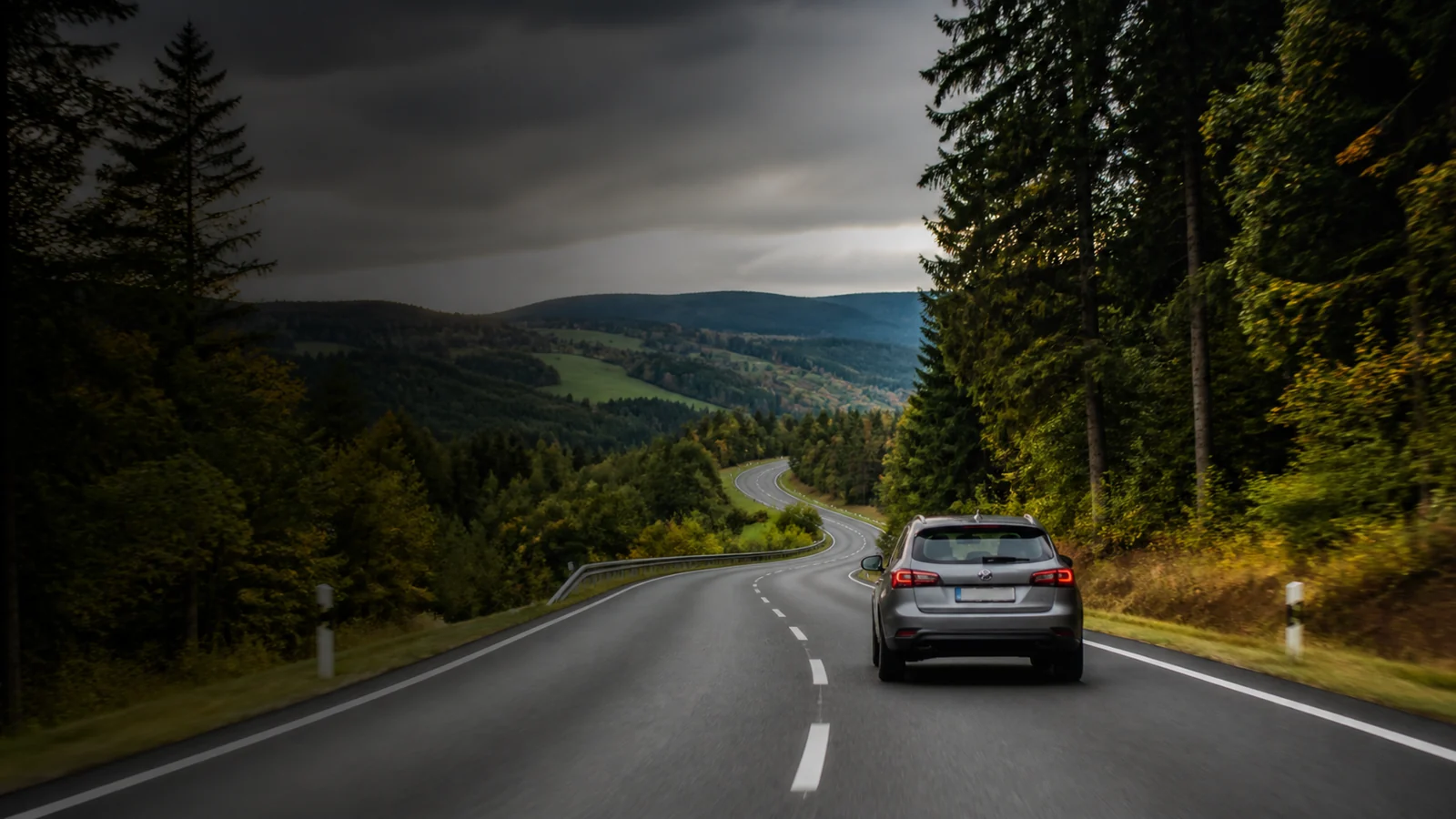
Build a realistic first journey
Kiel to Hamburg
South on the A7 via the A215. This is a busy commercial corridor, so expect heavy goods vehicle traffic and variable speed limits. Hamburg's harbour, museums, and nightlife are within easy reach. Parking in central Hamburg is expensive; consider Park + Ride if you only want a brief visit.
Kiel to the Schleswig-Holstein coast
West on the A21 and then regional roads toward towns like Eckernförde or Schönberg. The Baltic coastline here is dotted with cliffs, beaches, and small harbours. Roads are narrower than the autobahn and include tourist traffic in summer, so allow extra time for the journey.
Kiel to Denmark
North on the B76 and then the A7 across the border toward Flensburg and beyond. The Danish border is close enough for a day trip, and the drive through southern Jutland offers flat farmland and wind farms. Remember that Denmark uses the krone, not the euro, though credit cards are accepted almost everywhere.
Frequently asked questions
Where can I pick up a rental car near Kiel?
Most visitors collect their vehicle at Hamburg Airport and drive north. Some suppliers may offer a handover in central Kiel by prior arrangement. Your voucher will confirm the exact location, opening hours, and any shuttle requirements.
Do I need an International Driving Permit in Germany?
Licences from the EU, UK, USA, Canada, Australia, and New Zealand are generally accepted without an IDP. If your licence is in a non-Latin script, carry an International Driving Permit as well. Confirm your supplier's requirements before you book.
Is there a minimum age for car hire in Kiel?
Most contracts require the driver to be at least 21, with a full licence held for one or two years. Drivers under 25 may face a surcharge and may be excluded from larger vehicle categories. The exact rules are set by the supplier you select.
What vehicle size is best for Kiel and the coast?
A compact car is ideal for Kiel's city centre and coastal roads. An estate or small SUV provides extra space for beach gear, bicycles, or luggage. If you plan to cross into Denmark or carry bulky items, check your hotel's parking dimensions and any ferry vehicle restrictions before booking a larger model.
Compare Kiel car hire
Enter dates above, then compare pickup method, vehicle category and complete supplier terms before booking.
Continue planning with All Germany car hire locations, Car hire in Berlin, Car hire in Hamburg, Germany car hire.