

Hire a Car in Ostend for Coastal Freedom and Flanders Road Trips
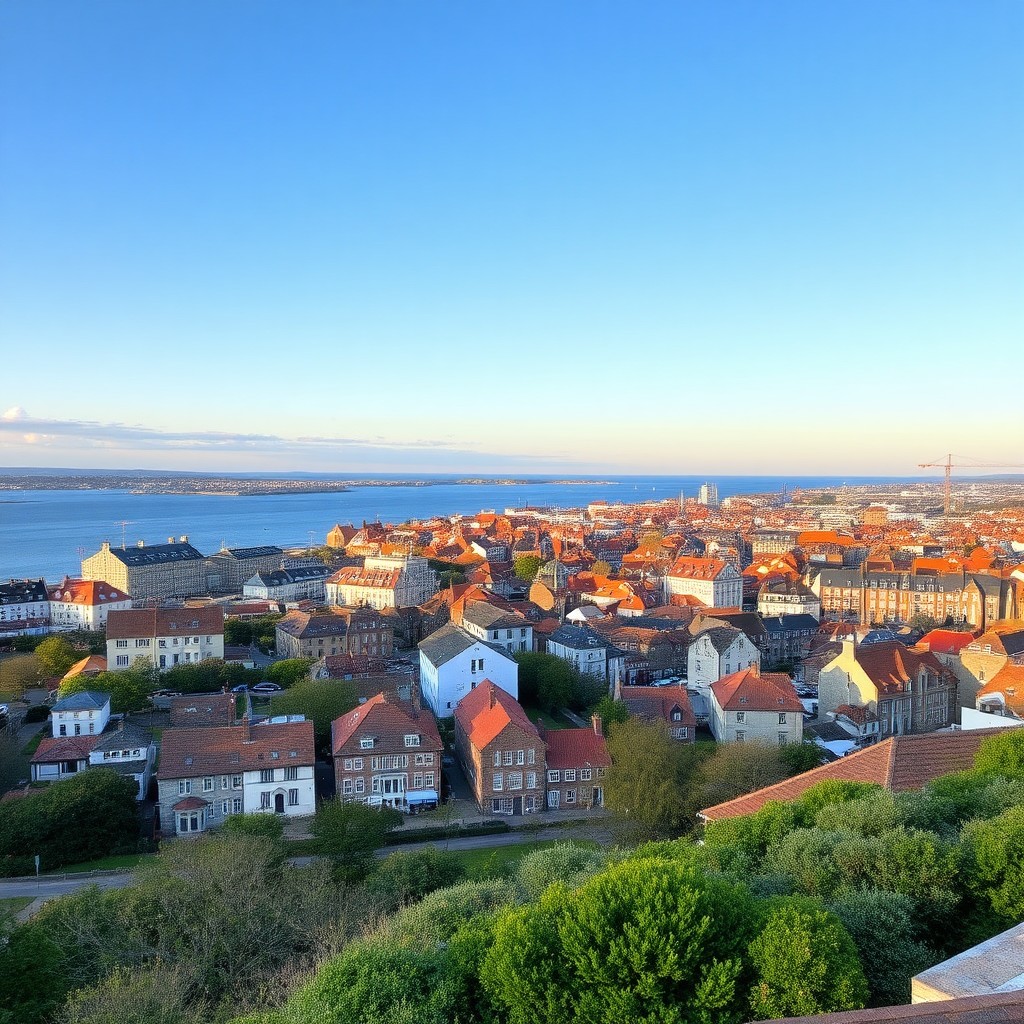
Ostend is Belgium’s largest coastal city — a working port that happens to have a long sandy beach, a ferry terminal, and a seafront that has attracted holidaymakers since the 19th century. King Leopold II made it fashionable; the city has since added art museums, a regenerated harbour quarter, and enough seafood restaurants to justify the trip on gastronomic grounds alone. A rental car here is useful because the Belgian coast is long, the coastal tram is slow, and the best parts of West Flanders — Bruges, Ypres, the polder villages — are all inland.
The city itself divides into two characters. The seafront is tourist Belgium: apartment blocks, promenades, beach bars and the casino. Turn inland and you find a working port, a fishing harbour where boats still unload directly to market stalls, and neighbourhoods that feel more like industrial Flanders than a resort. A car lets you move between these worlds easily, and more importantly lets you escape the coast when the weather turns or the summer crowds peak. The N-roads inland are flat, fast and lined with poplars; the motorways connect you to Bruges, Ghent and beyond.
West Flanders, Flemish Belgium
Plan this first.
Ostend-Bruges Airport (OST)
Confirm before booking.
Beaches, seafood, art museums, ferry port
Confirm before booking.
Coastal touring, Bruges day trips, polder drives
Confirm before booking.
Match collection to the actual itinerary
Include transfers, parking days, opening hours and return timing when comparing the two options.
Airport and City-Centre Pick-Up
Ostend-Bruges Airport is small, with limited scheduled flights but a significant presence for holiday charters and freight. Rental desks are in the terminal, and the handover is quick because the airport never gets crowded in the way Brussels does. City-centre collection is also available from agencies near the station and harbour. If you are staying on the seafront, ask your hotel about parking before you collect the car; seafront garages fill quickly in July and August, and on-street spaces are competitive.
Driving the Coast vs Cutting Inland
The Belgian coast is served by the Kusttram, a coastal tram that runs the full length from De Panne to Knokke. It is a novelty, but it is slow and crowded in peak season. A car gives you the freedom to stop at smaller beaches, visit coastal fortifications from both world wars, and cut inland to the polders — the flat, drained farmland that characterises West Flanders. The N-roads inland are peaceful, scenic in a modest way, and lead to villages with excellent local restaurants that most tourists never reach.
Plan the handover, price and first drive
Ostend has been a resort city for nearly two centuries, but it has never lost its working edge. The fishing harbour still operates every morning, and the seafood restaurants along the waterfront buy directly from the boats. The contrast is part of the charm: you can eat Michelin-level fish in a paper-wrapped portion of frites around the corner, and both are authentic.
The art history is less expected. James Ensor, Belgium’s most important painter between Magritte and the modern generation, was born here and the city still celebrates him. The Mu.ZEE museum is small but well curated, and the Ensor House gives a sense of the bourgeois world he grew up in. A car makes it easy to combine Ostend with other Belgian art destinations — Bruges for the Flemish Primitives, Ghent for Van Eyck.
The coastal tram is famous, but a car gives you something the tram cannot: the ability to stop. The coast between Ostend and the French border is lined with small resorts, each with its own character. De Panne is family-friendly and Dutch-influenced; Nieuwpoort has a marina and a beach; De Haan is quietly affluent with some of the best-preserved Belle Époque architecture. You can visit three or four in a day by car, or settle into one and use the vehicle for inland exploring.
Inland, the polders are the hidden landscape. Flat, green, and patterned with drainage canals, they are not dramatic but they are deeply characteristic of this part of Belgium. The roads are straight, the villages are small, and the restaurants are often excellent. A drive through the polders after a morning on the coast is one of the most satisfying ways to experience West Flanders — and it is only really possible with your own transport.
Check the conditions behind the price
The selected supplier’s terms and booking voucher control the rental. Review them before payment and again before collection.
Total payable price
Compare the full payable amount and inclusions rather than an unsupported daily-price promise.
Deposit and payment card
Confirm the deposit, accepted card type and whose name must appear on the card.
Excess and cover
Read the renter's liability, exclusions and what any optional protection actually changes.
Fuel policy
Know the collection level, return requirement and whether a refuelling charge can apply.
Mileage and territory
Check any distance limit and where the vehicle may be driven.
Extras and return
Price additional drivers, seats, after-hours service and one-way return before payment.
Choose for people, bags and roads
A category normally represents a group of similar cars, not a promise of one exact model.
- Compact: convenient for couples and tighter parking.
- Intermediate: more room for bags and longer journeys.
- Family or SUV category: useful only when the required capacity justifies it.
- Transmission: select automatic explicitly if manual is unsuitable.
Practical planning before departure
Road Rules
Belgium drives on the right. The coast road can be busy with cyclists and local traffic in summer. Speed limits are lower and more strictly enforced near beaches and in resort towns.
Insurance
Standard cover applies. Check whether your policy includes windscreen damage; coastal roads can throw up debris, and summer traffic increases the risk of minor incidents.
Parking
Ostend has paid seafront parking, multi-storey garages near the centre, and some free spaces further inland. In peak season, arrive early or use park-and-ride options.
Fuel
Petrol stations are plentiful on the ring roads and motorway approaches. Some smaller coastal villages have limited options out of season; refuel before you explore.
Local access, road and operating conditions can change. Check current signs, your supplier instructions and the linked source before travelling: Visit Ostend.
Build a realistic first journey
To Bruges
The A10 motorway is fastest, but the N-roads through the polders are prettier. You can combine the two by driving inland via Damme, a canal-side village that feels like a smaller, quieter version of Bruges itself.
To Ypres and the Battlefields
South on the N-roads through Diksmuide and Veurne. The landscape is flat Flanders farmland, dotted with war cemeteries and memorials. The Menin Gate and Tyne Cot are the best-known sites, but the smaller cemeteries along this route are equally moving.
The Coastal Route to De Panne and Knokke
Follow the coastal road or the Kusttram route by car. De Panne has wide dunes and a nature reserve; Knokke is the most upscale resort, with galleries and designer shops. The full length can be done in a day, though traffic is heavy on summer weekends.
Frequently asked questions
Is Ostend Airport the same as Brussels Airport?
No. Ostend-Bruges Airport (OST) is on the coast and serves a limited range of flights. Brussels Airport (BRU) is the main international hub, roughly an hour and a half inland by road.
Can I drive a rental car from Ostend into France?
Yes, the French border is a short drive south. Cross-border travel within the EU is normally permitted; confirm on your voucher and carry your documents.
What is the best way to get from Ostend to Bruges?
The A10 motorway is fastest. For a scenic drive, take the N-roads through Damme and follow the canal.
Is parking difficult in Ostend in summer?
Yes, seafront parking is competitive and can be expensive in July and August. Consider parking inland and walking, or ask your accommodation about reserved spaces.
Compare Ostend car hire
Enter dates above, then compare pickup method, vehicle category and complete supplier terms before booking.
Continue planning with All 365 Car Hire Locations, Car Hire Bruges | Compare Rentals & Explore Flanders, Car Hire Antwerp Airport | Rent a Car from the quoted rate for the selected dates, Car Hire Antwerp | Rent a Car from the quoted rate for the selected dates.