

Rent a Car in Munich and Unlock Bavaria's Best Roads
Munich sits at the heart of Bavaria, surrounded by Alpine foothills, pristine lakes, and some of Germany's most famous castles. The city itself is walkable, but the real value of a rental car here is what lies outside the ring road. Neuschwanstein, the Bavarian Alpine Road, Salzburg across the Austrian border, and the Romantic Road all become accessible once you are behind the wheel.
Oktoberfest brings millions of visitors each autumn, pushing accommodation prices up and public transport to capacity. A rental car lets you stay in outlying towns and drive in, or escape the crowds for quieter Bavarian villages. The A8, A9, and A95 Autobahns radiate from Munich, connecting southern Germany to Austria, Switzerland, and the Czech Republic.
~1.5 million
Plan this first.
Oktoberfest, Marienplatz, beer gardens
Confirm before booking.
A8, A9, A95
Confirm before booking.
MUC — timing that varies with traffic and conditions northeast
Confirm before booking.
Match collection to the actual itinerary
Include transfers, parking days, opening hours and return timing when comparing the two options.
City-centre pickup for Munich exploration
Downtown offices near Hauptbahnhof and major hotels suit travellers staying in Munich first. Street parking in Altstadt and Maxvorstadt is extremely limited — use Parkhaus garages or choose accommodation with included parking. City branches typically open Monday to Saturday with reduced Sunday service.
Airport pickup for immediate regional travel
Munich Airport is outside the city, making it the practical choice if you are heading straight to the Alps, Salzburg, or rural Bavaria. You avoid central Munich traffic and join the A92 within minutes of leaving the terminal.
Plan the handover, price and first drive
Munich grew from a medieval monastery settlement into the capital of Bavaria and one of Europe's wealthiest cities. Its centre, focused on Marienplatz, survived Allied bombing and was painstakingly rebuilt. The result is a city that looks older than it is, with beer gardens, baroque churches, and royal palaces drawing visitors year-round.
The annual Oktoberfest began in 1810 as a royal wedding celebration and has become the world's largest folk festival. During the event, hotel rooms sell out months in advance and public transport operates at maximum capacity. A rental car gives you the flexibility to stay outside the city and commute in, or to skip Munich entirely and explore quieter Bavarian towns.
Bavaria's road network is among the best in Europe. The Deutsche Alpenstraße (German Alpine Road) runs from Lindau on Lake Constance to Berchtesgaden near Salzburg, passing through some of the most dramatic scenery in southern Germany. Munich sits near the midpoint of this route, making it an ideal base for a multi-day driving tour.
Check the conditions behind the price
The selected supplier’s terms and booking voucher control the rental. Review them before payment and again before collection.
Total payable price
Compare the full payable amount and inclusions rather than an unsupported daily-price promise.
Deposit and payment card
Confirm the deposit, accepted card type and whose name must appear on the card.
Excess and cover
Read the renter's liability, exclusions and what any optional protection actually changes.
Fuel policy
Know the collection level, return requirement and whether a refuelling charge can apply.
Mileage and territory
Check any distance limit and where the vehicle may be driven.
Extras and return
Price additional drivers, seats, after-hours service and one-way return before payment.
Choose for people, bags and roads
A category normally represents a group of similar cars, not a promise of one exact model.
- Compact: convenient for couples and tighter parking.
- Intermediate: more room for bags and longer journeys.
- Family or SUV category: useful only when the required capacity justifies it.
- Transmission: select automatic explicitly if manual is unsuitable.
Practical planning before departure
Parking in Munich
Central parking is scarce and expensive. Use multi-storey garages or stay in outer districts like Schwabing or near the English Garden where parking is more manageable. Always check whether your hotel includes parking before booking.
Documents and deposit
Bring a valid driving licence, passport or ID card, and a credit card in the main driver's name. German rental companies inspect vehicles thoroughly at pickup and return. Photograph the car before leaving to document any pre-existing marks.
Driving conditions
Bavarian Autobahns are excellent but busy during holiday periods and winter weekends. The A8 toward Salzburg and the A95 toward Garmisch-Partenkirchen carry heavy tourist traffic. Allow extra time and check the current route before departure.
Local access, road and operating conditions can change. Check current signs, your supplier instructions and the linked source before travelling: Munich Tourism.
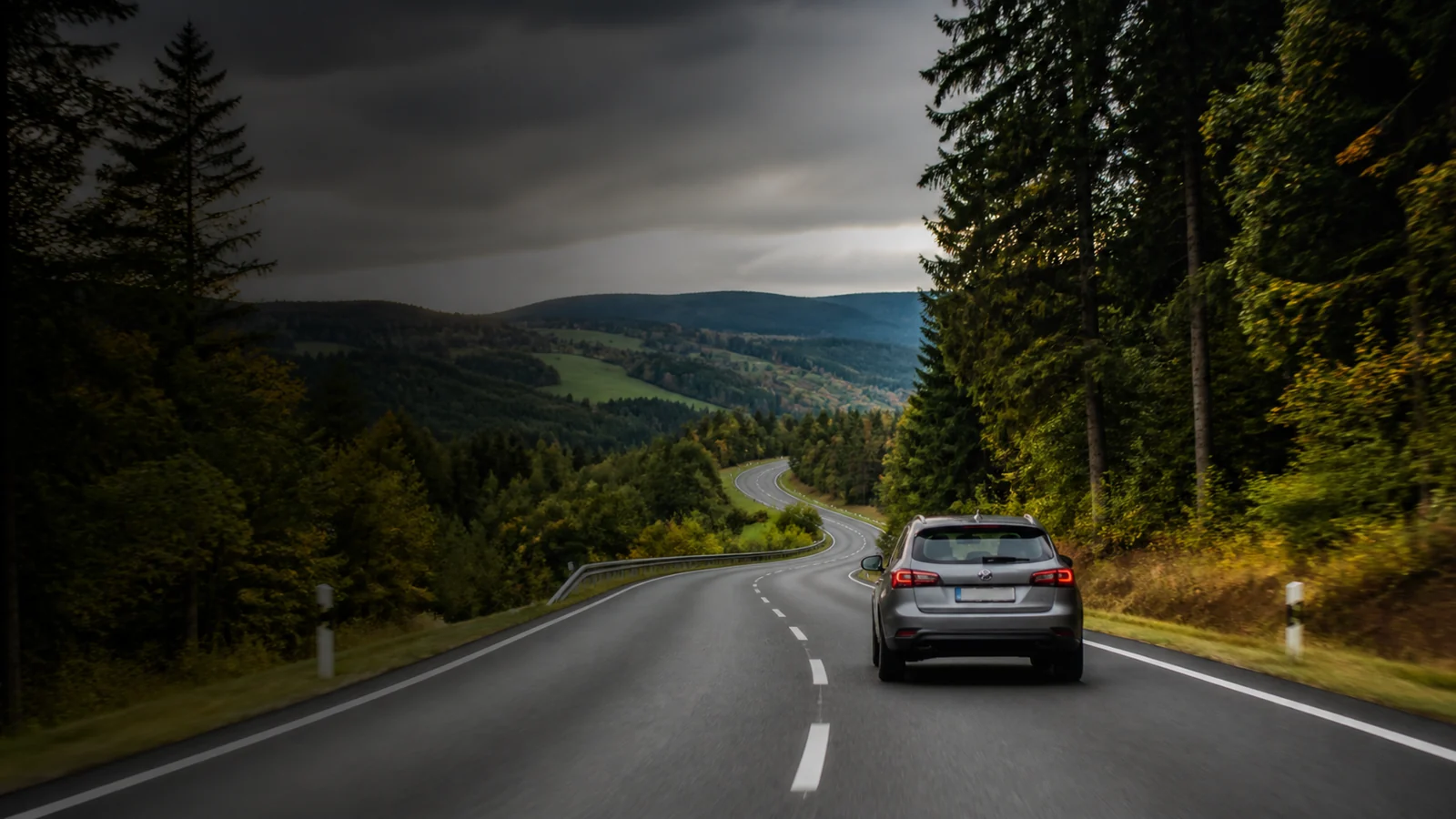
Build a realistic first journey
Neuschwanstein Castle
South on the A96 toward Füssen, then follow signs to Hohenschwangau. The castle is a major attraction and tickets sell out early in summer. Parking is available near the village centre.
Salzburg, Austria
Southeast on the A8 toward the Austrian border. Salzburg's baroque Old Town and fortress make it one of the most popular day trips from Munich. Remember to confirm cross-border permission with your rental supplier.
Bavarian Alpine Road
South via the A95 and B23 through Bad Tölz, Lenggries, and toward Wallgau. This scenic route connects several Alpine lakes and villages. Winter driving may require snow chains — confirm equipment with your supplier.
Frequently asked questions
Do I need a car in Munich itself?
Not for central sightseeing. The U-Bahn and S-Bahn cover the city well. A car becomes essential for visiting Neuschwanstein, the Alps, Salzburg, or rural Bavaria.
Where should I park a rental car in Munich?
Use Parkhaus garages in the centre. Street parking is metered and hard to find in Altstadt and Maxvorstadt. Outer districts and hotel parking are better options for overnight stays.
Can I drive a German rental car into Austria?
Most suppliers allow EU and Schengen travel, but confirm with your specific company. The voucher or booking confirmation states any territorial restrictions and whether additional cover is needed.
What is the best time to drive out of Munich?
Avoid weekday mornings and late afternoons. Winter weekends bring ski traffic south on the A95, while Oktoberfest crowds clog roads around Theresienwiese. Check the current route before setting out.
Compare Munich car hire
Enter dates above, then compare pickup method, vehicle category and complete supplier terms before booking.
Continue planning with Munich Airport pickup, Stuttgart car hire, all Germany car hire locations, Berlin Car Hire.