

Palma de Mallorca Airport Car Hire — Start Your Island Trip the Right Way
Palma de Mallorca Airport is one of Spain's busiest, and for good reason. Millions of visitors pass through each year on their way to beaches, mountain villages, and cycling routes across the island. Hiring a car at the airport keeps your arrival and departure simple, but it pays to know where your supplier actually operates, what the vehicle can carry, and whether airport collection is the best fit for your itinerary before you commit.
A rental car at PMI makes sense when your accommodation is spread across the island, you are travelling with bulky luggage or sports equipment, or your plans involve the Tramuntana mountains and eastern calas that public transport does not reliably serve. It adds less value if you are staying in central Palma for the duration of your trip, where buses, taxis, and walking cover most needs. In that case, compare the cost of collecting later in the city instead of paying for a parked vehicle.
PMI
Plan this first.
8km east of Palma city centre
Confirm before booking.
Island-wide itineraries, bulky luggage
Confirm before booking.
Right-hand traffic
Confirm before booking.
Match collection to the actual itinerary
Include transfers, parking days, opening hours and return timing when comparing the two options.
Airport Collection
Collecting at PMI keeps your flight and road journey connected. Most major suppliers operate from the airport, though the exact counter or office location varies by company — some are inside the terminal, others in a nearby building, and a few use a shuttle to an off-site compound. Check your voucher for the specific address, contact number, and instructions for late arrivals. Save this before you fly. Opening hours vary, and some offices close earlier than the last inbound flight.
City Collection in Palma
If your first few nights are in Palma itself, collecting a car from a downtown office later in your trip can be er and more convenient. You avoid the airport surcharge, skip the rental queue after a long flight, and do not pay for a vehicle you are not using while exploring the city on foot. Compare this with airport collection when your itinerary is city-first, island-second. Just confirm the city office location and whether you need to book a specific time slot.
Plan the handover, price and first drive
Palma de Mallorca Airport is a gateway, not a destination. The real Mallorca begins when you leave the terminal and head inland or along the coast. For some, that means a straight run to a beach resort in Cala d'Or or Alcúdia. For others, it means a slow, winding drive into the Tramuntana mountains, where the sea disappears behind limestone peaks and the villages look much as they did a century ago.
The island rewards those who explore. The beaches everyone knows are beautiful, but the ones you find by accident — a cove at the end of a dirt track, a swimming spot below a pine forest — are the ones you remember. A rental car is the price of admission for these discoveries. Without it, you are bound to bus routes and taxi fares, and half the island remains out of reach.
Mallorca is larger than it looks on a map. The drive from Palma to the northern lighthouse at Formentor takes longer than you might expect, not because the distance is great but because the road demands respect. Cyclists, goats, hairpin bends, and the occasional German campervan all share the asphalt. Take your time. The point is not to arrive quickly but to see everything along the way.
Check the conditions behind the price
The selected supplier’s terms and booking voucher control the rental. Review them before payment and again before collection.
Total payable price
Compare the full payable amount and inclusions rather than an unsupported daily-price promise.
Deposit and payment card
Confirm the deposit, accepted card type and whose name must appear on the card.
Excess and cover
Read the renter's liability, exclusions and what any optional protection actually changes.
Fuel policy
Know the collection level, return requirement and whether a refuelling charge can apply.
Mileage and territory
Check any distance limit and where the vehicle may be driven.
Extras and return
Price additional drivers, seats, after-hours service and one-way return before payment.
Choose for people, bags and roads
A category normally represents a group of similar cars, not a promise of one exact model.
- Compact: convenient for couples and tighter parking.
- Intermediate: more room for bags and longer journeys.
- Family or SUV category: useful only when the required capacity justifies it.
- Transmission: select automatic explicitly if manual is unsuitable.
Practical planning before departure
Driving and Parking in Mallorca
Traffic keeps to the right in Spain. Seat belts are mandatory for all passengers, and child restraints are required for younger travellers. Main roads on Mallorca are generally in good condition, but the island mixes fast motorways with narrow village streets and steep mountain approaches. Do not rely on map distances for journey times — the road to Deià or Formentor may be short on paper but slow in reality. Parking in Palma, resort centres, and near popular beaches is limited and often metered. Confirm arrangements with your accommodation.
Luggage and Vehicle Fit
Mallorca attracts cyclists, golfers, and families with pushchairs and beach gear. Before booking, check that your chosen vehicle category has enough boot space for your luggage plus any equipment. A compact car may be fine for two people with soft bags, but a family of four with suitcases and a buggy will need a larger estate or MPV. The voucher controls what you are entitled to — do not assume an upgrade will be available on arrival.
Documents and Licence Rules
A valid driving licence is required. EU licence holders generally do not need an International Driving Permit. Visitors from outside the EU should check whether their licence is accepted or whether an IDP is required, as rules vary by country of issue. A credit card in the main driver's name is standard for the security deposit. Check the supplier's policy on additional drivers before you travel.
Tolls, Fuel, and Road Conditions
There are no motorway tolls on Mallorca, which simplifies budgeting. Fuel stations are plentiful in towns and along main roads but can be sparse in remote mountain areas and on the eastern coast. Fill up before exploring the Tramuntana or the eastern calas. Mountain roads are narrow, steep, and shared with cyclists — drive carefully and allow extra time, especially during the cycling season.
Local access, road and operating conditions can change. Check current signs, your supplier instructions and the linked source before travelling: Spain official tourism information.
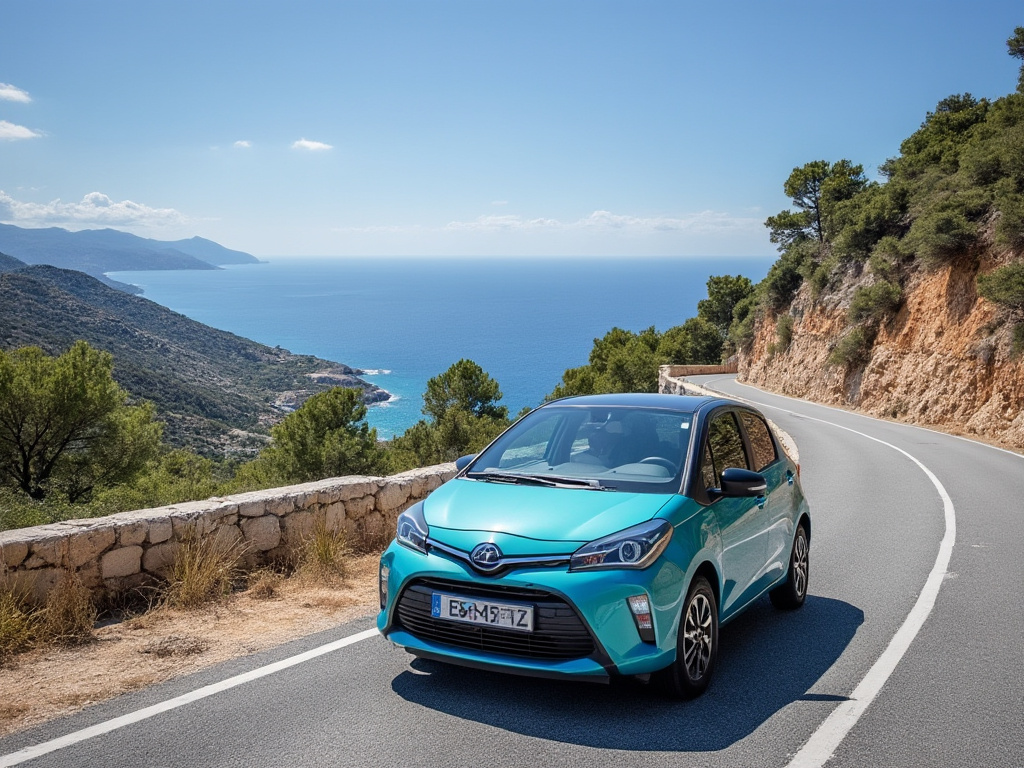
Build a realistic first journey
Palma to the Serra de Tramuntana
The Tramuntana mountains run along Mallorca's northwest coast and are a UNESCO World Heritage Site for their dry-stone terraces, olive groves, and historic villages. The drive from Palma takes you through winding roads with sea views, past Valldemossa, Deià, and Sóller. Each village has its own character — Valldemossa for its monastery and Chopin connection, Deià for its artistic heritage, Sóller for its orange groves and vintage train. The road is narrow and popular with cyclists; patience is required.
The Northern Coast and Formentor
The road north from Palma leads through Inca and on to the resorts of Alcúdia and Pollença. Beyond Pollença, the cape of Formentor offers dramatic cliffs and a lighthouse with views across the Mediterranean. This is one of Mallorca's most photographed drives, but the road is narrow and busy in summer. An early start avoids the worst of the traffic. There are walking trails and beaches along the way if you want to break up the journey.
Eastern Calas and Hidden Beaches
Mallorca's east coast is dotted with calas — small, sheltered coves with clear water and pine-backed shores. Caló des Moro, Cala Llombards, and Cala Mondragó are among the best known, though parking can be a challenge and some require a short walk from the road. These are not served by public transport, so a car is essential. Bring supplies, as facilities are limited.
Frequently asked questions
Where do I collect my rental car at Palma Airport?
The exact location depends on your supplier. Some operate from counters inside the terminal building, others from nearby offices or off-site compounds reached by shuttle. Check your booking voucher for the address, contact number, and any late-arrival instructions. Save this information before you fly.
Do I need a car for a Palma city break?
Probably not. Palma's old town, cathedral, and waterfront are walkable, and buses and taxis cover the rest. A car becomes useful if you plan to explore the Tramuntana mountains, visit eastern beaches, or split your stay between different parts of the island. If you are staying in the city only, consider collecting later or using public transport.
What size car do I need in Mallorca?
This depends on your group and luggage. A compact car is fine for two people travelling light. Families, groups with sports equipment, or anyone staying for more than a week should consider an intermediate or estate vehicle with more boot space. Check the vehicle dimensions and luggage capacity before booking.
Are there tolls on Mallorca?
No. Mallorca has no toll roads, which makes driving straightforward. You will still need to budget for fuel, which is priced at the pump and can be higher in remote areas. Mountain roads are free but narrow and winding — drive to conditions rather than rushing.
Compare Palma De Mallorca Airport car hire
Enter dates above, then compare pickup method, vehicle category and complete supplier terms before booking.
Continue planning with Car hire in Palma city, Spain car hire locations, all Spain car hire locations, Car Hire Thessaloniki Airport.