
Driving from Thessaloniki to Meteora: Route, Stops and Monastery Road Trip Tips
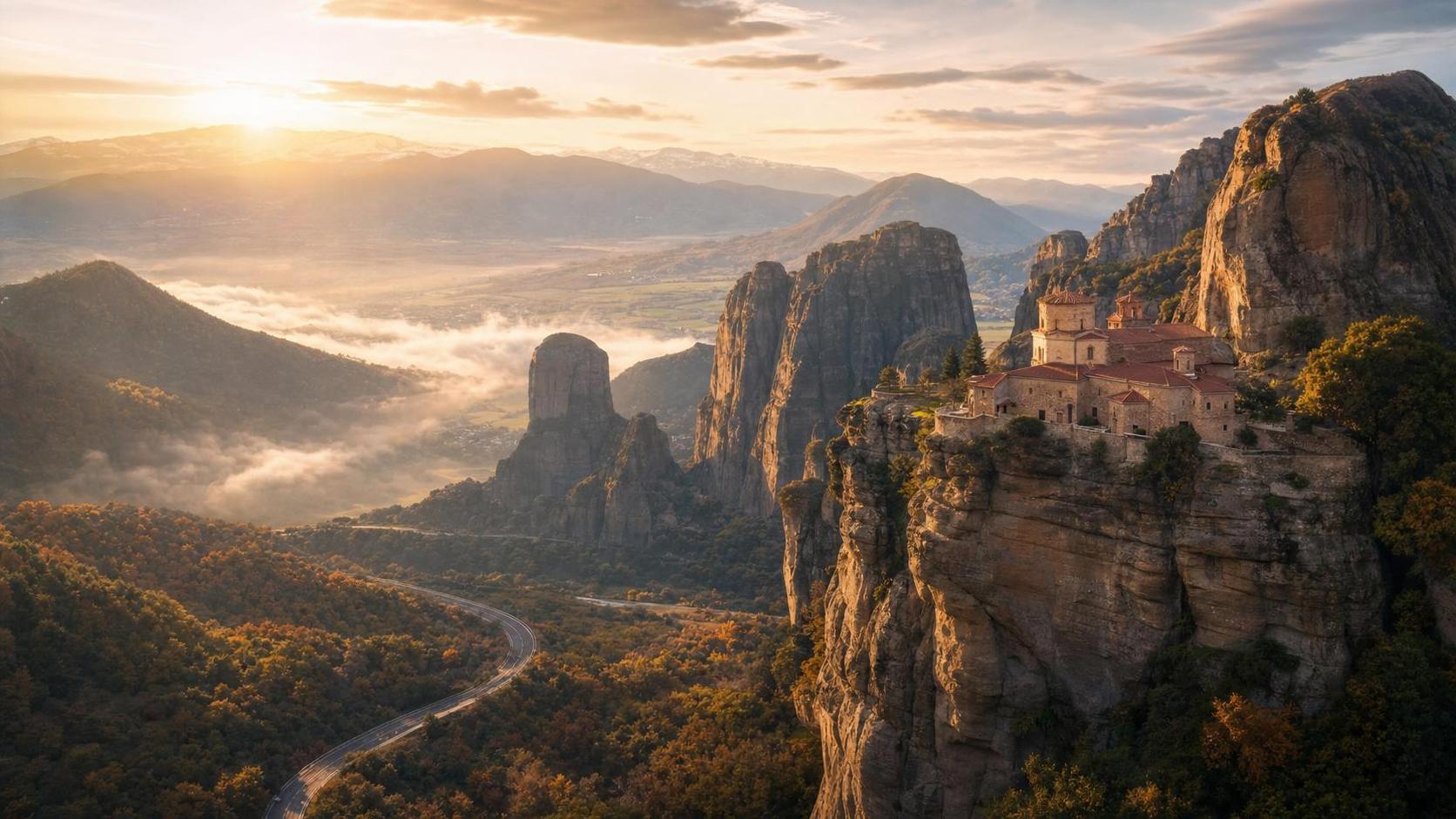
The monasteries of Meteora look impossible until you see them with your own eyes. Six massive sandstone pillars, each topped with a Byzantine monastery, rising from the plain of Thessaly like something from a fantasy film. Getting there from Thessaloniki by car is one of the most rewarding drives in mainland Greece — and with your own rental, you can stop at ancient ruins, mountain villages and thermal springs along the way.
Most travellers book an organised bus tour and miss everything between the two points. That is a mistake. The 230-kilometre route rewards anyone who takes the wheel. Here is how to do it properly.
The Route at a Glance
Starting your trip with Thessaloniki Airport car rental puts you on the road immediately. Thessaloniki to Meteora is roughly 230 kilometres by the fastest road, taking about two and a half hours via the A1/E75 motorway and then the EO3 west from Trikala to Kalabaka. But the best version of this trip adds a stop or two and stretches to four or five hours of actual driving, plus time at the monasteries.
The two main options are:
- Fast Route (2h 30min): A1 motorway south to Larissa, then west on the EO3 through Trikala to Kalabaka. All dual carriageway or wide single carriageway. Good road surface year-round.
- Scenic Route via Tempi Valley (3h 30min+): Leave the A1 at the Tempi exit and follow the old highway through the dramatic gorge between Mount Olympus and Mount Kissavos. Rejoin the A1 near Larissa. Adds roughly an hour but delivers the most photographed valley in northern Greece.
Both routes are straightforward in a standard economy or compact car from Thessaloniki Airport. You do not need an SUV unless you are visiting in mid-winter when mountain passes can see snow.
Stop 1: Tempi Valley and the Old Highway
If you take the scenic option, the Tempi Valley is your first reward. The Pinios River has carved a narrow passage between two mountain ranges here, and the road hugs the water through tunnels of plane trees. There is a small parking area near the chapel of Agia Paraskevi, built into a cave in the cliff face. Walk ten minutes upstream and you will find the source of the river bubbling from a spring locals claim has healing properties.
The old highway is slower than the motorway but far prettier. Plan forty-five minutes to an hour for this section including the stop. There are a few tavernas at the southern end serving grilled trout from the river.
Stop 2: Larissa — Coffee and the Ancient Theatre
Larissa is Greece’s fifth-largest city and a natural halfway point. The centre is compact enough for a thirty-minute wander. The ancient theatre on the southern side, built in the third century BC and recently restored, is worth a look — it is free to enter and usually empty of tourists.
For coffee, the pedestrianised area around Plateia Kentriki has dozens of cafes. Greeks drink freddo espresso in summer and it is done better here than in the islands. Budget twenty to thirty minutes for Larissa unless you plan to eat.
Stop 3: Trikala and the Lithaios River Walk
Trikala sits on the edge of the Thessalian plain, about forty kilometres short of Meteora. The old town around the fortress has been restored in recent years and the riverside walk along the Lithaios is genuinely pleasant. There are good bakeries here if you want supplies for the monasteries — the shops at Meteora themselves are overpriced and limited.
If you are travelling with children, the central park has one of the better playgrounds in northern Greece and free parking on the ring road.
Arriving at Meteora — Parking and Practicalities
The monasteries sit above the twin towns of Kalabaka and Kastraki. Most visitors base themselves in Kalabaka, which has more restaurants and hotels, but Kastraki is closer to the rock pillars and feels more traditional.
Parking: There is a large free car park at the base of the road leading up to the monasteries, signed from both towns. In July and August it fills by 10:30am. Arrive early or park in Kastraki and walk the first section. There is also parking at individual monasteries but spaces are tight and the access roads are steep.
Entrance fees: Each monastery charges €3 admission. Most visitors see two or three in a day. The most popular combination is Great Meteoron (the largest and oldest), Varlaam (connected by a small bridge) and Rousanou (the one on its own pillar, famously photographed from the road below).
Dress code: Shoulders and knees must be covered. Men and women both. Wrap-around skirts are available at the entrance for a small donation but it is easier to dress appropriately before you leave the car.
What to Expect on the Roads
Greek motorways are toll roads. The Thessaloniki to Larissa section costs roughly €4–5 each way in tolls. Have cash ready — not all booths accept foreign cards, though contactless payment is becoming more common at major plazas.
Speed limits are 130 km/h on motorways, 90 km/h on rural single carriageways and 50 km/h through villages. The EO3 west of Trikala passes through several villages where the limit drops to 50 km/h and Greek police do enforce this with mobile cameras.
Fuel prices in northern Greece are typically €1.50–1.65 per litre for unleaded. Fill up in Larissa or Trikala if you are running low — the petrol stations near Meteora charge a premium.
Best Time to Visit
Spring (April to mid-June) and autumn (September to October) are ideal. The monasteries sit at altitude and summer heat is less oppressive up here than on the coast, but the parking situation and crowds are significantly worse in July and August. Winter visits can be magical if there is snow on the pillars, but check road conditions before you set out — the access road can ice over.
Extending the Trip
With a rental car, Meteora does not have to be a day trip. Consider:
- Delphi: Three hours south through stunning mountain scenery. Combine the two and you have the best mainland Greece road trip most visitors never attempt.
- Mount Olympus: The national park entrance at Litochoro is ninety minutes east of Thessaloniki on the A1. Easy to add as a separate day.
- The Zagori Villages: North of Meteora near Ioannina, famous for stone bridges and hiking trails. Another three to four hours west.
Related Destinations
Looking for more car hire options in Greece? Also explore Athens car hire, Thessaloniki Airport car rental, Delphi car hire, Greece car hire destinations and Corfu car hire.
Frequently Asked Questions
Can I drive from Thessaloniki to Meteora in a day?
Yes, comfortably. The drive is two and a half hours each way, leaving five or six hours to visit two or three monasteries. Leave Thessaloniki by 7:30am to beat the crowds and be back for dinner.
Do I need a 4×4 for Meteora?
No. The access roads are paved and well-maintained. A standard economy or compact car handles the route without issue. Winter visits after heavy snow are the only exception.
How many monasteries should I visit?
Most visitors find two or three is enough. Great Meteoron and Varlaam are the most impressive architecturally. Rousanou offers the best photographs. St. Stephen’s is easiest to reach. Choose based on your fitness level — some require climbing many steps.
Is there petrol near Meteora?
Yes, but prices are higher than in Larissa or Trikala. Fill up before you leave the main highway if you want to save a few euros.
Can I combine Meteora with Delphi in one trip?
Technically yes, but it is a long day — six to seven hours of driving plus monastery time. Better to stay overnight in Kalabaka and drive to Delphi the next morning.